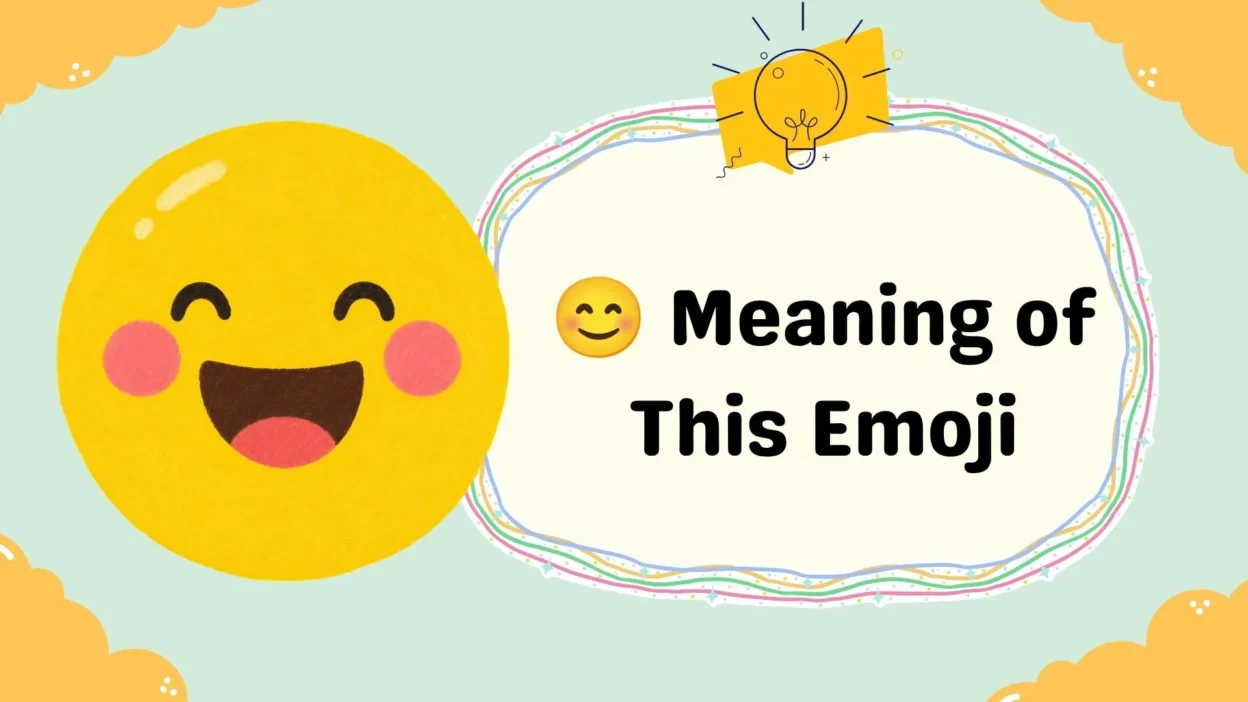
The 😊 Smiling Face with Smiling Eyes Emoji is one of the warmest and most positive emojis used in texting and social media. It usually expresses genuine happiness, friendliness, kindness, gratitude, affection, or a soft sense of appreciation.
Unlike a simple smile, 😊 often gives a message a more personal and heartfelt feeling, making it popular when someone wants to sound sweet, polite, or emotionally warm.
Its meaning can also depend on the conversation and the relationship between the people involved. A friend may use 😊 to show happiness or appreciation, while a girl or guy might send it to express affection, friendliness, or subtle interest.
Quick Answer:
The 😊 emoji (officially Smiling Face with Smiling Eyes) shows genuine happiness, warmth, gratitude, or friendly contentment. It feels softer and more sincere than a big open-mouthed grin.
What Does “😊 meaning of this emoji” Mean?
The 😊 emoji is a yellow face with gently curved, closed smiling eyes and a broad closed-mouth smile that often turns up toward lightly blushed cheeks. Unicode officially names it “Smiling Face with Smiling Eyes.” Many people also call it the blush emoji or the soft smile emoji.
In plain English, it means the person feels happy in a calm, warm way. The smile reaches the eyes, which is why it feels more sincere than a simple polite smile. It does not shout excitement. Instead it quietly says, “I feel good about this” or “Thank you, that made me smile.”
The most common meaning is genuine positive feeling mixed with friendliness. People use it to show appreciation, quiet joy, or to make a message feel kinder. It is the digital version of a warm, closed-mouth smile you might give someone you like or respect.
Meaning in Different Contexts
The same 😊 emoji can feel slightly different depending on the conversation and the platform. Here is how it usually works in everyday places people use it.
Everyday Conversation
In casual talk with friends or family, 😊 often means simple happiness or quiet satisfaction. Someone might say, “The weather is perfect today 😊.” The emoji adds a soft, content feeling without needing extra words. It keeps the tone light and pleasant.
Text Messages
Texting is where this emoji appears most often. It softens a message, shows gratitude, or confirms that the sender is in a good mood. A short reply like “Sounds good 😊” feels friendlier than the same words alone. It also works well after compliments or thank-you notes because it looks humble and warm.
Social Media
On public posts the 😊 emoji usually signals positive support or quiet joy. People leave it under photos of food, travel, or small wins. In captions it can turn a plain statement into something warmer: “Finally finished the project 😊.” It rarely feels dramatic; it feels steady and kind.
WhatsApp chats feel personal, so 😊 often carries real warmth. Friends and family use it to show they are glad to hear from you or that they appreciate the update. In group chats it can gently agree with a plan or thank someone for organizing something. It stays polite even when the conversation is relaxed.
Snapchat
Snapchat gives this emoji a special extra meaning. When you see 😊 next to a friend’s name in your contact list, it means you message that person often, but they are not your number-one Best Friend. It ranks just below the heart and the yellow heart emojis in Snapchat’s friendship ranking system. In regular snaps and chats, though, it still means the usual soft happiness or friendliness.
Instagram users love 😊 in Stories, captions, and comments. Creators place it after sharing good news or a kind moment. Comments full of 😊 under a post usually mean the audience feels happy for the poster or finds the content wholesome. It pairs well with soft pastel aesthetics and lifestyle photos.
TikTok
On TikTok the emoji appears in comments and captions when someone feels gently happy or supportive. It shows up under feel-good videos, cooking clips, or kind storytelling. Compared with louder laughing or screaming-face emojis, 😊 keeps the reaction calm and positive. Creators also use it when they want their caption to feel approachable.
Gaming
Gamers use 😊 less for high-intensity moments and more for friendly team chat. After a good match or when thanking a teammate for help, the soft smile keeps the tone light. It can also mark a pleasant or wholesome moment in a game story.
Professional Communication
In work messages the 😊 emoji is one of the safer positive choices. It softens a thank-you, a confirmation, or a polite request without looking too casual. Many people prefer it over big grinning faces when talking to managers or clients. In very formal emails most people still skip emojis, but in Slack, Teams, or internal chats it works well.
Internet Slang
Online, 😊 often stands for simple, unironic positivity. It can replace phrases like “that’s nice,” “thank you,” or “I’m happy for you.” Some people also use it as a gentle closer after a longer message so the tone does not feel abrupt.
Examples of “😊 meaning of this emoji”
Concrete examples make the meaning easier to feel. Here are five realistic ones.
- Sentence: “Thanks for helping me move the boxes yesterday 😊”
Meaning: Genuine gratitude mixed with warmth.
Situation: A friend texting after a favor. - Sentence: “Just got the email , I got the internship! 😊”
Meaning: Quiet, happy satisfaction rather than wild excitement.
Situation: Sharing good news with close friends or family. - Sentence: “Looking forward to the team lunch tomorrow 😊”
Meaning: Friendly anticipation and politeness.
Situation: Work group chat or calendar invite reply. - Sentence: “Your photo made me smile 😊”
Meaning: Soft appreciation and positive feeling.
Situation: Instagram or Facebook comment under a personal picture. - Sentence: “No problem at all, happy to help 😊”
Meaning: Kind reassurance and willingness.
Situation: Replying to someone who just thanked you for a small favor.
Each example shows the emoji adding a layer of sincere friendliness without turning the message loud or dramatic.
When Do People Use “😊 meaning of this emoji”?
People reach for the 😊 emoji in several everyday situations:
- When they want to say thank you in a warm way
- After receiving good but not over-the-top news
- To soften a message that might otherwise sound flat
- When showing support or quiet happiness for someone else
- As a friendly way to end a short reply
Almost everyone uses it , teens, adults, parents, and coworkers. It feels safe across age groups because it rarely looks sarcastic or exaggerated.
People choose this emoji because it looks sincere. The closed eyes and gentle smile suggest real feeling rather than performance.
It works best in friendly or semi-formal conversations. It feels less suitable when someone is sharing deep sadness, serious conflict, or high-stakes professional negotiations where pure text is clearer. In those moments a simple sentence without an emoji often shows more care.
Different Meanings of “😊 meaning of this emoji”
Although the emoji is mostly positive, context can shift its exact shade. Here are the main readings.
1. Genuine Happiness or Contentment
Definition: The person feels quietly happy or satisfied.
Context: Sharing small wins, nice weather, or a pleasant moment.
Example: “Spent the afternoon reading in the park 😊”
2. Gratitude and Appreciation
Definition: A warm way to say thank you.
Context: After a favor, gift, or kind words.
Example: “I really appreciate your advice 😊”
3. Friendliness and Politeness
Definition: Softening a message so it feels kinder.
Context: Confirmations, invitations, or everyday replies.
Example: “See you at 3 pm 😊”
4. Gentle Support or Encouragement
Definition: Showing you are happy for someone else.
Context: Congratulating a friend or reacting to good news.
Example: “So proud of you for finishing the race 😊”
5. Soft Closing or Tone Softener
Definition: Ending a message on a warm note so it does not feel abrupt.
Context: Longer texts or work updates.
Example: “I’ll send the file by tonight 😊”
These meanings sit close together. The surrounding words and the relationship between the people usually make the exact feeling clear.
Origin of “😊 meaning of this emoji”
The 😊 emoji arrived in Unicode 6.0 in 2010 under the name “Smiling Face with Smiling Eyes.” Its code point is U+1F60A. It became part of the official Emoji 1.0 set in 2015.
Its roots go back further. Japanese mobile carriers in the late 1990s and early 2000s already used small picture characters that looked similar. When Unicode began standardizing emoji for global phones, this soft smiling face was included because it filled an important emotional gap , a happy expression that was not wide-open or loud.
The design also connects to older text emoticons. The combination of smiling eyes and a closed smile echoes the classic ^^ face that people typed long before colorful emoji existed. That text version already carried a gentle, content feeling.
Over the years different phone makers drew the cheeks and eye shape in slightly different styles, but the overall meaning stayed stable. Today almost every major platform shows a warm yellow face with closed smiling eyes and a gentle upturned mouth. The consistency has helped the emoji keep a clear, positive reputation worldwide.
Culturally it fits the global shift toward warmer digital communication. As people moved more of their daily talk online, they needed faces that could show kindness without exaggeration. This emoji met that need.
Similar Words and Alternatives
Several other smileys sit near 😊. Knowing the differences helps you pick the right one.
- 🙂 Slightly Smiling Face , A milder, more neutral smile. It can feel polite or even a little restrained. Use it when you want less warmth than 😊.
- 😀 Grinning Face , A bigger, more open smile. It feels louder and more excited.
- 😄 Grinning Face with Smiling Eyes , Even more energetic and joyful. Good for bigger celebrations.
- 😁 Beaming Face with Smiling Eyes , Shows strong happiness, often with a sense of pride or amusement.
- 🥰 Smiling Face with Hearts , Adds clear affection or love. Stronger emotional closeness.
- ☺️ Smiling Face , An older, softer smile that sometimes looks more reserved or classic.
Text alternatives include “thanks,” “happy to hear that,” “sounds good,” or simply a short positive sentence. The emoji usually feels warmer and quicker than writing the full phrase.
Common Mistakes
One common mix-up is treating 😊 as identical to the big grinning faces. People sometimes send a loud 😁 when they only meant gentle happiness, or they read a soft 😊 as weak enthusiasm. Matching the energy of the conversation prevents that.
Another mistake is using the emoji in moments that need pure seriousness. If someone shares difficult news, a smiling face can feel out of place even if you mean well. In those cases plain supportive words work better.
On Snapchat some users forget the special ranking meaning and wonder why the emoji appears next to certain names. Remembering that it simply marks frequent (but not top) chat partners clears the confusion.
Tips to stay clear:
- Look at the whole message, not just the emoji.
- Match the strength of the smile to the strength of the feeling.
- When the situation is heavy, choose words over any smiley.
- On Snapchat, check the friend ranking list if the emoji seems mysterious.
Frequently Asked Questions
What does the 😊 emoji mean in texting?
It usually shows genuine happiness, gratitude, or friendly warmth. It softens the message and makes the tone kinder.
Is 😊 the same as the blush emoji?
Yes. Many people call it the blush emoji because of the rosy cheeks on some designs. The official name is Smiling Face with Smiling Eyes.
What does 😊 mean on Snapchat?
In regular chats it means the usual soft happiness. Next to a contact name it means you message that person often but they are not your number-one Best Friend.
Can 😊 be used in professional messages?
Yes, in informal work chats it is one of the safer positive emojis. It works well for thank-yous and polite confirmations. In very formal emails most people still avoid emojis.
Does 😊 mean the person is shy?
Not necessarily. The closed smile can look a little reserved, but most people use it for simple warmth and sincerity rather than shyness.
How is 😊 different from 🙂?
😊 feels warmer and more genuinely happy. 🙂 is milder and can sometimes read as polite or slightly distant.
Is it okay to use 😊 with people I don’t know well?
Yes. It is one of the safest positive emojis for new contacts because it rarely feels too familiar or too intense.
Conclusion
The 😊 emoji is a quiet, reliable way to show genuine happiness, gratitude, and warmth. Its closed smiling eyes and gentle mouth make it feel sincere rather than loud. Whether someone uses it to say thank you, share a small win, or simply keep a message friendly, the core feeling stays positive and kind.
You now understand how the meaning shifts across text messages, social platforms, Snapchat rankings, and work chats. You have seen clear examples, learned its Unicode roots, and spotted the differences between similar smileys.