Have you ever received a cat emoji with a cheeky smile and wondered what the sender was hinting at? 😼 This playful expression can make a simple text feel teasing, confident, or even a little flirty.
Understanding the Cat Smirk Emoji Meaning helps you catch the hidden tone behind messages and figure out whether someone is joking, showing attitude, or trying to get your attention.
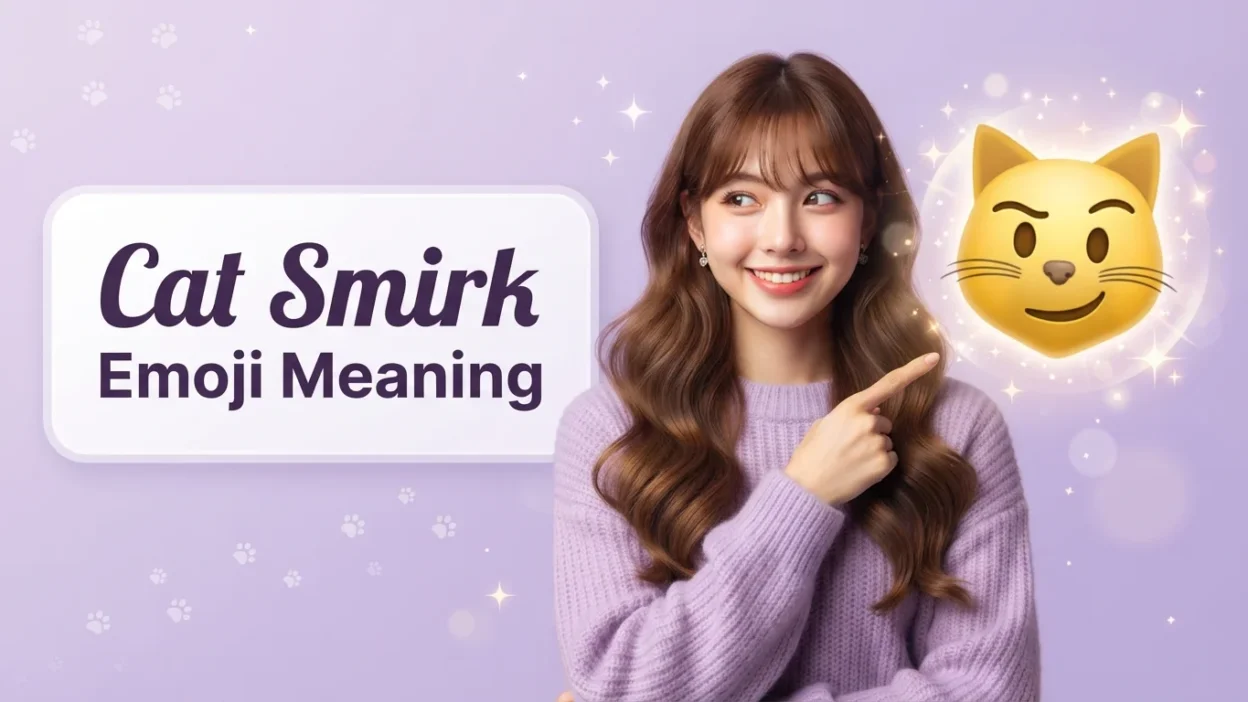
The 😼 emoji is officially known as the Cat with Wry Smile emoji. It features a cat face with narrowed eyes and a sly, sideways grin. People often use it to express smugness, mischief, playful confidence, or a sense of satisfaction after doing something clever.
Quick Answer
The cat smirk emoji 😼 usually means a sly, smug, mischievous, ironic, or playful attitude. It can suggest “I know something,” “I’m being cheeky,” “I got you,” or “I’m teasing you.” In some conversations, it can also suggest flirtation, but the exact meaning depends on context.
What Does “cat smirk emoji meaning” Mean?
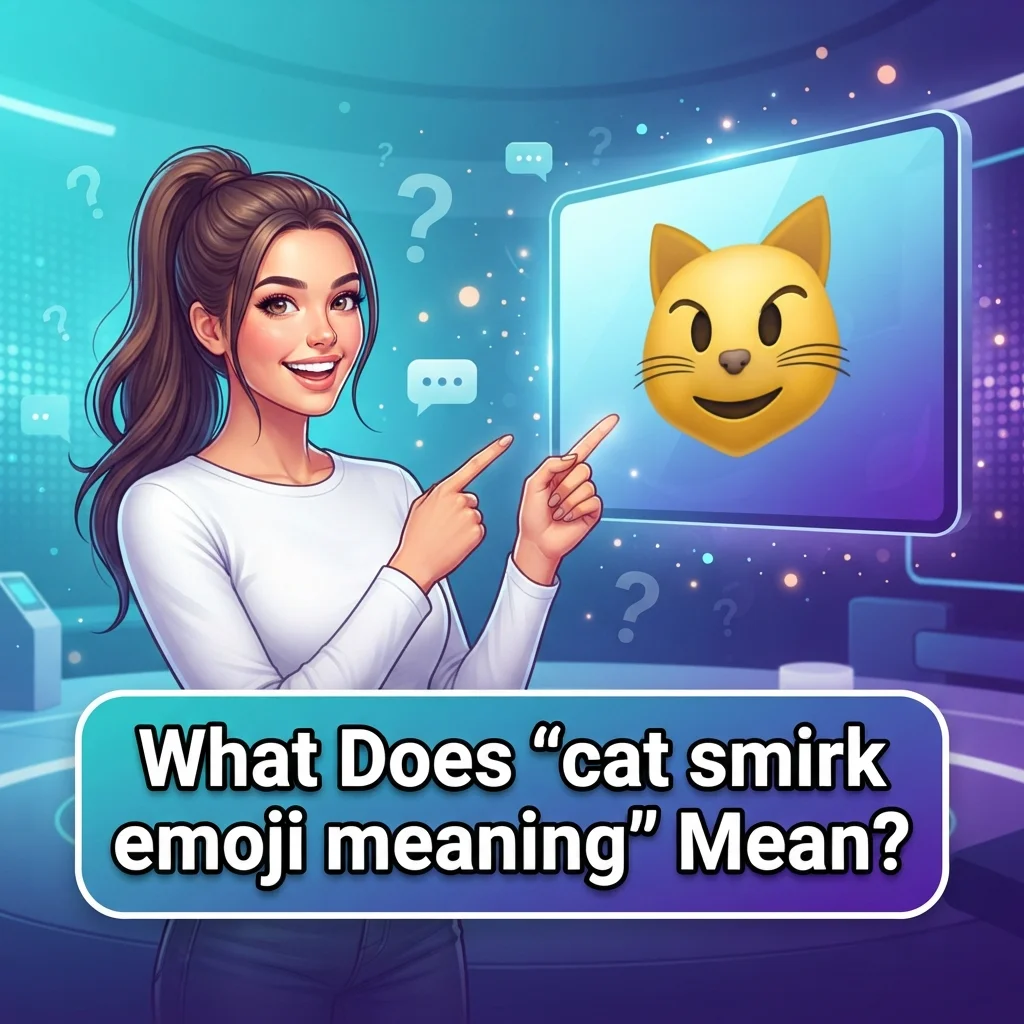
The cat smirk emoji 😼 represents a cat face with a wry smile. A wry smile is a crooked or slightly unusual smile that can suggest irony, amusement, confidence, or hidden meaning.
Unicode officially calls 😼 Cat with Wry Smile, while Unicode’s emoji annotations connect it with ironic, smile, and wry.
In simple English, 😼 often says:
“I’m being a little sly, cheeky, or smug.”
For example:
“I knew you would say that 😼”
Here, 😼 makes the message feel playful and knowing. The sender may be teasing the other person because they expected their reaction.
The most common meaning of 😼
The emoji can communicate several closely related feelings:
- Smugness , “I knew I was right.”
- Mischief , “I’m up to something.”
- Playfulness , “I’m just teasing you.”
- Irony , “I don’t mean this completely seriously.”
- Confidence , “I know what I’m doing.”
- Cheekiness , “I’m being a little naughty or bold.”
- Flirtation , “There may be a playful romantic meaning here.”
It does not automatically mean love or flirting. The surrounding message is important.
For example:
“I finished the work before you 😼”
This probably expresses playful bragging.
But:
“Come over later 😼”
This could sound more suggestive or flirtatious depending on the relationship.
Meaning in Different Contexts
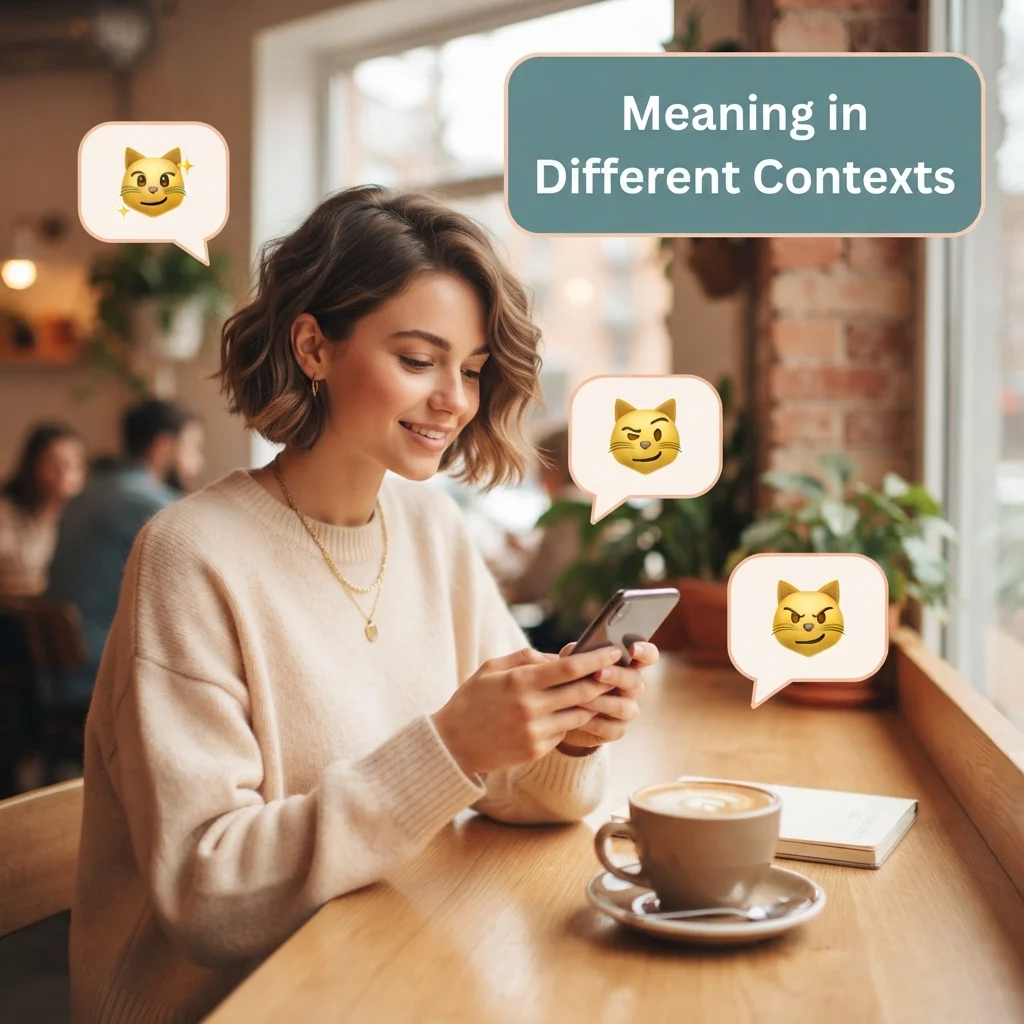
The cat smirk emoji meaning can change based on the platform and the conversation. The emoji itself does not contain one fixed sentence. Instead, it adds emotional tone to the words around it.
Everyday Conversation
In everyday conversation, 😼 often adds a cheeky or mischievous tone.
Someone might say:
“I ate the last slice of pizza 😼”
The emoji makes the statement sound playful rather than serious.
It can also show that someone feels slightly proud of something.
“Guess who finished first 😼”
Here, the sender is probably teasing or lightly bragging.
Text Messages
In texting, 😼 often works like a facial expression that would be difficult to communicate with words alone.
For example:
“Oh, so you finally admit I was right 😼”
The emoji gives the sentence a smug but playful feeling.
Without the emoji, the same sentence could sound more serious or argumentative.
Social Media
On social media, people may use 😼 in comments, captions, replies, or memes.
For example:
“You thought I wouldn’t notice 😼”
It can suggest that the person noticed something and is playfully calling it out.
It is also common when someone wants to make a humorous statement sound more confident or mischievous.
On WhatsApp, 😼 is commonly used in personal conversations when someone is joking, teasing, or acting confident.
For example:
“I have a surprise for you 😼”
This could mean the sender has something playful or unexpected planned.
However, it does not tell you exactly what the surprise is. You need to consider the relationship and previous messages.
Snapchat
On Snapchat, 😼 can have the normal conversational meaning of being sly, cheeky, or playful.
Do not confuse this with Snapchat’s special friend-status emojis. Platform-specific emoji systems can have meanings that differ from the ordinary meaning of an emoji used inside a message.
On Instagram, 😼 may appear in comments, DMs, captions, or replies.
A comment such as:
“Looking good 😼”
could be playful or flirtatious.
On the other hand:
“You really posted that 😼”
may sound teasing or sarcastic.
TikTok
TikTok users may use 😼 in comments or captions to add a mischievous tone to jokes and reactions.
For example:
“Nobody was supposed to see this 😼”
The emoji suggests that the person knows they are being a little cheeky.
Gaming
In gaming chats, 😼 can express confidence, playful trash talk, or satisfaction.
For example:
“You fell for it 😼”
This can mean:
“I tricked you, and I find that funny.”
It usually works better between friends or players who understand that the comment is playful.
Professional Communication
Be careful with 😼 at work.
The emoji can sound smug, sarcastic, mischievous, or flirtatious, depending on the message. Those meanings can create confusion in professional conversations.
For example, this may sound inappropriate in a formal workplace chat:
“I knew you would make that mistake 😼”
A simple smile or neutral wording would usually be clearer.
Internet Slang
😼 is not exactly an abbreviation or slang word. Instead, it is a visual tone marker.
It can make a normal sentence sound:
- cheeky
- ironic
- smug
- playful
- teasing
- slightly suggestive
That is why its meaning can be difficult to translate into one word.
Examples of “cat smirk emoji meaning”
Seeing real examples makes the cat smirk emoji meaning much easier to understand.
Example 1: Playful Teasing
Sentence:
“Of course you forgot again 😼”
Meaning:
The sender is teasing the other person.
Situation:
Two friends are joking about one person repeatedly forgetting something.
The emoji makes the sentence feel less formal and more cheeky.
Example 2: Smug Confidence
Sentence:
“I told you I would win 😼”
Meaning:
The sender feels pleased because they were correct.
Situation:
Two friends made a prediction or competed in a game.
Here, 😼 adds a little “I told you so” attitude.
Example 3: Mischief
Sentence:
“I may have changed your wallpaper 😼”
Meaning:
The person admits to doing something mischievous.
Situation:
A friend secretly changes another friend’s phone wallpaper as a joke.
The emoji signals that the action was playful.
Example 4: Knowing Something
Sentence:
“I know what you did last night 😼”
Meaning:
The sender is suggesting that they know a secret or funny detail.
Situation:
Friends are teasing each other.
Depending on the context, this could be completely harmless or slightly suggestive.
Example 5: Flirty Teasing
Sentence:
“Maybe I missed you a little 😼”
Meaning:
The person may be expressing affection with a playful or flirtatious attitude.
Situation:
Two people who are romantically interested in each other are chatting.
The emoji makes the statement feel more teasing than a straightforward declaration of affection.
Example 6: Sarcasm
Sentence:
“Wow, what a brilliant idea 😼”
Meaning:
The sender may not literally believe it is brilliant.
Situation:
A friend suggests something obviously silly.
The emoji can reinforce the sarcastic tone.
Example 7: Playful Bragging
Sentence:
“Looks like I got there first 😼”
Meaning:
The sender is proudly teasing someone who arrived later.
Situation:
Friends are meeting somewhere.
When Do People Use “cat smirk emoji meaning”?
People generally use 😼 when they want to add attitude to a message.
A plain sentence gives you information. An emoji can tell you how the person wants that information to sound.
For example:
“I knew it.”
This sounds neutral.
“I knew it 😼”
Now it sounds more confident, smug, or playful.
When someone is teasing
😼 works well when the sender wants to tease someone without sounding completely serious.
“You really thought I wouldn’t notice 😼”
When someone is being mischievous
It can suggest that the sender has done something cheeky.
“I ate your cookies 😼”
When someone feels confident
The emoji can show satisfaction after being proven correct.
“Told you that would happen 😼”
When someone is joking
😼 can signal that a sentence should not be interpreted too literally.
When someone is flirting
The emoji can sometimes make a message more playful or suggestive.
However, 😼 does not automatically mean romantic interest.
That distinction matters.
If someone sends:
“You are funny 😼”
it might be flirting, teasing, or simply playful conversation.
You need to consider the person’s usual communication style and the rest of the conversation.
Appropriate situations
😼 can be appropriate in:
- Friendly conversations
- Casual texting
- Jokes
- Memes
- Gaming chats
- Playful social media comments
- Light teasing
- Flirty conversations between consenting adults
Situations where caution is useful
Think twice before using 😼 in:
- Job applications
- Formal emails
- Academic communication
- Customer service messages
- Serious complaints
- Professional conversations with people you do not know well
The emoji can accidentally make a message sound sarcastic or suggestive.
Different Meanings of “cat smirk emoji”
The 😼 emoji has several common interpretations. These meanings overlap, but context helps you identify the intended tone.
😼 Meaning: Smugness
Definition:
Feeling pleased with yourself, especially because you were correct or successful.
Context:
Someone wins an argument, game, or prediction.
Example:
“I told you I was right 😼”
The sender is probably enjoying the fact that they were correct.
😼 Meaning: Mischief
Definition:
Showing that you are doing or planning something playful or slightly naughty.
Context:
A prank, surprise, joke, or secret.
Example:
“I have a little surprise for you 😼”
The sender may be hinting that something unexpected is coming.
😼 Meaning: Playful Teasing
Definition:
Making fun of someone in a lighthearted way.
Context:
Friends, partners, siblings, or people who already have a joking relationship.
Example:
“Someone is jealous 😼”
The sender may be playfully teasing the other person.
😼 Meaning: Irony
Definition:
Using a statement with a meaning that differs from its literal wording.
Context:
Sarcastic or humorous comments.
Example:
“Perfect timing 😼”
If someone arrives extremely late, the phrase may be ironic.
Unicode itself includes ironic among the keywords associated with 😼.
😼 Meaning: Flirting
Definition:
Adding a playful or suggestive tone to romantic conversation.
Context:
Two people are already flirting or have a romantic relationship.
Example:
“Maybe I was thinking about you 😼”
Here, the emoji can make the message feel more suggestive.
Still, the emoji alone is not proof that someone is flirting.
😼 Meaning: Confidence
Definition:
Showing that you feel sure about yourself or your actions.
Context:
Winning, succeeding, or making a confident statement.
Example:
“Wait until you see what I can do 😼”
What Does 😼 Mean From a Guy?
When a guy sends 😼, it can mean several things.
He might be:
- teasing you
- joking around
- acting confident
- being mischievous
- feeling smug
- flirting
- making a suggestive joke
For example:
“You looked really good today 😼”
If the conversation is already romantic, the emoji may add a flirtatious tone.
But:
“I beat you again 😼”
is more likely to be playful competition.
So, 😼 from a guy does not automatically mean he likes you. Look at his words, the relationship between you, and the broader conversation.
What Does 😼 Mean From a Girl?
When a girl sends 😼, the same basic meanings can apply.
She may be:
- teasing you
- joking
- acting playful
- showing confidence
- being mischievous
- flirting
- making an ironic comment
For example:
“You really thought I wouldn’t find out 😼”
sounds like playful teasing.
Meanwhile:
“Maybe you can convince me 😼”
could sound flirtatious depending on the conversation.
Again, the emoji itself does not establish romantic interest.
Is 😼 a Flirty Emoji?
Sometimes, but not always.
The 😼 emoji can have a flirty meaning because its sly expression may suggest confidence, teasing, or suggestiveness.
However, it has several non-romantic meanings too.
Compare these examples:
“I knew you would lose 😼”
→ playful competition
“I stole your fries 😼”
→ mischief
“You look cute today 😼”
→ possibly flirting
“Maybe I’ll tell you later 😼”
→ teasing or suggestive, depending on context
The relationship between the people matters just as much as the emoji.
Is 😼 the Same as 😏?
No. They are related, but they are not identical.
😏 is officially called Smirking Face, while 😼 is officially Cat with Wry Smile. Emojipedia describes 😼 as a cat variant of 😏.
😏 Smirking Face
😏 usually has a more human-looking expression.
It can communicate:
- smugness
- confidence
- flirtation
- suggestiveness
- mischief
- satisfaction
😼 Cat with Wry Smile
😼 communicates similar ideas but adds a cat-like, playful, mischievous feeling.
It can feel more humorous or cute than 😏.
For example:
“I know what you’re doing 😏”
can sound more directly suggestive.
“I know what you’re doing 😼”
can feel more playful, cheeky, or mischievous.
The difference is not absolute, though. Emoji meanings depend heavily on the conversation.
😼 vs 😺 vs 😸 vs 😻
Cat emojis can look similar, but their emotional tones differ.
| Emoji | Common meaning |
| 😼 | Sly, smug, mischievous, ironic |
| 😺 | Happy, friendly, cheerful |
| 😸 | Big grin, happiness, amusement |
| 😻 | Love, admiration, strong affection |
| 😽 | Kissing, affection |
| 😾 | Anger, displeasure |
| 😿 | Sadness, crying |
| 🙀 | Fear, shock, alarm |
The official Unicode list identifies 😼 as cat with wry smile, while the other cat faces have different names and keywords.
This is useful because replacing 😼 with 😻 can completely change the emotional tone.
Origin of “cat smirk emoji”
The 😼 emoji has a longer history than many people realize.
Its official Unicode code point is U+1F63C, and Unicode’s current emoji data calls it cat with wry smile.
According to Emojipedia, this cat-face emoji originated in early Japanese emoji sets. It was first added to an early Japanese emoji keyboard by au by KDDI in 2003, as part of a wider collection of cat-face expressions.
It was later standardized in Unicode 6.0 in 2010 and added to Emoji 1.0 in 2015.
That history helps explain why 😼 belongs to a larger family of expressive cat faces.
Unicode currently lists related cat-face characters including 😺, 😸, 😹, 😻, 😼, 😽, 😾, 😿, and 🙀.
The phrase “cat smirk emoji” is a common descriptive search term, but the official name is Cat with Wry Smile.
For authoritative emoji information, you can check Unicode’s emoji charts and Emojipedia’s 😼 reference.
Why Does 😼 Sometimes Feel Sarcastic?
A smirk is different from a straightforward happy smile.
A normal smile often communicates friendliness or happiness. A smirk can suggest that someone feels amused, confident, knowing, ironic, or slightly superior.
That is why 😼 can sound sarcastic.
For example:
“Nice job 😼”
Depending on what happened, this could mean:
- “You did a great job.”
- “You made a funny mistake.”
- “I’m teasing you.”
- “I’m being sarcastic.”
The words alone may not settle the meaning.
The conversation does.
Why Does 😼 Sometimes Sound Rude?
The emoji can sound rude when the message contains criticism, bragging, or mockery.
Consider:
“You finally figured it out 😼”
Between close friends, this may be harmless teasing.
From someone you barely know, it may feel condescending.
That is an important lesson about emoji communication: the same symbol can feel friendly or unfriendly depending on the relationship.
How to Understand 😼 in a Text
If someone sends you 😼 and you are unsure what they mean, look at five things.
Look at the words
Read the sentence before interpreting the emoji.
“I won again 😼” probably suggests smugness or playful bragging.
Look at the relationship
A close friend may use 😼 differently from a coworker or stranger.
Look at previous messages
If the person has been flirting, 😼 may have a flirtatious meaning.
If you have been joking about a game, it may simply mean playful confidence.
Look for other emojis
An emoji combination can provide additional clues.
For example:
😼😂
may suggest joking or playful mischief.
😼❤️
may create a more affectionate or flirtatious feeling.
These combinations are not fixed rules, though.
Consider the situation
A message after a competition may have a completely different meaning from the same message during a romantic conversation.
Similar Words and Alternatives
Several words and emojis can express ideas similar to 😼.
😏 Smirking Face
This is probably the closest emoji comparison.
Both can communicate smugness, confidence, mischief, or flirtation. However, 😏 often feels more directly human and sometimes more suggestive.
😉 Winking Face
😉 usually suggests a joke, playful meaning, flirtation, or “I’m not being completely serious.”
It can be friendlier and less smug than 😼.
😎 Smiling Face With Sunglasses
😎 often communicates confidence, coolness, or satisfaction.
It generally lacks the sly feeling associated with 😼.
😺 Grinning Cat
😺 is usually more openly happy and friendly.
It does not normally carry the same smug or ironic tone.
“Just kidding”
This phrase can clarify that you are joking.
For example:
“I stole your seat. Just kidding!”
is clearer than relying only on an emoji.
“I’m teasing”
This directly tells the reader that you are joking around.
“I know something”
This phrase captures one common feeling behind 😼, especially when someone is acting mysterious.
“I told you so”
This captures the smug or satisfied side of 😼.
Common Mistakes
Understanding the cat smirk emoji meaning becomes easier when you know what not to assume.
Mistake: Assuming 😼 always means flirting
This is one of the most common misunderstandings.
😼 can be flirtatious, but it can also mean teasing, irony, mischief, or smugness.
Better approach: Read the whole conversation before deciding that someone is flirting.
Mistake: Treating 😼 as a normal happy smile
😼 is not simply a happier version of 😺.
Its crooked or wry expression adds a different emotional layer.
Mistake: Assuming it always means something negative
The emoji can sound sarcastic or smug, but it is often used playfully.
A friend saying:
“I got you 😼”
may simply be joking.
Mistake: Using 😼 in serious professional messages
The emoji can introduce ambiguity.
For formal communication, clear words are usually safer.
Mistake: Confusing 😼 with 😏
The two emojis are related. 😼 is specifically the cat version with a wry smile, while 😏 is the standard Smirking Face.
Mistake: Trying to find one universal meaning
Emoji interpretation is not a mathematical formula.
Meaning changes with:
- context
- relationship
- culture
- platform
- surrounding words
- other emojis
Frequently Asked Questions
What does 😼 mean in texting?
In texting, 😼 usually means smug, sly, mischievous, playful, ironic, or teasing. It can also have a flirtatious meaning when the conversation is romantic.
Is 😼 a flirty emoji?
It can be. 😼 sometimes adds a playful or suggestive tone to romantic messages. However, it does not automatically indicate flirting because people also use it for jokes, teasing, mischief, and confidence.
What does 😼 mean from a guy?
From a guy, 😼 may mean he is teasing, joking, feeling confident, being mischievous, or flirting. The exact meaning depends on his message and your relationship.
What does 😼 mean from a girl?
From a girl, 😼 can similarly express playfulness, teasing, smugness, mischief, irony, or flirtation. The emoji alone cannot establish romantic interest.
What is the difference between 😼 and 😏?
😼 is the Cat with Wry Smile, while 😏 is the Smirking Face. They share several meanings, but 😼 adds a cat-like and often more playful or mischievous feeling.
What does 😼 mean from a crush?
If your crush sends 😼, it may suggest playful flirting, teasing, confidence, or a slightly suggestive joke. Look at the complete conversation instead of treating the emoji as definite proof of romantic interest.
Is 😼 rude?
Not necessarily. 😼 can be friendly and playful between people who know each other well. However, it can sound smug, sarcastic, or condescending in certain contexts, especially when paired with criticism or bragging.
Conclusion
The cat smirk emoji meaning 😼 is mainly connected with a sly, wry, mischievous, smug, ironic, or playful attitude. People use it when they want their message to sound a little cheeky rather than completely serious. It can also appear in flirting, but that meaning depends on the relationship and the surrounding conversation.
The official Unicode name is Cat with Wry Smile, and Unicode associates it with words such as ironic, smile, and wry. When you receive 😼, do not assume one fixed meaning. Check the words, situation, relationship, and other emojis first.