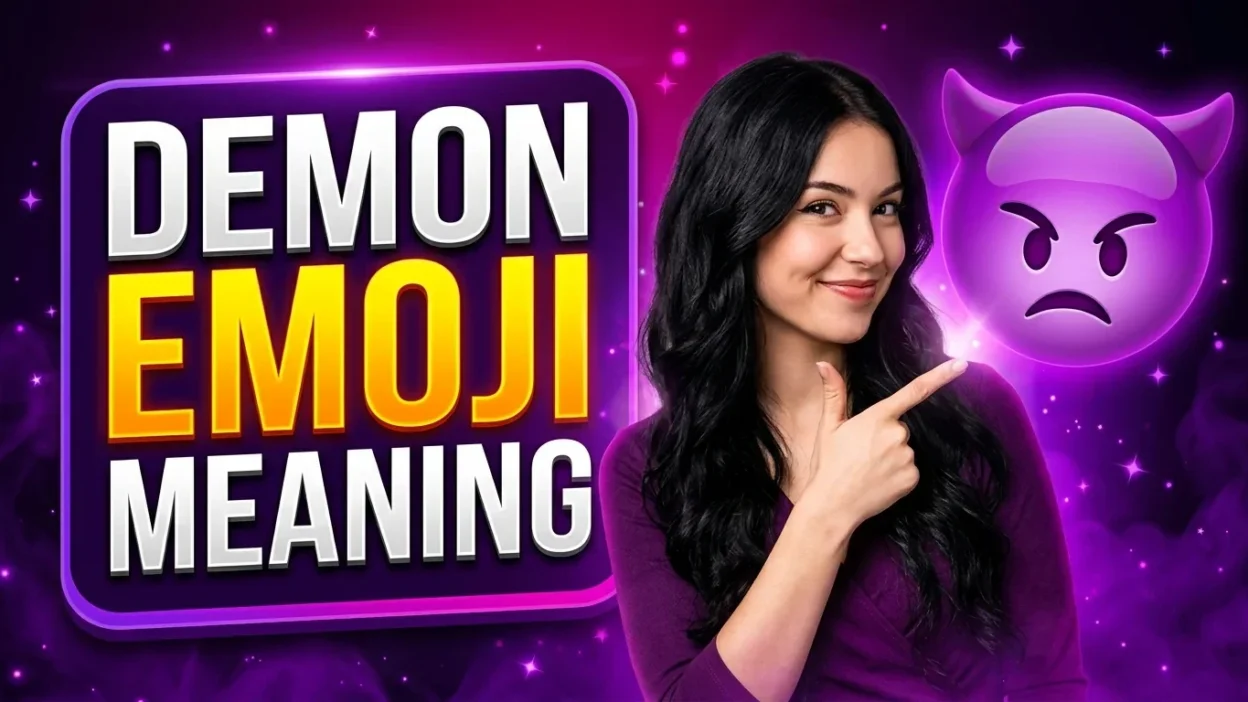
Ever received a 😈 emoji and wondered whether someone was being mischievous, flirting with you, or planning something playful? The Demon Emoji Meaning often relates to mischief, confidence, playful trouble, temptation, and a cheeky attitude.
People commonly use this emoji in text messages, Instagram comments, TikTok captions, and WhatsApp chats to add a naughty, teasing, or slightly mysterious vibe to their words.
However, the 😈 emoji does not always suggest something negative or evil. In everyday conversations, it can express playful confidence, a mischievous sense of humor, or excitement about doing something daring.
Quick Answer:
The demon emoji 😈 usually means mischief, naughtiness, teasing, playful trouble, confidence, or flirtation. Its exact meaning depends on the words around it and the relationship between the people using it.
For example:
- “I have a surprise for you 😈” = playful or mischievous
- “You look amazing 😈” = possibly flirtatious
- “Let’s break the rules 😈” = naughty or rebellious
- “I know what you did 😈” = teasing
- “Game time 😈” = confident or competitive
The emoji itself does not automatically mean romance or sexual interest. Context is the key to understanding it.
What Does “Demon Emoji Meaning” Mean?
The phrase demon emoji meaning usually refers to the meaning of the 😈 emoji, officially known as Smiling Face with Horns. It shows a purple face with horns, a mischievous smile, and an expression that often suggests playful trouble or a naughty attitude.
In everyday communication, 😈 is rarely used to talk about an actual demon. Instead, people use it as a visual way to express an attitude or emotion.
The most common meanings include:
- Mischief
- Naughtiness
- Playful trouble
- Teasing
- Flirting
- Confidence
- Rebellious behavior
- A cheeky sense of humor
- Excitement about doing something unexpected
For example, imagine your friend says:
“I have an idea 😈”
The emoji makes the sentence sound more mischievous. It can suggest that the idea is funny, secretive, slightly naughty, or unexpected.
The Literal Meaning of 😈
The literal visual idea behind 😈 comes from a horned, smiling demon-like face. But in modern digital communication, people usually use it symbolically.
Someone does not necessarily believe in demons or anything supernatural when they send 😈. Instead, the horns can represent a naughty or mischievous personality.
This is similar to using a wink 😉. The emoji adds emotional information that plain text might not communicate.
Compare:
“I know your secret.”
This can sound serious.
“I know your secret 😈”
Now it sounds more teasing, playful, or mischievous.
That small emoji can completely change the feeling of the sentence.
Demon Emoji Meaning in Different Contexts
The meaning of 😈 can change depending on where and how someone uses it. A message between close friends may have a very different meaning from a message between romantic partners.
Demon Emoji in Everyday Conversation
In everyday conversation, 😈 often shows that someone is being playful, cheeky, or mischievous.
For example:
“I ate the last slice of pizza 😈”
The sender is probably joking about doing something slightly naughty.
Another example is:
“Guess who is skipping the boring meeting today 😈”
Here, the emoji adds a rebellious and humorous tone.
In friendly conversations, it usually does not have a serious meaning.
Demon Emoji in Text Messages
In texting, 😈 is often used to add personality to a short message.
Text messages can sometimes sound cold because they do not contain facial expressions or voice tone. Emojis help fill that gap.
For example:
“You better watch out 😈”
This could be a playful warning rather than a genuine threat.
Similarly:
“Just wait until you see what I bought 😈”
The emoji creates a sense of mystery and playful excitement.
Demon Emoji on Social Media
On social media, 😈 can be used in captions, comments, replies, and private messages.
People may use it to show:
- A confident mood
- A rebellious attitude
- A funny secret
- A playful personality
- A bold fashion choice
- A teasing comment
- A mischievous action
For example, someone might post a picture with the caption:
“Feeling a little dangerous today 😈”
The message is usually playful rather than literal.
Demon Emoji Meaning on WhatsApp
On WhatsApp, 😈 can have many meanings because people use the app for both casual and personal conversations.
A friend might send:
“I have a plan for tonight 😈”
This could mean they are planning something fun.
A romantic partner might send:
“Wait until I see you 😈”
In that context, the emoji may have a stronger flirtatious meaning.
Therefore, the relationship between the sender and receiver matters.
Demon Emoji on Snapchat
Snapchat conversations often use emojis to make messages more expressive. On Snapchat, 😈 can indicate a playful or cheeky mood.
For example:
“You actually believed me? 😈”
This suggests the person was joking or teasing.
It can also appear in snaps where someone wants to create a bold, funny, or slightly rebellious vibe.
Demon Emoji on Instagram
On Instagram, 😈 can appear in comments, captions, DMs, and reactions.
For example:
“Okay, that outfit 😈”
Depending on the relationship, this could be a playful compliment or a flirtatious comment.
Someone might also write:
“New look unlocked 😈”
Here, the emoji can represent confidence and a bold attitude.
Demon Emoji on TikTok
TikTok users often use 😈 in captions and comments to make content feel funny, bold, mischievous, or slightly rebellious.
For example:
“I probably shouldn’t have done this 😈”
The emoji suggests that the person knows their action is a little naughty or unexpected.
The meaning can also depend on the type of video. A comedy video may use 😈 simply for humor, while a relationship video may use it to suggest flirting.
Demon Emoji in Gaming
In gaming communities, 😈 can represent a competitive, confident, or mischievous mood.
For example:
“You’re not ready for the next round 😈”
Here, the emoji can make the message sound confident and playful.
A gamer might also use it after winning:
“Too easy 😈”
This can communicate confidence, teasing, or friendly trash talk.
Demon Emoji in Professional Communication
The 😈 emoji is generally less suitable for formal professional communication.
For example, using it in a message to a close coworker may be acceptable if your workplace culture is casual. However, it may create confusion in a formal email or business conversation.
Instead of:
“I’ll take care of the problem 😈”
a professional message would normally be clearer without the emoji.
The meaning of emojis depends heavily on the relationship and setting, so professional communication requires extra care.
Demon Emoji as Internet Slang
The demon emoji is not exactly a slang word. It is a visual symbol that often works like internet slang.
Online users may use 😈 to communicate an attitude such as:
- “I’m being naughty.”
- “I’m up to something.”
- “I’m teasing you.”
- “I’m feeling bold.”
- “I’m feeling mischievous.”
- “I know exactly what I’m doing.”
The emoji lets users communicate these ideas without writing a full explanation.
Examples of Demon Emoji Meaning
Here are some realistic examples showing how the meaning of 😈 can change with the situation.
Example 1: “I have a surprise for you 😈”
Meaning: Playful mystery or mischief.
Situation: A friend has planned a surprise and wants to make the message sound exciting.
The emoji suggests that the surprise may be funny, unexpected, or slightly naughty.
Example 2: “I ate your chocolate 😈”
Meaning: Playful wrongdoing.
Situation: Someone has taken something belonging to a friend and is joking about it.
The emoji makes the message sound less serious and more teasing.
Example 3: “You look really good today 😈”
Meaning: Possible flirtation.
Situation: Someone compliments another person while adding a cheeky tone.
Here, 😈 can make the compliment feel more bold or flirtatious than a normal compliment.
Example 4: “Let’s do something inexplicable tonight 😈”
Meaning: Excitement and mischief.
Situation: Friends are planning a fun activity.
The emoji suggests that the plan might be spontaneous, unusual, or slightly rebellious.
Example 5: “I know your secret 😈”
Meaning: Teasing or playful confidence.
Situation: Someone knows something embarrassing or funny about their friend.
The emoji signals that the person is probably teasing rather than making a serious accusation.
Example 6: “You better be ready 😈”
Meaning: Playful challenge or confidence.
Situation: Two friends are competing in a game or joking around.
The emoji adds a competitive and mischievous tone.
Example 7: “Guess who is coming over 😈”
Meaning: Excitement, mystery, or possible flirtation.
Situation: The exact meaning depends on the relationship.
Between friends, it could simply be a surprise. Between romantic partners, it could have a flirtatious meaning.
When Do People Use the Demon Emoji?
People generally use 😈 when ordinary words do not fully express the tone they want.
To Show Mischief
One of the most common uses is showing that someone has done or plans to do something mischievous.
“I changed your phone wallpaper 😈”
The emoji makes the action sound like a harmless prank.
To Tease Someone
😈 can also signal playful teasing.
“I know you like them 😈”
This suggests the sender is teasing the other person about their feelings.
To Sound Flirtatious
In romantic or dating conversations, 😈 may suggest attraction or flirtation.
“You look dangerous tonight 😈”
The exact meaning depends on the relationship and surrounding conversation.
To Show Confidence
Some people use 😈 after making a bold statement.
“I’m winning this time 😈”
The emoji adds a confident, competitive feeling.
To Show a Rebellious Mood
The emoji can also suggest breaking a small rule or doing something unexpected.
“No homework tonight 😈”
This is usually humorous rather than genuinely rebellious.
Different Meanings of Demon Emoji
The demon emoji does not have one universal interpretation. Here are its most common meanings.
1. Mischief
Definition: Doing something playful, secretive, or slightly troublesome.
Context: Friends, jokes, pranks, and casual conversations.
Example:
“I moved your chair 😈”
The sender is joking about a harmless prank.
2. Naughtiness
Definition: Showing that someone has done or plans to do something a little naughty.
Context: Casual or playful conversations.
Example:
“I ate the whole cake 😈”
The emoji suggests playful guilt.
3. Flirting
Definition: Adding a cheeky or suggestive tone to a message.
Context: Dating, romantic relationships, or conversations where flirting is already happening.
Example:
“You know exactly what you’re doing 😈”
The emoji can make the message sound more flirtatious.
However, one emoji alone does not prove that someone is romantically interested.
4. Teasing
Definition: Playfully making fun of or challenging someone.
Context: Friends, couples, siblings, and online conversations.
Example:
“You really thought I wouldn’t notice? 😈”
The emoji adds a teasing attitude.
5. Confidence
Definition: Showing that you feel bold, powerful, or ready for a challenge.
Context: Gaming, sports, competition, social media, and casual conversations.
Example:
“Round two? I’m ready 😈”
Here, the emoji communicates confidence.
6. Rebellion
Definition: Showing a playful desire to break a minor rule or do something unexpected.
Context: Jokes, memes, and casual conversations.
Example:
“I’m staying up all night 😈”
The emoji makes the decision sound mischievous.
Demon Emoji Meaning From a Guy
When a guy sends 😈, the meaning depends on the conversation.
It can mean that he is:
- Being playful
- Teasing you
- Making a joke
- Acting confident
- Flirting
- Hinting at something mischievous
For example:
“You looked amazing today 😈”
This may have a flirtatious tone.
But:
“I beat you again 😈”
is more likely to be competitive or teasing.
The safest way to understand the message is to look at the words, previous messages, relationship, and overall tone rather than assuming that 😈 automatically means attraction.
Demon Emoji Meaning From a Girl
A girl may use 😈 for many of the same reasons.
She might use it to:
- Tease someone
- Joke around
- Show confidence
- Flirt
- Express mischief
- Add humor to a message
- Suggest a bold idea
For example:
“Don’t blame me if this gets inexplicable 😈”
could simply mean that she is excited about a fun plan.
In a romantic conversation, the same emoji could carry a more flirtatious meaning.
Again, the emoji alone cannot tell you exactly what someone feels.
Demon Emoji Meaning From a Girl to a Guy
When a girl sends 😈 to a guy, it can sometimes create a playful or flirtatious tone.
For example:
“Maybe I’ll tell you later 😈”
This can suggest teasing or mystery.
However, it does not automatically mean she wants a romantic relationship. People use emojis differently, and some people use 😈 frequently with friends.
Look at the entire conversation rather than interpreting one symbol in isolation.
Demon Emoji Meaning From a Guy to a Girl
A guy may send 😈 to a girl when he is teasing, flirting, joking, or trying to sound confident.
For example:
“You think you can beat me? 😈”
This sounds more competitive than romantic.
But:
“You looked beautiful tonight 😈”
could have a flirtatious tone.
The surrounding words provide the strongest clue.
😈 vs 👿: What Is the Difference?
People often confuse 😈 and 👿 because both have horns.
However, their expressions are different.
😈 Smiling Face with Horns generally represents:
- Mischief
- Naughtiness
- Playfulness
- Teasing
- Flirting
- Confidence
👿 Angry Face with Horns generally represents:
- Anger
- Frustration
- Irritation
- Annoyance
- Aggression
- Serious displeasure
For example:
“I have a plan 😈”
sounds playful.
But:
“I’m really angry right now 👿”
clearly communicates anger.
The smile on 😈 makes it much more playful than 👿.
Demon Emoji vs Devil Emoji
The words “demon emoji” and “devil emoji” are often used interchangeably in everyday searches, especially when people are looking for 😈.
The Unicode name for 😈 is Smiling Face with Horns, while people commonly describe it as a devil or demon face.
This distinction matters because the visual symbol is more important in casual texting than the exact vocabulary people use to describe it.
If someone searches for “devil emoji meaning,” “demon emoji meaning,” or “smiling face with horns meaning,” they may be referring to the same 😈 emoji.
Origin of the Demon Emoji
The modern 😈 emoji developed as part of the broader growth of emoji-based digital communication.
Emoji themselves became widely popular through Japanese mobile communication before spreading around the world. Standardized emoji characters were later incorporated into Unicode, allowing the same basic symbols to be represented across different digital systems.
The 😈 character is officially known as Smiling Face with Horns. Its design combines a smiling facial expression with devil-like horns.
The cultural idea behind the symbol is older than the emoji itself. Horned supernatural figures and devil-like imagery have appeared in many cultures, religions, stories, art forms, and forms of popular entertainment.
However, modern emoji users generally use 😈 in a much lighter way. It often represents playful mischief rather than literal evil.
There is no single internet event that created the modern meaning of 😈. Instead, its meaning developed through common digital communication, where users began using facial symbols to express emotions and tones that are difficult to communicate through plain text.
Why Does 😈 Sometimes Mean Flirting?
The connection between 😈 and flirting comes from the emoji’s combination of a smile, horns, and mischievous expression.
Flirting often involves playful teasing, confidence, mystery, and suggestive humor. Because 😈 visually communicates a cheeky attitude, people sometimes use it in romantic conversations.
For example:
“You know how to get my attention 😈”
This may sound flirtatious.
But:
“I hid your snacks 😈”
is probably just playful.
The same emoji can therefore have completely different meanings.
A useful rule is:
Do not interpret 😈 by itself. Read the entire message.
Similar Emojis and Alternatives
Several emojis can communicate ideas that overlap with 😈.
😉 Winking Face
😉 often means:
- Teasing
- Playfulness
- A joke
- Flirting
- Hidden meaning
It is generally softer than 😈.
😏 Smirking Face
😏 can suggest:
- Confidence
- Self-satisfaction
- Flirting
- Suggestiveness
- A knowing attitude
It can sometimes have a similar tone to 😈.
👿 Angry Face with Horns
👿 is more strongly associated with anger and frustration.
It is not normally a substitute for 😈.
😎 Smiling Face with Sunglasses
😎 usually communicates:
- Confidence
- Coolness
- Relaxation
- Success
It is less mischievous than 😈.
😜 Winking Face with Tongue
😜 can mean:
- Joking
- Being silly
- Teasing
- Playful behavior
It usually feels more goofy than 😈.
Common Mistakes When Interpreting the Demon Emoji
Understanding emoji requires more than looking up a single dictionary definition.
Mistake 1: Assuming 😈 Always Means Flirting
This is one of the biggest misunderstandings.
The emoji can be flirtatious, but it can also simply mean mischief or joking.
For example:
“I ate the last cookie 😈”
is unlikely to be romantic.
Mistake 2: Thinking 😈 Means Evil
The emoji has a devil-like appearance, but modern users often use it casually.
Someone sending 😈 is usually not saying that they are literally evil.
Mistake 3: Confusing 😈 With 👿
The two emojis look similar because both have horns.
However, 😈 is usually playful, while 👿 is more strongly associated with anger.
Mistake 4: Ignoring the Words Around the Emoji
The text surrounding an emoji often provides the strongest clue.
Compare:
“You better prepare yourself 😈”
with:
“I miss you 😈”
The second sentence may be more romantic depending on the conversation.
Mistake 5: Assuming Gender Changes the Meaning
A guy and a girl can use 😈 in exactly the same way.
Gender alone does not determine what the emoji means.
The relationship and context are more useful clues.
Mistake 6: Treating Every Emoji as Having One Fixed Meaning
Emoji meanings are flexible.
People also develop personal habits. Someone might use 😈 simply because they like the emoji.
Therefore, avoid making a strong conclusion from one symbol.
How to Understand 😈 in a Text Conversation
If you receive 😈 and are unsure what the sender means, follow these steps.
Look at the Sentence
Read the words before and after the emoji.
The sentence often explains the intended tone.
Consider Your Relationship
Ask whether the sender is:
- A close friend
- A family member
- A coworker
- A romantic partner
- Someone you are dating
- Someone you barely know
The same emoji can mean different things in each situation.
Check Previous Messages
If the conversation has already been playful or flirtatious, 😈 may continue that tone.
If the conversation has been about a game or joke, it may simply be playful.
Look for Other Emojis
A combination such as 😈😉 may create a more teasing tone.
A combination such as 😈😂 may make the message feel more humorous.
Still, emoji combinations should be interpreted within the full conversation.
Avoid Overthinking One Emoji
Sometimes 😈 simply means:
“I’m being mischievous.”
It does not always contain a hidden message.
Is the Demon Emoji Flirty?
Yes, 😈 can be flirty, but it is not always flirty.
It becomes more likely to have a flirtatious meaning when the surrounding message involves:
- Romantic compliments
- Dating
- Attraction
- Playful teasing
- Private conversations
- Suggestive jokes
- A romantic partner
For example:
“You looked amazing tonight 😈”
has a stronger chance of being flirtatious than:
“I stole your fries 😈”
The context makes the difference.
Is 😈 a Bad Emoji?
No. The demon emoji is not inherently bad.
Its meaning is usually playful, mischievous, cheeky, or teasing. In some conversations, it can be inappropriate if the tone becomes overly suggestive, especially in professional or unfamiliar settings.
The emoji itself is neutral. The context determines whether its use is appropriate.
Can 😈 Mean “I’m Naughty”?
Yes.
This is one of the most common interpretations.
When someone writes:
“I shouldn’t have done that 😈”
the emoji can suggest playful guilt or naughtiness.
It can communicate the idea of:
“I know I did something a little naughty, and I’m enjoying the joke.”
Can 😈 Mean “I’m Up to Something”?
Yes.
The emoji is often used when someone wants to create a sense of mystery.
For example:
“Wait until you see what I have planned 😈”
This suggests that something unexpected or mischievous is coming.
Can 😈 Mean “I Am Teasing You”?
Yes.
For example:
“You really thought I forgot? 😈”
The emoji signals that the sender may be teasing the receiver.
It can make a potentially serious sentence feel playful.
Is 😈 Appropriate in Professional Messages?
Usually, you should be careful.
Professional communication works best when the intended meaning is clear. Because 😈 can sometimes sound flirtatious, naughty, or suggestive, it may be misunderstood by coworkers, clients, customers, or managers.
If you have a very casual workplace relationship, the emoji may occasionally be acceptable. However, formal emails, business proposals, job applications, and official communications generally do not need it.
Frequently Asked Questions
What does the demon emoji 😈 mean?
The demon emoji 😈, officially called Smiling Face with Horns, commonly represents mischief, naughtiness, teasing, confidence, playful trouble, or flirtation. Its exact meaning depends on context.
Is 😈 a flirty emoji?
It can be. In romantic or dating conversations, 😈 may add a playful, cheeky, or suggestive tone. However, it can also simply represent humor or mischief.
What does 😈 mean from a guy?
A guy may use 😈 to tease, flirt, joke, show confidence, or suggest that he is planning something mischievous. The surrounding conversation is more important than the emoji alone.
What does 😈 mean from a girl?
A girl may use 😈 to express playfulness, teasing, confidence, mischief, or flirtation. It does not automatically indicate romantic interest.
What is the difference between 😈 and 👿?
😈 usually represents playful mischief, naughtiness, teasing, or flirtation. 👿 generally represents anger, frustration, annoyance, or aggression.
Does 😈 mean evil?
Not usually. Although the emoji has a devil-like appearance, people commonly use it in a lighthearted way to show mischief, playfulness, or a cheeky mood.
What does 😈 mean in texting?
In texting, 😈 can mean “I’m being mischievous,” “I’m teasing you,” “I’m feeling naughty,” “I have a plan,” or “I’m being flirtatious.” The exact meaning depends on the message and relationship.
Conclusion
The demon emoji meaning is mainly connected with mischief, naughtiness, teasing, confidence, playful trouble, and sometimes flirting. The 😈 emoji is officially known as Smiling Face with Horns, but people often call it the demon or devil emoji because of its horned appearance.
Its meaning is flexible. A friend might use 😈 after a harmless prank, while a romantic partner might use it to create a flirtatious tone. On social media, it can show confidence or a rebellious mood. In gaming, it can represent competitive energy or playful trash talk.