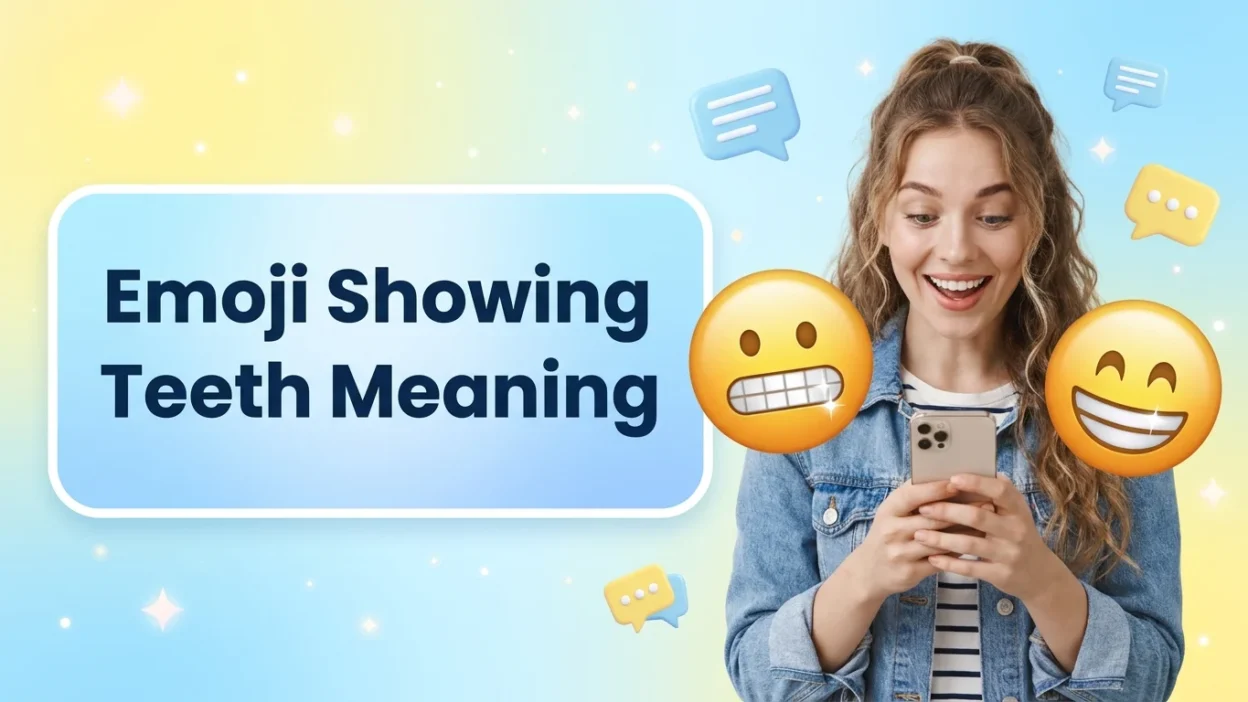
Have you ever smiled through an awkward moment, even when you felt uncomfortable inside? The 😬 emoji perfectly captures that feeling. The emoji showing teeth meaning usually relates to awkwardness, nervousness, embarrassment, tension, or an uncomfortable reaction.
Its wide, clenched-teeth expression can show that someone feels unsure about a situation or does not know how to respond. In everyday texting, people often use 😬 when something goes wrong, a conversation becomes uncomfortable, or someone shares unexpected news.
For example, if your friend says they accidentally sent a private message to the wrong person, you might reply, “Oh no, that’s awkward 😬.” The emoji helps express sympathy, nervous laughter, or second-hand embarrassment without needing a lengthy explanation.
Quick Answer
The emoji showing teeth meaning usually expresses happiness, excitement, friendliness, amusement, or a big cheerful smile. Common teeth-showing emojis include 😀, 😃, 😄, and 😁. However, 😬 is different because its clenched teeth often suggest awkwardness, nervousness, embarrassment, or tension.
What Does “emoji showing teeth meaning” Mean?
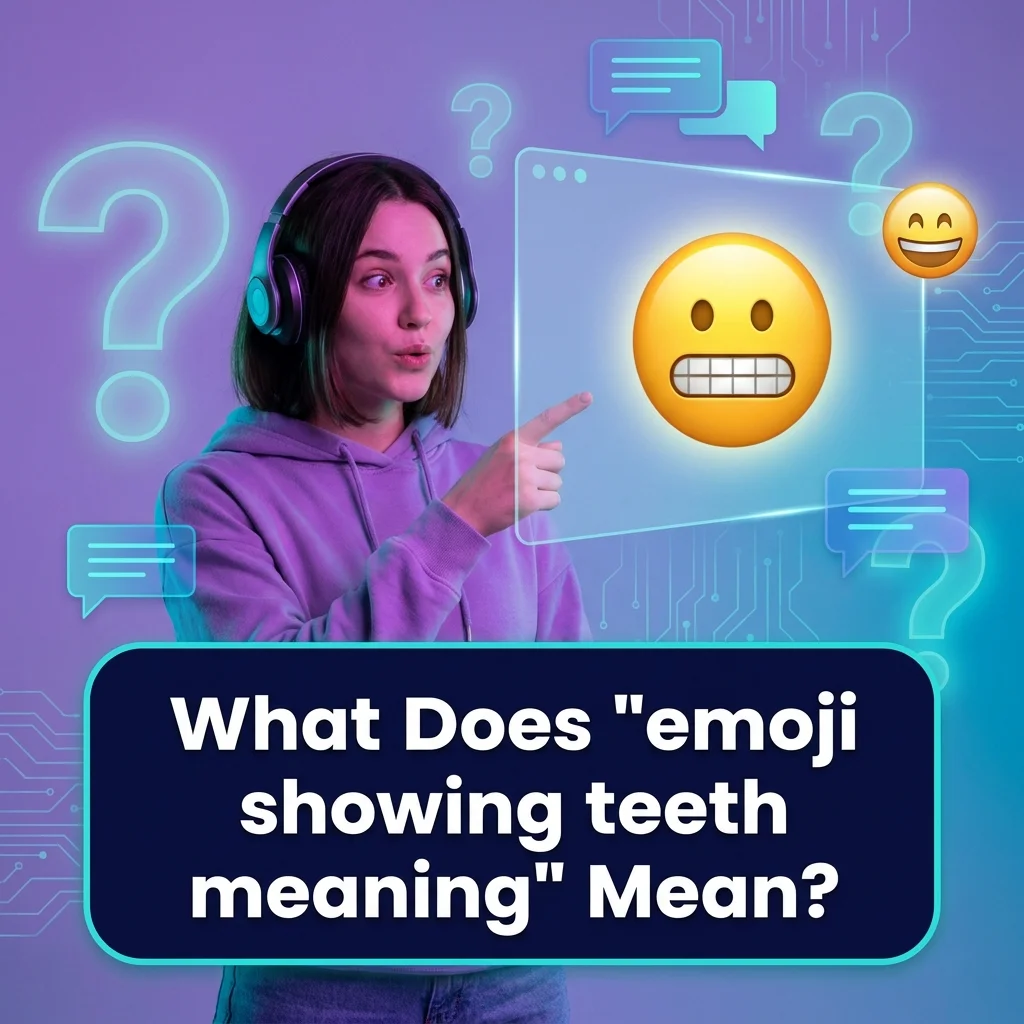
The phrase emoji showing teeth meaning generally refers to the meaning of a smiley emoji where the character’s teeth are clearly visible.
Several popular emojis fall into this category. For example, 😀 is officially called Grinning Face, while 😃 is Grinning Face with Big Eyes, 😄 is Grinning Face with Smiling Eyes, and 😁 is Beaming Face with Smiling Eyes. Unicode includes “teeth” among the keywords for some of these expressions.
In simple English, these emojis usually show that someone is smiling broadly.
The most common meaning
When someone sends a teeth-showing smiley, they may be saying:
- “I’m happy.”
- “That’s funny.”
- “I’m excited!”
- “I like this.”
- “I’m being friendly.”
- “That made me smile.”
- “I’m joking around.”
- “I’m really pleased.”
The meaning is not always romantic. A friend, family member, coworker, or stranger can use a teeth-showing emoji.
Literal meaning
Literally, the emoji shows a face with a broad smile and visible teeth. Symbolically, the teeth are part of the visual design used to communicate a stronger or more open smile.
Think of the difference between saying “Okay.” and “Okay! 😁”. The second version feels warmer and more cheerful.
Which Emojis Show Teeth?
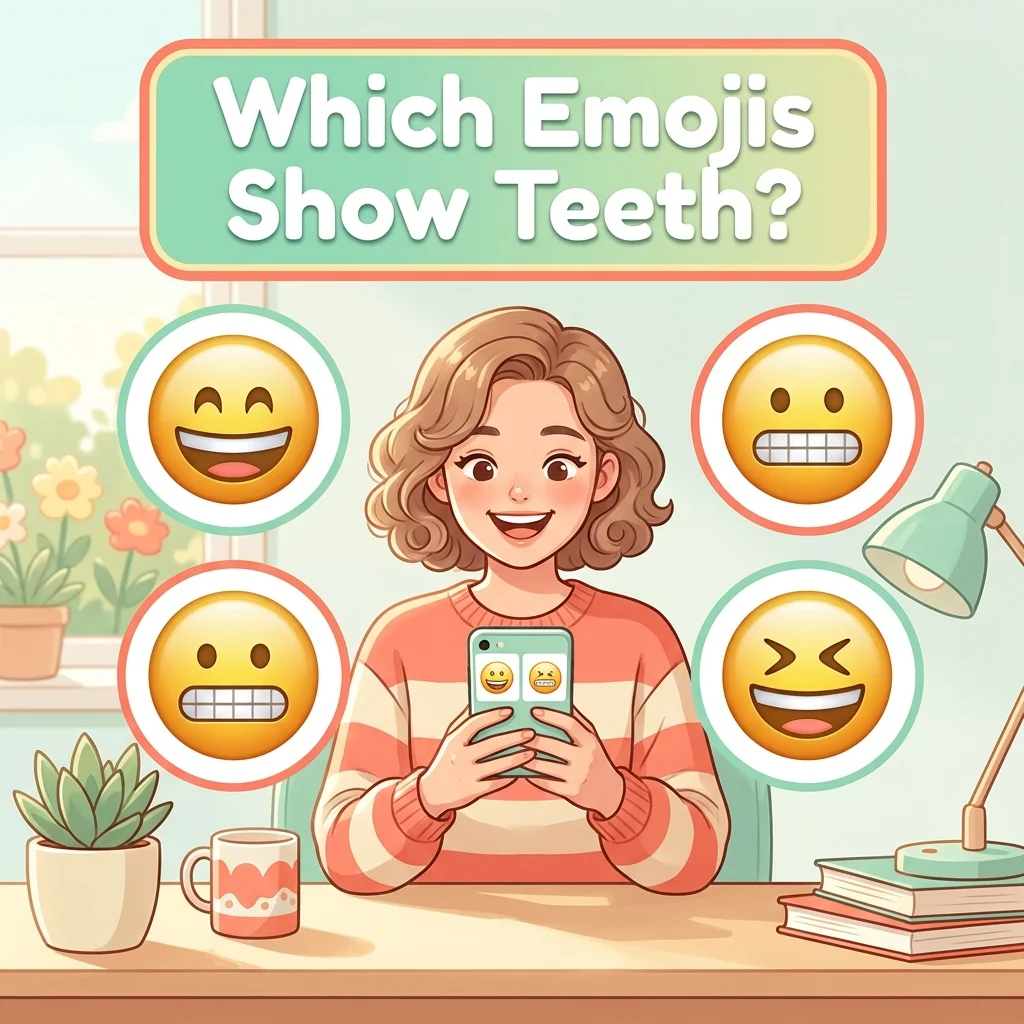
Not every smiley with an open mouth has exactly the same meaning. Here are some of the most common ones.
| Emoji | Official name | Common meaning |
| 😀 | Grinning Face | Happiness, friendliness, general cheer |
| 😃 | Grinning Face with Big Eyes | Excitement, happiness, enthusiasm |
| 😄 | Grinning Face with Smiling Eyes | Warm happiness, amusement |
| 😁 | Beaming Face with Smiling Eyes | Big happiness, pride, cheerful excitement |
| 😬 | Grimacing Face | Nervousness, awkwardness, tension |
| 😆 | Grinning Squinting Face | Strong laughter, amusement, joking |
Unicode currently identifies 😀, 😃, 😄, 😁, 😆, and 😬 as separate facial expressions.
This distinction matters because showing teeth does not automatically mean happiness. For example, 😬 also shows teeth, but its clenched-teeth expression can suggest discomfort or awkwardness.
Meaning in Different Contexts
The emoji showing teeth meaning can change depending on where and how someone uses it.
An emoji does not work like a dictionary word with one fixed definition. Its meaning develops from the surrounding message.
Everyday Conversation
In everyday conversation, a teeth-showing emoji usually makes a message feel more cheerful.
For example:
“That sounds great 😁”
The sender probably feels happy about the idea.
Another example:
“I finally finished my homework 😄”
Here, the emoji reinforces relief and happiness.
In face-to-face communication, people often use a broad smile to show positive emotion. Teeth-showing emojis imitate that visual signal in digital conversations.
Text Messages
In text messages, 😀, 😃, 😄, and 😁 can make short replies sound friendlier.
Compare:
“Thanks.”
with:
“Thanks 😄”
The second message feels warmer and more expressive.
A person may also use a teeth-showing emoji after receiving good news:
“You got the job! 😁”
In this case, the emoji communicates excitement and celebration.
Social Media
On social media, teeth-showing emojis often appear in comments, captions, and replies.
Someone might comment:
“This is so good 😁”
They are probably showing enthusiasm or approval.
A creator may also use 😄 or 😃 in a caption to make the post feel positive and energetic.
On WhatsApp, these emojis are common in casual conversations.
For example:
“See you tonight 😁”
This usually sounds friendly and positive.
A family member might send:
“Dinner is ready 😄”
The emoji adds warmth without needing extra words.
However, if someone uses 😬 instead, the emotional message can change:
“I forgot your birthday 😬”
Here, the teeth are not showing excitement. They suggest embarrassment or awkwardness.
Snapchat
On Snapchat, facial emojis can have both ordinary conversational meanings and platform-specific functions.
For example, 😁 can simply communicate a big smile in a message or caption. However, Snapchat also uses certain emojis beside contacts as part of its friend-status system. That platform-specific meaning should not be confused with the general meaning of the emoji itself.
So, always check whether the emoji appears inside a message or as a Snapchat status indicator.
On Instagram, teeth-showing emojis are frequently used in captions, comments, and direct messages.
Someone might write:
“Best day ever 😁”
The emoji reinforces happiness.
In a comment, it might simply mean:
“You look amazing 😄”
That does not automatically indicate romantic interest. It may simply be a friendly compliment.
TikTok
TikTok users often use teeth-showing emojis when reacting to funny, exciting, surprising, or relatable content.
For example:
“Why is this literally me 😭😆”
Here, 😆 contributes a laughing or amused tone.
A creator might also write:
“Part 2 is coming tomorrow 😁”
In that situation, the emoji creates excitement and positive anticipation.
Gaming
Gamers may use 😁, 😃, or 😆 after winning a match, making a joke, or teasing a friend.
For example:
“Easy win 😁”
This can communicate confidence, excitement, or playful teasing.
However, the same message could sound boastful depending on the relationship between the players. Context matters.
Professional Communication
Teeth-showing emojis can work in informal professional chats, especially when coworkers already communicate casually.
For example:
“Great work on the presentation 😄”
That can sound encouraging and friendly.
However, in a highly formal email, a simple professional sentence may be more appropriate. Emoji use depends on workplace culture, your relationship with the recipient, and the purpose of the message.
Examples of “emoji showing teeth meaning”
Here are several real-life examples that show how the same visual idea can communicate slightly different feelings.
Example 1: Simple Happiness
Sentence:
“I’m finally home 😁”
Meaning:
The person is happy or relieved to be home.
Situation:
They may have had a long day and are glad it is over.
Example 2: Excitement
Sentence:
“We’re going to the concert tomorrow 😃”
Meaning:
The sender is excited about the upcoming event.
Situation:
The emoji adds energy to an already enthusiastic message.
Example 3: Friendly Appreciation
Sentence:
“Thanks for helping me 😄”
Meaning:
The sender feels grateful and friendly.
Situation:
The emoji makes the thank-you sound warmer.
Example 4: Amusement
Sentence:
“That video was hilarious 😆”
Meaning:
The sender found something very funny.
Situation:
The emoji works as a visual form of laughter.
Example 5: Pride
Sentence:
“I passed my exam! 😁”
Meaning:
The person is extremely pleased with their achievement.
Situation:
The broad grin communicates celebration and satisfaction.
Example 6: Friendly Greeting
Sentence:
“Hey! Good to see you 😄”
Meaning:
The sender is happy to see the other person.
Situation:
The emoji makes the greeting feel more welcoming.
Example 7: Awkward Situation
Sentence:
“I accidentally sent that message to my boss 😬”
Meaning:
The sender feels embarrassed, nervous, or uncomfortable.
Situation:
This is an important example because 😬 shows teeth but does not normally mean simple happiness. Its clenched-teeth expression is commonly associated with awkward or tense feelings.
When Do People Use “emoji showing teeth meaning”?
People use teeth-showing emojis whenever they want to make a message more expressive.
To show happiness
A broad smile is an easy way to communicate positive emotion.
“I got the tickets 😁”
The sender is probably pleased.
To show excitement
A bigger smile can add energy to an announcement.
“We’re going on vacation! 😃”
To make a message friendlier
Short digital messages can sometimes sound cold. An emoji can soften the tone.
“Sure 😄”
That feels more friendly than simply:
“Sure.”
To react to something funny
😆 is particularly useful when someone wants to communicate laughter or amusement.
To celebrate
People often use 😁 after good news, achievements, victories, or exciting events.
To show playful energy
Friends may use a teeth-showing smile while teasing each other.
“You thought you were going to beat me 😁”
The emoji can make the teasing feel playful rather than serious.
Appropriate vs. inappropriate situations
These emojis usually work well in:
- Casual texts
- Friend group chats
- Family messages
- Social media comments
- Informal conversations
- Gaming chats
- Friendly congratulations
Use more care in:
- Formal business emails
- Serious complaints
- Sensitive discussions
- Professional messages to someone you do not know well
- Situations involving grief or bad news
The important point is not that teeth-showing emojis are “good” or “bad.” Their appropriateness depends on the situation.
Different Meanings of “emoji showing teeth meaning”
Because several emojis show teeth, there is no single emotional meaning.
Happiness
Definition: A cheerful or positive emotional reaction.
Context: Someone shares good news or something enjoyable.
Example:
“I got the new phone 😁”
Here, 😁 supports the person’s happiness.
Excitement
Definition: Strong positive anticipation.
Context: Upcoming events, plans, celebrations, or achievements.
Example:
“Tomorrow is the big day 😃”
The emoji makes the excitement more obvious.
Friendly warmth
Definition: A pleasant and approachable tone.
Context: Greetings, thanks, compliments, and casual conversation.
Example:
“Nice talking to you 😄”
Amusement
Definition: Finding something funny or entertaining.
Context: Jokes, memes, funny videos, and playful comments.
Example:
“That was actually hilarious 😆”
Pride or satisfaction
Definition: Feeling pleased about something you did or achieved.
Context: Success, accomplishments, or completing a difficult task.
Example:
“I finished the project 😁”
Nervousness or awkwardness
Definition: Feeling uncomfortable, embarrassed, or tense.
Context: Mistakes, embarrassing moments, uncomfortable situations, or uncertain reactions.
Example:
“I forgot everyone’s names 😬”
This meaning is especially associated with 😬 Grimacing Face, not with the cheerful grin of 😁. Emojipedia describes 😬 as a clenched-teeth expression that can convey nervousness, embarrassment, or awkwardness.
😁 Emoji Showing Teeth Meaning
The 😁 emoji showing teeth meaning is usually a big, bright, cheerful grin.
Its official Unicode name is Beaming Face with Smiling Eyes. Unicode lists keywords including beaming, grin, grinning, happy, nice, smile, smiling, and teeth.
Emojipedia describes 😁 as a full-toothed grin that can communicate radiant happiness. Depending on the conversation, it can also feel warm, silly, amused, or proud.
For example:
“I got an A on the test 😁”
This clearly suggests happiness and pride.
However, the emoji can sometimes be playful:
“I ate the last slice of pizza 😁”
Here, the grin may communicate mischievous satisfaction.
😀 Emoji Showing Teeth Meaning
😀 is officially called Grinning Face.
It shows a broad, open smile and can communicate general pleasure, good cheer, or humor. Emojipedia notes that it may show upper teeth and, on some platforms, a tongue.
Example:
“Good morning 😀”
This normally communicates a cheerful greeting.
Compared with 😁, the expression is more neutral and straightforward. It does not necessarily suggest the same intense or beaming happiness.
😃 Emoji Showing Teeth Meaning
😃 is officially called Grinning Face with Big Eyes.
It generally communicates happiness, enthusiasm, or excitement. Unicode lists keywords such as awesome, big, eyes, happy, mouth, open, smile, smiling, and teeth.
Example:
“You actually came! 😃”
The emoji can make the message feel pleasantly surprised and enthusiastic.
😄 Emoji Showing Teeth Meaning
😄 is officially called Grinning Face with Smiling Eyes.
It commonly represents happiness, amusement, and a warm smile. Emojipedia describes it as a broad, open smile showing upper teeth and notes that it can convey general happiness and good-natured amusement.
Example:
“That made my day 😄”
The smiling eyes give it a warm and friendly feeling.
😬 Emoji Showing Teeth Meaning
😬 is the important exception.
The 😬 Grimacing Face also visibly shows teeth, but the meaning is usually different from a happy grin. It can represent awkwardness, nervousness, embarrassment, tension, or discomfort.
For example:
“I accidentally replied to the wrong group 😬”
The sender is not celebrating. They are showing discomfort about their mistake.
This is why looking only at the teeth can cause confusion. The eyes and overall facial expression matter too.
Emoji Showing Teeth From a Guy
If a guy sends you a teeth-showing emoji, the meaning depends on what he says around it.
For example:
“That was fun 😁”
This most likely expresses happiness or friendly enjoyment.
If he writes:
“You look great 😄”
It may simply be a warm compliment.
If the conversation is clearly romantic, the emoji can support a playful or positive tone. However, the emoji alone is not enough evidence to conclude that someone has romantic feelings.
Context, wording, relationship, and the wider conversation provide much more information.
Emoji Showing Teeth From a Girl
The same basic principle applies when a girl sends a teeth-showing emoji.
She may use 😁 or 😄 to show:
- Happiness
- Friendship
- Excitement
- Appreciation
- Humor
- Playfulness
- Support
For example:
“You did it! 😁”
This is naturally read as encouragement and happiness.
It does not automatically indicate flirting or romantic interest.
Emoji Showing Teeth in a Flirty Text
A teeth-showing emoji can appear in flirtatious conversations, but it is not inherently a flirting emoji.
For example:
“Can’t wait to see you 😁”
Depending on the existing relationship, this could sound playful or affectionate.
However:
“Thanks for sending that 😄”
could simply be friendly.
When trying to understand a potentially flirty emoji, consider the entire conversation instead of assigning a romantic meaning to one symbol.
Emoji Showing Teeth vs. 😬
One of the easiest mistakes is confusing a happy grin with a grimace.
| Emoji | Typical feeling | Example |
| 😀 | General happiness | “Good morning 😀” |
| 😃 | Excitement | “We won! 😃” |
| 😄 | Warm happiness | “That’s great 😄” |
| 😁 | Big cheerful grin | “I passed! 😁” |
| 😆 | Strong amusement | “That’s hilarious 😆” |
| 😬 | Awkwardness or nervousness | “Oops 😬” |
The difference comes from the entire facial expression, not simply the presence of teeth.
Origin of “emoji showing teeth meaning”
There is no single historical origin for the phrase “emoji showing teeth meaning.” It is a modern descriptive search phrase used to ask what smiley faces with visible teeth communicate.
The individual emojis, however, have documented histories.
The emoji family developed from Japanese mobile-phone pictographs and later became standardized through Unicode. For example, 😄 was first added to an early Japanese emoji keyboard by SoftBank in 2000. It was later approved as part of Unicode 6.0 in 2010 and added to Emoji 1.0 in 2015.
😁 was approved as part of Unicode 6.0 in 2010 and added to Emoji 1.0 in 2015. Its official Unicode name is now Beaming Face with Smiling Eyes.
😀 followed a slightly different timeline. Emojipedia records it as being approved in Unicode 6.1 in 2012 and added to Emoji 1.0 in 2015.
Platform designs have also changed over time. For example, Apple’s earlier version of 😁 looked much more like the modern 😬 expression, which contributed to confusion about its emotional meaning.
This history explains why an emoji can look slightly different on different phones and why people may interpret older versions differently.
Why Do Teeth Change an Emoji’s Meaning?
Teeth often make a smile look wider and more expressive.
Think about a real conversation. A small closed-mouth smile may communicate quiet friendliness, while a broad toothy grin often suggests stronger happiness or excitement.
Digital emojis use similar visual signals.
However, teeth can also communicate tension. A person who feels nervous may clench their teeth while smiling awkwardly. That is why 😬 can mean something very different from 😁.
The eyes also matter. Smiling eyes usually create a warmer expression, while wide or tense eyes can change how the mouth is interpreted.
In short, mouth + eyes + context gives you a much better interpretation than the teeth alone.
Similar Words and Alternatives
If you want to describe a teeth-showing emoji in words, several expressions can work.
Grinning
Grinning means smiling broadly.
Example:
“He was grinning after hearing the news.”
This is closely related to 😀, 😃, 😄, and 😁.
Beaming
Beaming describes a very happy or proud smile.
This word fits especially well with 😁 because Unicode’s official name is Beaming Face with Smiling Eyes.
Big smile
This is a simple everyday description.
“She sent a big smile emoji.”
It is easy for beginners to understand.
Toothy grin
A toothy grin specifically emphasizes visible teeth.
“He replied with a toothy grin.”
This phrase is useful when describing the visual appearance rather than assigning a specific emotion.
Smiling face
This is a broader term. It can describe emojis that do not show teeth as well.
Happy emoji
This is a general description rather than an official emoji name.
It may refer to many positive facial emojis, so it is less precise.
Common Mistakes
Mistake: Assuming every teeth emoji means happiness
Not every emoji showing teeth communicates happiness.
😬 can represent nervousness, embarrassment, awkwardness, or tension.
Better approach: Look at the eyes and the overall expression.
Mistake: Treating 😁 and 😬 as identical
Both can display teeth, but their emotional signals are different.
Better approach: Think of 😁 as a broad cheerful grin and 😬 as a clenched or uncomfortable grin.
Mistake: Assuming a teeth emoji is romantic
A smiley does not automatically mean flirting.
Better approach: Look at the message, relationship, and conversation history.
Mistake: Ignoring platform differences
Emoji artwork can vary between Apple, Google, Samsung, Microsoft, WhatsApp, and other platforms.
An emoji’s appearance can therefore influence how a person interprets it. Historical designs can differ even more dramatically. Emojipedia specifically notes significant historical differences for some teeth-showing emojis.
Mistake: Taking one emoji too literally
People use emojis creatively.
Someone may use 😁 sarcastically, playfully, or simply because they like the emoji.
Better approach: Read the whole sentence before deciding what the emoji means.
Frequently Asked Questions
What does an emoji showing teeth mean?
An emoji showing teeth usually represents a broad smile, happiness, friendliness, amusement, excitement, or satisfaction. The exact meaning depends on the specific emoji and context.
What does 😁 mean?
😁 is officially called Beaming Face with Smiling Eyes. It commonly expresses strong happiness, a cheerful grin, amusement, warmth, or pride.
What does 😀 mean?
😀 is the Grinning Face emoji. It commonly communicates general happiness, good cheer, friendliness, or humor.
What does 😬 mean when it shows teeth?
😬 usually suggests nervousness, awkwardness, embarrassment, tension, or discomfort rather than simple happiness.
Is a teeth-showing emoji flirting?
Not necessarily. A teeth-showing emoji can be friendly, funny, excited, or playful. It can appear in a romantic conversation, but the emoji alone does not prove romantic interest.
Which emoji shows a big toothy smile?
😁 is one of the clearest examples because it depicts a full-toothed grin and is officially named Beaming Face with Smiling Eyes.
Why do emoji meanings change between phones?
Emoji designs can vary by platform. Apple, Google, Samsung, Microsoft, and other platforms may draw the same Unicode emoji differently. These visual differences can sometimes affect how an expression feels to the reader.
Conclusion
The emoji showing teeth meaning usually relates to a broad smile, happiness, excitement, friendliness, amusement, or satisfaction. Common examples include 😀, 😃, 😄, and 😁, with each face adding a slightly different emotional tone.
Unicode officially identifies these emojis with names and keywords connected to smiling, grinning, happiness, and teeth. However, 😬 is an important exception. Its clenched teeth can suggest nervousness, embarrassment, awkwardness, or tension instead of cheerful happiness.