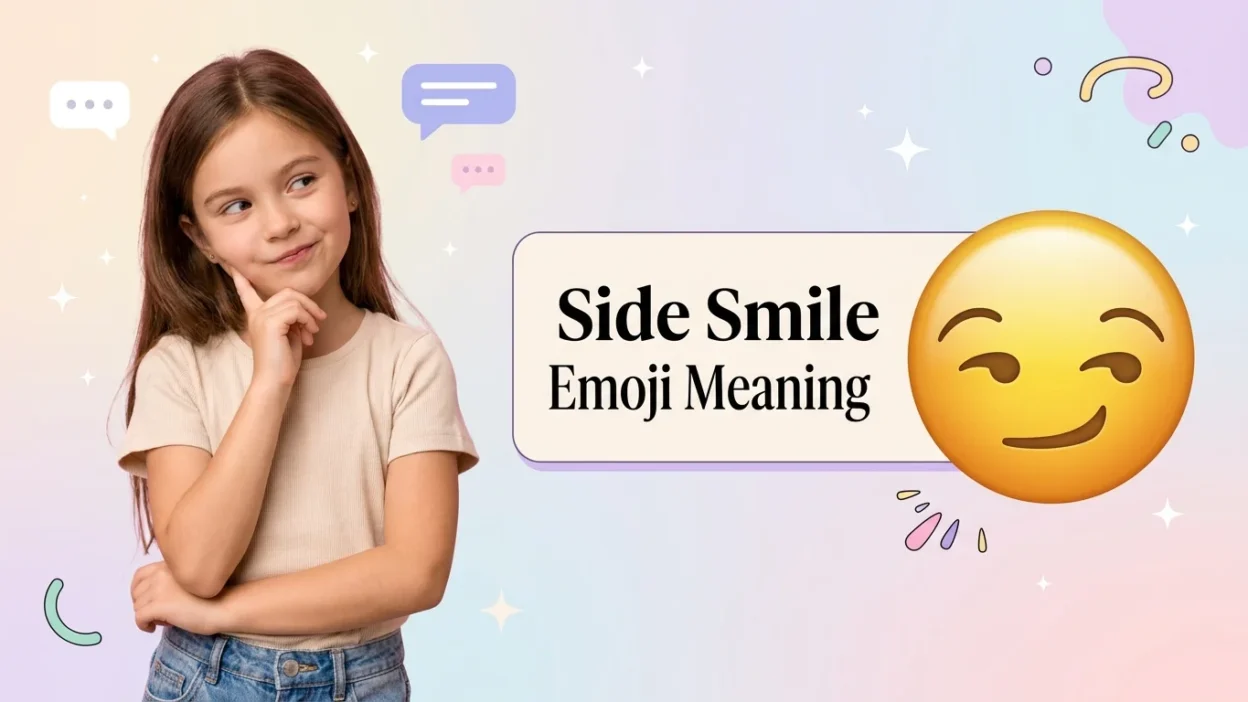
Have you ever received a sideways smile and wondered whether it was friendly, playful, or a little bit teasing? The Side Smile Emoji Meaning can depend heavily on the situation, the sender’s tone, and the words surrounding it.
The 😏 emoji is often associated with confidence, teasing, sarcasm, mischief, flirtation, or a knowing attitude. In everyday texting, this emoji can add a hidden tone to an otherwise simple message.
Someone may send it when they are joking with you, hinting at something, showing confidence, or trying to make a conversation feel slightly flirty.
Quick Answer: What Does the Side Smile Emoji 😏 Mean?
The side smile emoji 😏 usually means smirking, teasing, confidence, flirtation, sarcasm, or a knowing attitude. Its exact meaning depends on the conversation.
For example:
- “I know what you did 😏” → teasing or knowing
- “You look good today 😏” → possibly flirting
- “I told you I was right 😏” → confidence or smugness
- “Sure, go ahead 😏” → playful or suggestive tone
So, 😏 is not simply a happy smile. It often adds a hidden, playful, confident, or slightly cheeky tone to a message.
What Does “Side Smile Emoji Meaning” Mean?
When people search for side smile emoji meaning, they are usually asking about the emoji 😏, commonly called the smirking face.
The emoji shows a face with a small, sideways-looking smile. That expression gives it a different feeling from a straightforward smile such as 🙂 or 😊.
The most common meanings include:
- Smirking
- Teasing
- Flirting
- Being playful
- Showing confidence
- Feeling smug
- Suggesting something indirectly
- Making a sarcastic comment
- Showing that you know something
- Adding a cheeky tone
The emoji itself does not automatically mean romance or flirting. Context is important. A close friend might use 😏 to joke with you, while someone you are attracted to might use the same emoji in a flirtatious conversation.
The Literal Meaning
There is no literal sentence hidden inside 😏. It is a facial expression represented as an emoji.
The official Unicode name is SMIRKING FACE, which gives the clearest starting point for understanding it.
A smirk is a small smile that can suggest self-confidence, amusement, satisfaction, teasing, or a feeling that you know something others do not.
That is why 😏 often feels more complicated than a normal smiling emoji.
The Most Common Meaning
In everyday online communication, 😏 often communicates a knowing or cheeky smile.
For example:
“I know you like that song 😏”
The sender may be teasing you because they believe they know something about you.
Another example:
“Maybe I could help you with that 😏”
Here, the emoji can make the sentence sound playful or flirtatious.
Side Smile Emoji Meaning in Different Contexts
The same emoji can change meaning depending on where and how you use it. Here are some common contexts.
Everyday Conversation
In casual conversation, 😏 often shows that someone is teasing, joking, or feeling confident.
For example:
“I knew you would come back 😏”
This could mean the speaker expected the other person to return and feels a little pleased about being right.
It can also make a harmless sentence sound cheekier than it would otherwise.
Text Messages
In text messages, 😏 is often used to communicate a tone that plain words cannot easily show.
Text has no facial expression or voice tone, so an emoji can change how a sentence feels.
For example:
“So you finally noticed me 😏”
Without the emoji, the sentence might sound serious. With 😏, it can sound playful, teasing, or slightly flirtatious.
Social Media
On social media, people often use 😏 in comments, captions, and replies to add attitude.
Someone might write:
“Not everyone can pull this look off 😏”
This could communicate confidence or playful self-praise.
A comment such as:
“We know who this is for 😏”
may suggest teasing or a hidden romantic meaning.
On WhatsApp, 😏 is commonly used between friends, couples, family members, and people who are casually chatting.
Its meaning depends heavily on the conversation.
A friend might send:
“I saved you some cake 😏”
This could simply be playful.
A romantic partner might send:
“Wait until you see what I planned 😏”
In that context, it could create a more suggestive or flirtatious tone.
Snapchat
On Snapchat, 😏 can add a teasing or confident feeling to a snap or chat.
Someone may use it after posting a picture of a new outfit, a funny situation, or something they know will get a reaction.
Because Snapchat conversations are often casual and playful, the emoji can easily carry a joking or cheeky tone.
On Instagram, 😏 may appear in comments, captions, replies, or direct messages.
For example:
“Looking good 😏”
Depending on the relationship, this can sound like a compliment with a flirty undertone.
However, it does not automatically mean romantic interest. Friends can also use it jokingly.
TikTok
TikTok users may use 😏 in comments when a video has a funny, confident, romantic, or suggestive theme.
For example:
“You knew exactly what you were doing 😏”
Here, the emoji reinforces the idea that the creator intentionally created a particular reaction.
Gaming
In gaming conversations, 😏 can show confidence, playful competition, or satisfaction.
For example:
“Easy win 😏”
The sender is probably showing confidence or teasing the other player.
It can be friendly banter, especially between people who regularly play together.
Professional Communication
Be careful with 😏 at work.
The emoji can be misunderstood because it may sound flirty, sarcastic, smug, or suggestive.
For example, sending:
“I can show you how it works 😏”
to a colleague may create an unintended meaning.
In professional communication, a neutral emoji or clear wording is usually safer.
Internet Slang and Online Culture
Online, 😏 can work like a visual version of phrases such as:
- “I know what you mean.”
- “You know what I mean.”
- “I see what you’re doing.”
- “Nice try.”
- “I know something.”
- “Maybe…”
- “You wish.”
- “I’m teasing you.”
The exact interpretation depends on the words surrounding it.
Examples of the Side Smile Emoji 😏
Here are some realistic examples that show how the side smile emoji meaning can change with context.
Example 1: Teasing a Friend
Message:
“You said you weren’t hungry, but you ate half the pizza 😏”
Meaning:
The sender is teasing the friend.
Situation:
Two friends are joking about someone changing their mind.
Example 2: Showing Confidence
Message:
“I told you I would finish first 😏”
Meaning:
The sender feels confident and slightly proud.
Situation:
Someone wins a friendly competition.
Example 3: Flirting
Message:
“You look really good tonight 😏”
Meaning:
The compliment may have a flirtatious tone.
Situation:
Someone is talking to a person they are attracted to.
Example 4: Knowing Something
Message:
“Oh, I know who you were talking to 😏”
Meaning:
The sender is suggesting that they know a secret or understand what happened.
Situation:
Two people are discussing something indirectly.
Example 5: Playful Challenge
Message:
“Think you can beat me? 😏”
Meaning:
The sender is confidently challenging someone.
Situation:
Friends are preparing for a game or competition.
Example 6: Sarcastic Response
Message:
“Wow, what a surprise 😏”
Meaning:
The sender may be joking because the event was actually expected.
Situation:
A friend does exactly what everyone predicted.
Example 7: Suggestive Hint
Message:
“Maybe I’ll tell you later 😏”
Meaning:
The sender may be deliberately keeping something mysterious or playful.
Situation:
Two people are joking or flirting.
When Do People Use the Side Smile Emoji?
People usually use 😏 when they want their message to have more personality than the words alone provide.
A sentence can sound completely different when you add this emoji.
To Tease Someone
😏 is useful when you want to playfully tease a friend.
“You really thought I wouldn’t notice 😏”
The emoji makes the statement feel less serious and more mischievous.
To Flirt
The emoji can create a flirtatious mood.
“Maybe we should hang out sometime 😏”
The words are fairly simple, but the emoji can add a romantic or suggestive hint.
To Show Confidence
Someone may use 😏 after winning an argument, game, or challenge.
“Guess who was right 😏”
It communicates confidence with a little attitude.
To Suggest a Hidden Meaning
Sometimes the sender intentionally leaves something unsaid.
“You’ll find out tonight 😏”
The emoji can make the reader wonder what the sender means.
To Joke Around
Friends often use 😏 as part of playful banter.
“Don’t act innocent 😏”
This does not necessarily have a romantic meaning. It may simply be a joke between friends.
Appropriate and Inappropriate Situations
😏 works best in casual conversations where the relationship and tone are already clear.
It can be appropriate between:
- Close friends
- Romantic partners
- People who regularly joke together
- Casual online communities
- Gaming friends
Be more careful when using it with:
- Bosses
- Teachers
- Clients
- New professional contacts
- Strangers
- People who may not understand your humor
The reason is simple: 😏 can easily sound flirtatious or suggestive when the context is unclear.
Different Meanings of the Side Smile Emoji 😏
The side smile emoji has several common interpretations.
Smirking
This is the most direct interpretation because the official name is smirking face.
A smirk can communicate quiet confidence, amusement, or the feeling that you know something.
Example:
“I knew you’d say that 😏”
Teasing
😏 can show that you are jokingly provoking someone.
Example:
“You still haven’t beaten my score 😏”
The sender is not necessarily being rude. They may simply be having fun.
Flirting
In romantic conversations, 😏 can suggest attraction or playful interest.
Example:
“You can come over if you want 😏”
The emoji can give the sentence a flirtier tone.
However, the emoji alone does not prove that someone is flirting. You need to consider the whole conversation.
Confidence
Someone may use 😏 after making a confident statement.
Example:
“I knew I could do it 😏”
The expression can communicate satisfaction with being right or successful.
Sarcasm
Sometimes 😏 accompanies a sarcastic remark.
Example:
“Great job arriving on time 😏”
If the person arrived late, the emoji may signal that the sentence is sarcastic.
Suspicion or Knowing
The emoji can imply that the sender sees through a situation.
Example:
“I know what you’re planning 😏”
The meaning here is closer to “I see what you’re doing.”
Cheekiness
A cheeky comment is playful and slightly bold.
Example:
“You can’t hide from me forever 😏”
The emoji adds a mischievous feeling.
Side Smile Emoji 😏 From a Guy: What Can It Mean?
If a guy sends you 😏, there is no single guaranteed interpretation.
It could mean:
- He is teasing you.
- He is joking.
- He feels confident.
- He is hinting at something.
- He is flirting.
- He is being sarcastic.
- He thinks he knows something you do not.
For example:
“You looked at me twice today 😏”
This could be playful teasing or flirting, depending on your relationship.
The important point is that an emoji cannot reliably reveal someone’s intention by itself. Look at the surrounding words and the broader conversation.
Side Smile Emoji 😏 From a Girl: What Can It Mean?
If a girl sends 😏, the same general possibilities apply.
She might be:
- Teasing you
- Flirting
- Making a joke
- Showing confidence
- Being sarcastic
- Hinting at something
- Acting playful or mischievous
For example:
“I know you missed me 😏”
This might be flirtatious between romantic interests, but it could also be a playful joke between friends.
Context matters more than the gender of the sender.
Is the Side Smile Emoji Flirty?
It can be, but it is not always flirty.
This is one of the most important points about the side smile emoji meaning.
When 😏 appears in a romantic conversation, it can suggest:
- Attraction
- Playful interest
- A romantic hint
- A teasing compliment
- A suggestive thought
But when it appears between friends, it may simply mean:
- “I’m teasing you.”
- “I knew it.”
- “I’m joking.”
- “Nice try.”
- “I feel confident.”
How to Tell if 😏 Is Flirty
Look at the entire conversation.
For example:
“You look amazing tonight 😏”
This has a stronger chance of sounding flirtatious than:
“I beat your score again 😏”
The first message involves appearance and may suggest attraction. The second is clearly connected to competition.
Still, there is no universal rule. Personal communication styles vary.
Is 😏 a Bad or Rude Emoji?
Not necessarily.
😏 is not automatically rude, inappropriate, or negative. However, it can sound sarcastic, smug, or suggestive in some situations.
For example:
“Nice excuse 😏”
This could feel mocking.
But:
“I knew you would choose that 😏”
could simply be playful.
If you are unsure how the emoji will be received, use clearer words instead.
Side Smile Emoji vs Similar Emojis
Several emojis can look similar in meaning, but they communicate different emotions.
| Emoji | Common meaning | Main difference |
| 😏 | Smirk, teasing, flirtation, confidence | Has a cheeky or knowing tone |
| 😉 | Wink, joke, playful hint | Usually more clearly playful |
| 🙂 | Simple smile, politeness | More neutral |
| 😊 | Warm happiness | Friendlier and more sincere |
| 😌 | Relief, calm, satisfaction | Softer and more peaceful |
| 😒 | Unamused or annoyed | More negative |
| 🙃 | Irony, awkwardness, sarcasm | Often signals an unusual or opposite meaning |
| 😎 | Confidence, coolness | More relaxed and self-assured |
| 😜 | Joking, silliness | More openly playful |
Unicode identifies 😏 as smirking face, while 😉 is winking face, 🙂 is slightly smiling face, 😌 is relieved face, and 😒 is unamused face.
😏 vs 😉
These two are often confused.
😏 usually feels more knowing, cheeky, confident, or suggestive.
😉 usually feels more like a wink, joke, playful secret, or light flirtation.
Compare:
“You know what I mean 😏”
with:
“You know what I mean 😉”
The first can sound more suggestive or confident. The second often feels lighter and friendlier.
😏 vs 🙂
🙂 is much more neutral.
“Okay 🙂”
can simply mean “Okay.”
“Okay 😏”
may suggest that the sender has another thought, is teasing, or is being cheeky.
😏 vs 😌
😌 generally communicates relief, calmness, or satisfaction.
😏 has more attitude and can suggest teasing or hidden meaning.
😏 vs 😒
These can sometimes be confused because both may appear in sarcastic conversations.
😒 generally communicates unamusement, irritation, or dissatisfaction.
😏 is more likely to communicate smirking confidence, teasing, or playful attitude.
What Does 😏 Mean in a Text From Someone You Like?
If someone you like sends 😏, it can feel exciting because the emoji may seem flirtatious.
However, do not assume that it automatically means romantic interest.
Look at the message around it.
For example:
“You looked really good today 😏”
This can reasonably be read as flirtatious.
But:
“I finally beat you at the game 😏”
is probably about confidence or playful competition.
The relationship also matters. Someone who regularly uses 😏 with everyone may not be using it as a special romantic signal.
What Does 😏 Mean From Your Crush?
When a crush sends 😏, the emoji can add a playful or flirtatious layer to the message.
For example:
“Maybe we should go together 😏”
could suggest romantic interest.
Still, one emoji is not enough evidence to determine someone’s feelings. Consider their words, behavior, and the conversation as a whole.
Can 😏 Mean “I Know Something”?
Yes.
One common use of 😏 is to suggest that the sender knows something and expects the other person to understand.
For example:
“I know who you were texting 😏”
The emoji can communicate:
“I know what happened, and I’m teasing you about it.”
This use is especially common among friends and couples.
Can 😏 Mean Sarcasm?
Yes.
😏 can strengthen a sarcastic statement.
For example:
“Wow, you replied so fast 😏”
If the person actually took three hours to respond, the sentence is probably sarcastic.
The emoji signals that the speaker does not necessarily mean the words literally.
However, sarcasm depends heavily on context. The same emoji can mean something different in another conversation.
Origin of the Side Smile Emoji
The side smile emoji 😏 is officially known as SMIRKING FACE and has the Unicode code point U+1F60F. Unicode’s historical documentation places the character in Unicode Version 6.0, released in 2010.
The emoji did not begin as a piece of internet slang with one fixed modern meaning. Instead, it belongs to the larger development of digital character sets and emoji.
As emoji became common across phones, messaging apps, websites, and social platforms, people began using them to express emotional shades that are difficult to communicate through plain text.
The meaning of 😏 has therefore developed through everyday digital communication.
Unicode gives the emoji an official name, but people can use it in many different ways. Current Unicode emoji data associates 😏 with keywords including flirt, kidding, sly, smug, suspicious, and shade, which reflects the range of meanings users may understand from the expression.
It is important to separate the official Unicode name from modern conversational meaning. “Smirking face” is the standardized name, while meanings such as flirting, teasing, or sarcasm come from how people use the emoji in context.
Why Does 😏 Have So Many Meanings?
Human facial expressions are rarely limited to one emotion.
A smirk can communicate:
- Confidence
- Humor
- Mischief
- Satisfaction
- Teasing
- Suspicion
- Flirtation
- Sarcasm
Emoji work in a similar way.
Think about the difference between a real-life smile and the same smile in different situations. A person might smile because they are happy, because they know a secret, because they are teasing a friend, or because they feel confident.
The same idea applies to 😏.
That is why reading the words around the emoji is so important.
Common Mistakes About the Side Smile Emoji
People often misunderstand 😏 because they assume every emoji has one fixed meaning.
Mistake 1: Assuming It Always Means Flirting
This is probably the most common mistake.
😏 can be flirty, but it can also be teasing, sarcastic, confident, or playful.
Better approach: Read the full message before deciding what the sender means.
Mistake 2: Treating It Like a Normal Smile
😏 is not the same as 🙂 or 😊.
A normal smiling emoji usually feels friendly or positive. 😏 has a stronger sense of attitude.
Tip: If you want a simple friendly smile, 🙂 or 😊 may communicate that more clearly.
Mistake 3: Using It in Formal Messages
Using 😏 with a manager, client, teacher, or unfamiliar professional contact can create confusion.
Better approach: Keep workplace communication clear unless you already know that casual emoji use is accepted.
Mistake 4: Assuming the Sender Is Being Rude
The emoji can sometimes sound smug or sarcastic, but it is not automatically rude.
The relationship and surrounding message matter.
Mistake 5: Ignoring the Words Around It
The same emoji can communicate different things in different sentences.
Compare:
“I knew I was right 😏”
and:
“You look beautiful 😏”
The first focuses on confidence. The second may have a flirtatious tone.
How to Respond to the Side Smile Emoji
Your response should match the context.
If They Are Teasing You
You can respond playfully:
“Oh, really? 😂”
If They Are Flirting
You might respond with a similarly playful message if you are comfortable with that tone.
“Is that so? 😉”
If You Are Unsure
Ask directly:
“What does that mean? 😂”
There is nothing wrong with asking for clarification, especially if the message could have several meanings.
If You Want to Keep Things Professional
Use a clear, neutral response rather than matching the emoji.
This avoids accidentally making the conversation sound more personal than intended.
Frequently Asked Questions
What does the side smile emoji 😏 mean?
The side smile emoji 😏 usually means smirking, teasing, confidence, flirtation, sarcasm, or a knowing attitude. The exact meaning depends on the conversation and relationship between the people using it.
Is 😏 a flirty emoji?
It can be flirty, especially in romantic conversations. However, 😏 does not always indicate flirting. Friends may use it to tease, joke, show confidence, or suggest that they know something.
What does 😏 mean from a guy?
A guy may use 😏 to flirt, tease, joke, show confidence, or hint at something. The emoji alone cannot tell you exactly what he means, so look at the surrounding message and conversation.
What does 😏 mean from a girl?
A girl may use 😏 for the same reasons: teasing, flirting, confidence, sarcasm, humor, or a playful hint. The meaning depends on context rather than the sender’s gender.
What is the difference between 😏 and 😉?
😏 is officially called smirking face and often feels cheeky, knowing, confident, or suggestive. 😉 is officially called winking face and more commonly communicates a playful wink, joke, or light hint.
Is 😏 rude?
😏 is not automatically rude. However, it can sound smug, sarcastic, or suggestive in some situations. If the relationship or context is unclear, the emoji may be misunderstood.
What is the official name of 😏?
The official Unicode name of 😏 is SMIRKING FACE. Its Unicode code point is U+1F60F, and Unicode records it as an emoji from Version 6.0.
Conclusion
The side smile emoji 😏 usually represents a smirk, playful confidence, teasing, flirtation, sarcasm, or a knowing attitude. Its official Unicode name is smirking face, but everyday users can give it slightly different meanings depending on the conversation.
The most important thing to remember is that 😏 does not automatically mean someone is flirting. A friend may use it to tease you, while a romantic interest may use it to add a flirty hint. The words around the emoji, the relationship between the people, and the overall situation provide the real context.