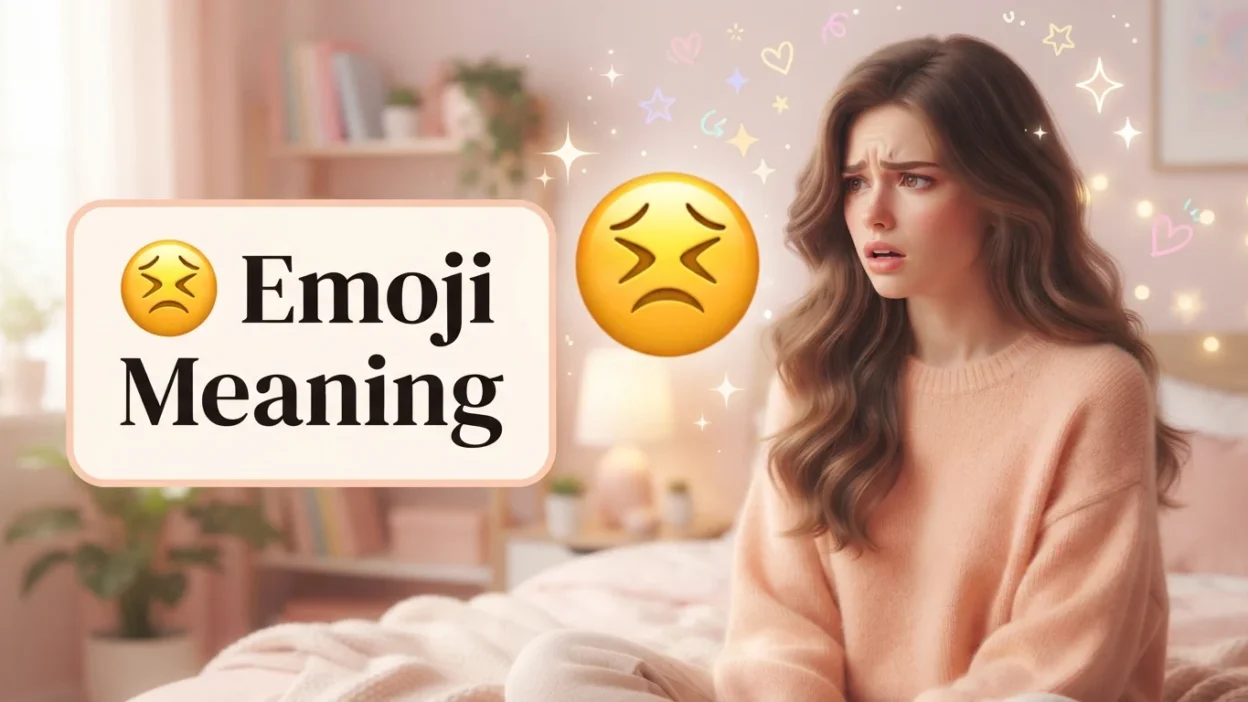
Have you ever had one of those moments when everything feels overwhelming, frustrating, or just too much to handle? The 😖 emoji captures that feeling in a single expression!
Whether someone is reacting to a stressful situation or expressing emotional discomfort in a text, this emoji helps communicate feelings that are sometimes difficult to explain with words.
Understanding the 😖 emoji meaning can help you interpret messages more accurately and respond with the right emotion. The 😖 emoji is officially known as the Confounded Face emoji.
Quick Answer:
The 😖 emoji means frustration, distress, irritation, discomfort, or emotional upset. It is officially called Confounded Face and often shows that someone feels overwhelmed, bothered, embarrassed, or unhappy about a situation.
For example:
“I studied all night and still failed 😖”
Here, 😖 shows frustration and disappointment.
It does not automatically mean anger, sadness, or confusion. The exact feeling depends on the conversation and the words around the emoji.
What Does “😖 emoji meaning” Mean?
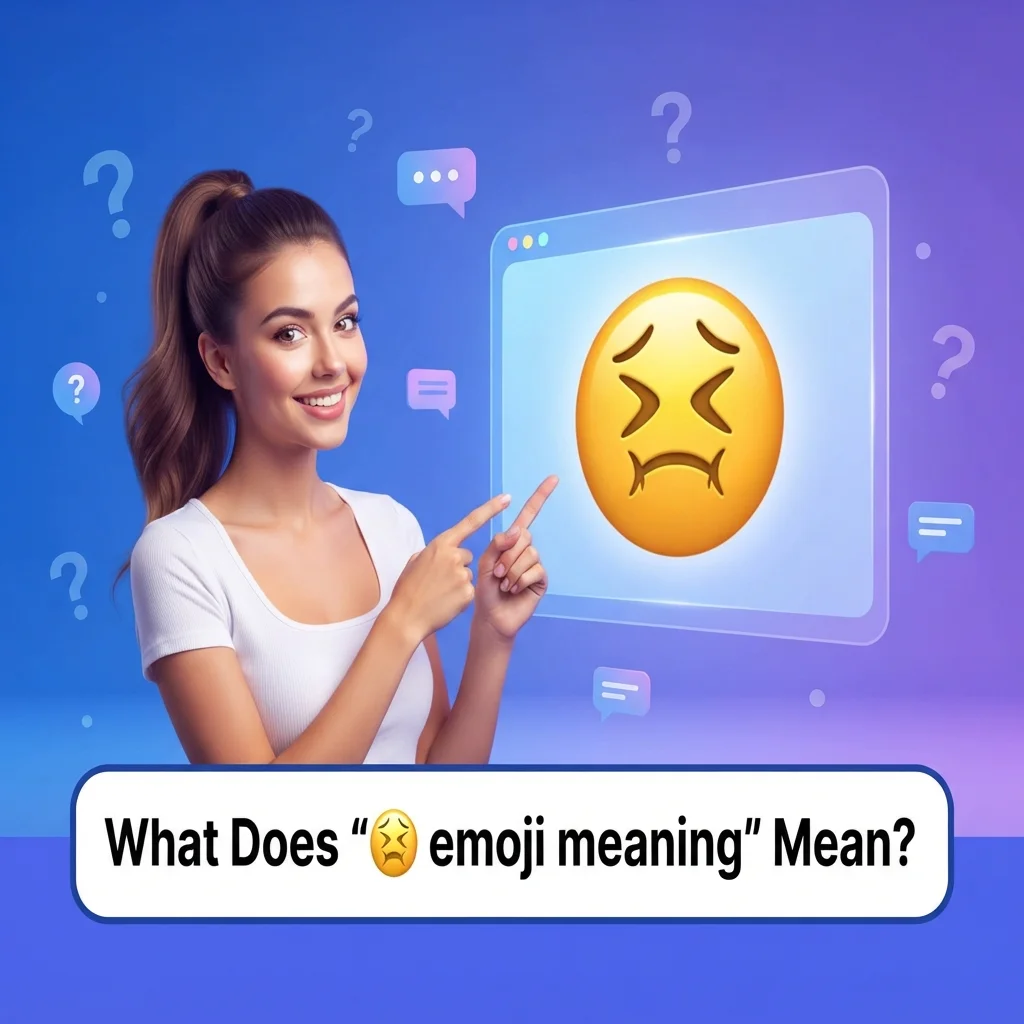
The 😖 emoji meaning is connected to strong negative or uncomfortable emotions. The emoji shows a yellow face with tightly closed, X-shaped eyes and a scrunched mouth. Its facial expression looks as if someone is struggling to deal with something unpleasant.
Unicode’s official name for 😖 is Confounded Face. Its Unicode code point is U+1F616, and Unicode’s emoji annotations include terms such as annoyed, confused, cringe, distraught, frustrated, mad, and sad.
In everyday language, you can think of 😖 as:
“This is really frustrating.”
“I can’t deal with this.”
“This hurts.”
“I’m extremely uncomfortable.”
“I’m so annoyed right now.”
“This situation is getting to me.”
The emoji does not have one single emotional translation. Instead, it acts like a visual expression of emotional discomfort.
The most common meaning of 😖
The most common use of 😖 is to show frustration or distress.
For example:
“My internet stopped working again 😖”
The sender probably feels annoyed and frustrated.
Another example:
“I forgot my wallet at home 😖”
Here, the emoji may communicate regret, frustration, or embarrassment.
Does 😖 mean sadness?
It can.
However, 😖 usually expresses a more tense or intense form of emotional discomfort than a simple sad emoji such as 😢.
Someone might use 😖 when they are sad because something went wrong, especially when sadness is mixed with frustration.
“I really wanted to go, but the tickets sold out 😖”
The person may be disappointed and frustrated rather than simply sad.
Does 😖 mean anger?
Sometimes.
The expression can communicate irritation or anger, especially when someone is dealing with something annoying.
“He deleted my work without asking 😖”
Here, 😖 could mean:
“That really annoys me.”
However, 😖 generally looks more distressed or frustrated than openly furious. Emojis such as 😡 or 😠 are usually more direct when someone wants to show anger.
Meaning of 😖 in Different Contexts
The 😖 emoji meaning can change depending on where and how it appears. Emojis do not work like exact dictionary definitions. They add emotional tone to written communication.
😖 in Everyday Conversation
In everyday conversation, 😖 often shows that someone is having a difficult time.
For example:
“I have three exams tomorrow 😖”
The person is probably stressed or overwhelmed.
It can also appear after a frustrating event:
“I missed the bus by two minutes 😖”
Here, it communicates disappointment and annoyance.
In casual conversations, 😖 can make a statement feel more emotional and expressive.
😖 in Text Messages
Texting is one of the most common places to see 😖.
People use it when words alone do not fully communicate how they feel.
For example:
“I can’t find my keys anywhere 😖”
The emoji adds frustration.
Another example:
“I accidentally sent the message to the wrong person 😖”
Here, it may show embarrassment, panic, or regret.
The surrounding sentence usually tells you which emotion is strongest.
😖 on Social Media
On social media, 😖 can react to disappointing news, difficult situations, stressful events, or relatable problems.
For example:
“When your favorite show ends on a cliffhanger 😖”
The emoji communicates emotional frustration.
People may also use it in comments:
“Why does this always happen to me 😖”
In this setting, the emoji often makes the comment sound more emotionally expressive.
😖 on WhatsApp
On WhatsApp, 😖 can mean frustration, stress, disappointment, embarrassment, or emotional discomfort.
For example:
“The meeting was moved to 7 AM 😖”
The sender probably does not literally mean they are crying. They are expressing annoyance or discomfort.
A friend might also reply:
“I forgot to bring the documents 😖”
In that situation, 😖 can mean “I’m sorry, I messed up.”
😖 on Snapchat
On Snapchat, 😖 can be used casually to show that something is awkward, annoying, stressful, or upsetting.
For example:
“My parents found out 😖”
Depending on the conversation, this could indicate embarrassment, worry, or frustration.
Unlike some Snapchat-specific emojis, 😖 does not have a special Snapchat-only meaning. It generally carries its normal emoji meaning.
😖 on Instagram
On Instagram, people may use 😖 in comments, captions, Stories, or direct messages.
For example:
“This ending 😖”
The emoji could show that the ending was emotionally painful, frustrating, or difficult to accept.
It can also be used humorously:
“Trying to wake up for work at 5 AM 😖”
The situation may not be serious. The emoji simply exaggerates the person’s struggle.
😖 on TikTok
TikTok users may use 😖 when reacting to embarrassing, frustrating, emotional, or uncomfortable situations.
For example:
“Watching myself make that mistake 😖”
The emoji adds a feeling of secondhand embarrassment or discomfort.
It can also appear in humorous captions where the situation is intentionally exaggerated.
😖 in Gaming
In gaming chats, 😖 often means frustration.
For example:
“I was one hit away from winning 😖”
Here, the emoji communicates disappointment and frustration.
A player might also write:
“The boss got me again 😖”
This means the player is annoyed because they failed again.
Gaming conversations often use 😖 in a playful way rather than to express serious emotional distress.
😖 in Professional Communication
Be more careful with 😖 at work.
The emoji can make a message sound informal, emotional, or frustrated. It may be acceptable in a friendly team chat where emojis are normal, but it may not fit a formal email or serious business communication.
For example, instead of:
“The report is due today 😖”
a professional email might simply say:
“The report is due today, so I’ll prioritize it this morning.”
Context and workplace culture matter.
What Does 😖 Mean From a Guy?
When a guy sends 😖, it often means he is frustrated, uncomfortable, annoyed, disappointed, or stressed.
For example:
“I wanted to see you today but my plans changed 😖”
In this context, 😖 may show disappointment.
Another example:
“I completely messed that up 😖”
Here, it probably communicates embarrassment or frustration.
Does 😖 from a guy mean he likes you?
Not necessarily.
An emoji alone cannot reliably prove romantic interest. If a guy sends 😖 while talking about a personal problem, he may simply be expressing frustration.
If it appears in a clearly romantic conversation, it could add emotional emphasis, but the surrounding words matter much more than the emoji itself.
For example:
“I wish you were here right now 😖”
This sounds more emotionally or romantically suggestive because of the sentence, not simply because of 😖.
What Does 😖 Mean From a Girl?
When a girl sends 😖, it can similarly express frustration, stress, disappointment, embarrassment, discomfort, or sadness.
For example:
“I studied so hard and still got the wrong answer 😖”
The emoji likely shows frustration.
Or:
“I can’t believe I said that in front of everyone 😖”
Here, it may show embarrassment.
Does 😖 from a girl mean she is upset?
It can, but you should look at the message around it.
If she says:
“You didn’t tell me about the change 😖”
she may be annoyed or disappointed.
If she says:
“I miss you so much 😖”
the emoji could communicate emotional pain or longing.
The same emoji can carry different shades of emotion.
What Does 😖 Mean From a Guy to a Girl?
When a guy sends 😖 to a girl, it usually shows an emotional reaction to whatever they are discussing.
For example:
“You really can’t come tonight? 😖”
This may communicate disappointment.
Another example:
“I can’t believe I embarrassed myself like that 😖”
Here, the emoji likely expresses embarrassment.
It does not automatically indicate flirting or romantic feelings. You should interpret it together with the conversation, relationship, and tone.
What Does 😖 Mean From a Girl to a Guy?
When a girl sends 😖 to a guy, it may show frustration, embarrassment, disappointment, stress, or emotional discomfort.
For example:
“You seriously forgot our plans? 😖”
This sounds frustrated.
But:
“I wish I could come with you 😖”
could express disappointment or longing.
Again, the sentence provides the main clue.
Examples of 😖 in Text Messages
Here are some realistic examples that show how the emoji can work in different situations.
Example 1: Frustration
“My laptop crashed before I saved the file 😖”
Meaning: The person is extremely frustrated because their work may have been lost.
Situation: Something went wrong unexpectedly.
Example 2: Disappointment
“The concert is sold out 😖”
Meaning: The person is disappointed that they cannot attend.
Situation: They wanted something but did not get it.
Example 3: Embarrassment
“I called my teacher ‘Mom’ today 😖”
Meaning: The person feels embarrassed and uncomfortable about the mistake.
Situation: They made an awkward social mistake.
Example 4: Stress
“I have two assignments due tomorrow 😖”
Meaning: The sender feels overwhelmed by their workload.
Situation: They have too much to handle.
Example 5: Annoyance
“The Wi-Fi keeps disconnecting 😖”
Meaning: The person is annoyed by a repeated problem.
Situation: Something inconvenient keeps happening.
Example 6: Emotional Pain
“I really wanted to be there with you 😖”
Meaning: The person may be expressing emotional discomfort or disappointment.
Situation: They cannot be with someone they care about.
Example 7: Failure
“I lost the game again 😖”
Meaning: The sender feels disappointed and frustrated.
Situation: They tried to succeed but failed.
Example 8: Regret
“I shouldn’t have sent that message 😖”
Meaning: The person regrets what they did.
Situation: They believe they made a mistake.
When Do People Use 😖?
People commonly use 😖 when they want to show that something feels difficult, frustrating, uncomfortable, upsetting, or overwhelming.
Common situations include:
- Making a mistake
- Dealing with bad news
- Missing an opportunity
- Feeling embarrassed
- Losing a game
- Facing a difficult task
- Experiencing technical problems
- Being disappointed
- Feeling emotionally overwhelmed
- Dealing with an annoying person or situation
- Regretting something
- Struggling with work or school
The emoji is especially useful in casual communication because it gives a written sentence a visible emotional expression.
Who uses 😖?
There is no specific age or gender associated with 😖. Teenagers, adults, friends, family members, coworkers, and social media users may all use it.
Its meaning comes from context rather than from who sends it.
When is 😖 appropriate?
😖 works well in:
- Casual texts
- Friendly chats
- Social media
- Gaming conversations
- Informal group chats
- Personal messages
- Humorous posts
When should you avoid 😖?
You may want to avoid it in:
- Formal business emails
- Official documents
- Academic writing
- Serious professional announcements
- Sensitive situations where the meaning could be misunderstood
For professional communication, clear words are usually better than relying on an emoji.
Different Meanings of 😖
Although Confounded Face has one official name, people use it for several related emotions.
😖 Meaning 1: Frustration
Definition: Feeling annoyed because something is difficult or is not going as planned.
Context: Problems, mistakes, delays, or failure.
Example:
“I’ve tried fixing it five times 😖”
The sender feels frustrated because the problem continues.
😖 Meaning 2: Distress
Definition: Feeling emotionally troubled or upset.
Context: Difficult personal or emotional situations.
Example:
“I don’t know what to do anymore 😖”
Here, the emoji adds emotional distress.
😖 Meaning 3: Irritation
Definition: Feeling bothered or annoyed by something.
Context: Repeated inconveniences or unwanted behavior.
Example:
“He keeps calling me during work 😖”
The emoji shows irritation.
😖 Meaning 4: Disappointment
Definition: Feeling unhappy because something did not happen as hoped.
Context: Missed opportunities, canceled plans, failure, or bad results.
Example:
“They canceled the trip 😖”
The sender is disappointed.
😖 Meaning 5: Embarrassment
Definition: Feeling uncomfortable because of an awkward mistake or situation.
Context: Social mistakes or embarrassing moments.
Example:
“I forgot her name right after she introduced herself 😖”
The emoji can express embarrassment.
😖 Meaning 6: Emotional Overload
Definition: Feeling like a situation has become too much to handle.
Context: Work, school, relationships, deadlines, or stressful events.
Example:
“Three exams and a project this week 😖”
The sender feels overwhelmed.
😖 Meaning 7: Disgust or Strong Discomfort
Sometimes 😖 can communicate that something feels unpleasant or difficult to tolerate.
Example:
“That smell was horrible 😖”
Here, the emoji emphasizes discomfort or disgust.
However, 😖 is not exclusively a disgust emoji. Other emojis may communicate disgust more directly depending on the situation.
😖 Emoji Meaning in Relationships
In relationships, 😖 can express emotional frustration, disappointment, embarrassment, or longing.
For example:
“Why did you leave without saying goodbye? 😖”
This could communicate hurt or frustration.
Another example:
“I wanted to spend more time with you 😖”
Here, it can add emotional weight to the statement.
However, do not assume that 😖 automatically means someone is angry, flirting, or emotionally attached. The surrounding conversation provides the stronger clue.
😖 meaning in a romantic conversation
In a romantic conversation, 😖 may make a message feel more emotionally intense.
For example:
“I wish you were here right now 😖”
The emoji may show that the person is emotionally affected by the situation.
Still, it does not have a secret romantic meaning. It is better to understand the actual words and the relationship between the people involved.
😖 vs Similar Emojis
Several emojis look emotionally similar to 😖, but their meanings are not exactly the same.
| Emoji | Common meaning | Main difference |
| 😖 | Frustration, distress, discomfort | Strong emotional struggle |
| 😣 | Perseverance, strain, difficulty | Often shows trying to endure |
| 😫 | Tiredness, exhaustion | More focused on being worn out |
| 😩 | Weariness, frustration | Often communicates being fed up or exhausted |
| 😞 | Disappointment, sadness | More clearly sad or disappointed |
| 😕 | Confusion, uncertainty | More focused on not understanding |
| 😡 | Anger | More directly angry |
| 😢 | Sadness | More directly crying or sad |
| 😬 | Awkwardness, tension | Often shows nervous or uncomfortable tension |
| 😟 | Worry | More focused on concern |
Unicode lists 😖 as Confounded Face, while 😣 is Persevering Face, 😩 is Weary Face, 😫 is Tired Face, and 😞 is Disappointed Face.
😖 vs 😣
These two are easy to confuse.
😖 usually communicates frustration, distress, or emotional discomfort.
😣 often suggests strain, difficulty, or trying hard to endure something.
For example:
“This problem is driving me to make one livid 😖”
This focuses on frustration.
“I can finish this assignment if I keep trying 😣”
This focuses more on effort and perseverance.
😖 vs 😫
😫 generally communicates being tired or exhausted.
😖 is more strongly associated with frustration or distress.
For example:
“I’ve worked for 12 hours 😫”
The person is exhausted.
“I’ve tried fixing this for three hours 😖”
The person is frustrated.
😖 vs 😕
😕 is usually connected with confusion or uncertainty.
😖 can include confusion, but it usually feels more intense or uncomfortable.
“What does this question mean? 😕”
This suggests confusion.
“I’ve read this question ten times and still can’t solve it 😖”
This suggests frustration and distress.
Common Mistakes When Interpreting 😖
Because emojis are flexible, people sometimes misunderstand 😖.
Mistake 1: Assuming it always means anger
😖 can communicate irritation, but it is not simply an angry face.
Someone may be sad, embarrassed, disappointed, or overwhelmed instead.
Mistake 2: Assuming it always means sadness
The emoji can show sadness, but its expression often combines sadness with frustration or discomfort.
Look at the words around it before deciding what the sender means.
Mistake 3: Treating it as a secret romantic emoji
There is no standard romantic definition for 😖.
A person might use it while flirting, but that does not make 😖 a flirting emoji.
Mistake 4: Ignoring the sentence
The emoji should be interpreted together with the message.
Compare:
“I failed my exam 😖”
with:
“You’re making me laugh so hard 😖”
The first likely expresses frustration or disappointment. The second could be a playful exaggeration depending on the conversation.
Mistake 5: Confusing 😖 with 😣
They look similar, but they are not identical. 😣 is officially Persevering Face, while 😖 is officially Confounded Face.
Origin of 😖
The 😖 emoji is officially known as Confounded Face. Its Unicode code point is U+1F616. Unicode records 😖 as part of Unicode 6.0, which was released in 2010. It was later included in Emoji 1.0 in 2015.
The word confounded itself is an English word associated with being confused, frustrated, bewildered, or troubled by something. The emoji’s visual design represents this kind of emotional struggle through tightly scrunched eyes and a crumpled mouth.
It is important to distinguish between the history of the emoji and the history of emojis in general. 😖 was not invented by WhatsApp, Instagram, Snapchat, or TikTok. It is a standardized Unicode character that different platforms display through their own emoji designs.
Over time, Apple, Google, Microsoft, Samsung, Twitter, and other platforms have changed the visual appearance of 😖. Emojipedia notes that vendor designs have evolved, with some earlier versions using different eyebrow, forehead, or facial details.
This explains why 😖 may look slightly different on an iPhone, Android phone, computer, or social media platform.
Unicode’s current emoji data still identifies U+1F616 as confounded face, with related keywords including frustrated, annoyed, confused, distraught, mad, and sad.
Is 😖 a Bad Emoji?
No. 😖 is not inherently good or bad.
It simply communicates an uncomfortable or negative emotional reaction. Whether that reaction is serious, humorous, dramatic, or playful depends on the conversation.
For example:
“My flight was canceled 😖”
This could be a genuine expression of frustration.
But:
“I ate the last cookie 😖”
could be playful or humorous.
The emoji’s emotional intensity can therefore range from mild annoyance to strong distress.
How to Reply to 😖
Your reply should depend on the reason the person used it.
If they are frustrated, you could say:
“What happened?”
If they are disappointed:
“I’m sorry. That really sucks.”
If they made a mistake:
“Don’t worry. Everyone makes mistakes.”
If they are stressed:
“Take a break. You’ll get through it.”
If they are joking:
“Haha, you’ll survive!”
The best response comes from understanding the context instead of reacting to the emoji alone.
Similar Words and Alternatives to 😖
If someone wants to express the same general feeling without an emoji, several phrases can work.
“I’m frustrated.”
This is a direct way to express annoyance because something is not working.
“I’m so annoyed.”
This focuses more on irritation.
“This is stressing me out.”
This emphasizes pressure or anxiety.
“I can’t deal with this.”
This suggests that the situation feels overwhelming.
“I’m really disappointed.”
This works when something did not happen as expected.
“This is so frustrating.”
This is one of the closest verbal alternatives to 😖.
“I’m struggling with this.”
This emphasizes difficulty rather than anger.
“I’m so done.”
In casual internet language, this can mean that someone is tired of dealing with a situation.
“Ugh!”
This short expression often communicates frustration or annoyance.
“This hurts.”
This is more appropriate when the situation causes emotional or physical pain.
These phrases are not exact replacements in every situation. The best choice depends on the emotion you want to communicate.
How to Understand 😖 Correctly in a Chat
When you receive 😖, use these simple steps.
Look at the words before the emoji
The sentence usually provides the main clue.
“I failed again 😖”
This suggests frustration or disappointment.
Look at what happened
Think about the situation being discussed.
If someone missed a flight, 😖 probably means frustration.
If someone made an embarrassing mistake, it may mean embarrassment.
Look at the conversation’s tone
A serious conversation and a funny conversation can use the same emoji differently.
Consider the person’s normal texting style
Some people use 😖 dramatically for small problems. Others use it only when they are genuinely upset.
Do not overanalyze one emoji
An emoji is only one part of a message. The actual words, situation, and relationship usually provide more information.
😖 Emoji Meaning in Internet Slang
😖 is not technically internet slang because it is an emoji rather than an abbreviation or slang word.
However, internet users often combine it with casual expressions.
For example:
“Bro I can’t do this 😖”
“Why is this so hard 😖”
“Not again 😖”
“I’m done 😖”
These combinations create a conversational tone and make the message feel more emotional.
You may also see 😖 paired with words such as ugh, no, bro, help, please, or I can’t.
For example:
“Ugh, not again 😖”
This strongly suggests annoyance.
Is 😖 a Crying Emoji?
Not exactly.
😖 can communicate sadness or emotional pain, but it does not show tears. Its official name is Confounded Face, not crying face. Unicode separately identifies 😢 as Crying Face and 😭 as Loudly Crying Face.
So:
- 😖 = frustration, distress, discomfort, emotional struggle
- 😢 = sadness or crying
- 😭 = intense crying or strong emotional reaction
Of course, people sometimes use 😖 when they are emotionally close to tears.
Is 😖 a Confused Emoji?
It can suggest confusion, but confusion is not its only meaning.
Unicode’s emoji annotations include confused as one of its related keywords.
However, 😕 is generally more directly associated with confusion.
Compare:
“What does this mean? 😕”
This is straightforward confusion.
“I’ve tried to understand this for an hour 😖”
This suggests confusion mixed with frustration.
Can 😖 Be Used as a Joke?
Yes.
Emojis are often used dramatically for humor.
For example:
“My phone battery is at 99% 😖”
The situation is not actually serious. The sender is jokingly acting distressed.
Another example:
“They ate the last slice of pizza 😖”
The emoji exaggerates the situation for comedic effect.
This kind of playful exaggeration is common in informal texting and social media.
Frequently Asked Questions
What does 😖 emoji mean?
The 😖 emoji usually means frustration, distress, irritation, discomfort, disappointment, or emotional struggle. It is officially called Confounded Face.
What does 😖 mean from a guy?
When a guy sends 😖, he may be expressing frustration, disappointment, embarrassment, stress, or discomfort. It does not automatically mean that he is flirting or romantically interested.
What does 😖 mean from a girl?
A girl may use 😖 to show frustration, stress, disappointment, embarrassment, or emotional discomfort. The exact meaning depends on the message and situation.
Does 😖 mean sad?
It can mean sadness, especially when sadness is mixed with frustration or distress. However, 😖 is not specifically a crying emoji. Its official name is Confounded Face.
Does 😖 mean angry?
Sometimes. 😖 can express irritation or frustration, but it is usually more emotionally distressed than directly angry. 😡 and 😠 are generally clearer choices for anger.
What is the difference between 😖 and 😣?
😖 is Confounded Face and commonly expresses frustration, distress, or discomfort. 😣 is Persevering Face and often suggests strain, difficulty, or trying hard to endure something.
Is 😖 a romantic emoji?
Not by itself. 😖 does not have a standard romantic meaning. It can appear in romantic conversations, but the surrounding words and situation determine whether the message is romantic.
Conclusion
The 😖 emoji meaning is mainly connected to frustration, distress, irritation, discomfort, disappointment, and emotional struggle. Its official Unicode name is Confounded Face, and it is represented by a yellow face with scrunched eyes and a crumpled mouth. Unicode lists related keywords such as frustrated, annoyed, confused, distraught, mad, and sad.
People commonly use 😖 in text messages, WhatsApp chats, social media posts, gaming conversations, and other informal communication. It can describe anything from a frustrating mistake to an embarrassing moment or an overwhelming situation.