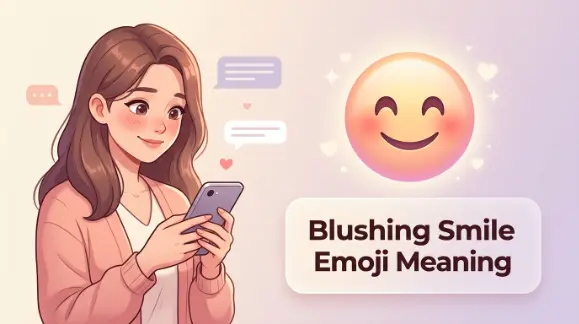
That little shy smile can sometimes reveal more emotion than words can. 😊 The Blushing Smile Emoji Meaning is usually associated with happiness, warmth, shyness, affection, gratitude, or feeling pleasantly embarrassed. People often use this emoji when they want to respond in a sweet and friendly way without making their message sound too serious.
You might see 😊 in texts between friends, family members, couples, or people who are getting to know each other. In a romantic conversation, it can suggest that someone feels shy, flattered, or happy about what was said.
In this guide, you’ll learn the Blushing Smile Emoji Meaning in texting, flirting, relationships, and social media. We’ll also explain what 😊 can mean from a guy or girl and look at common examples to help you understand the emotion behind this warm and gentle emoji.
Quick Answer: The blushing smile emoji (😊) shows happiness mixed with warmth, shyness, or gentle embarrassment. Officially named “Smiling Face with Smiling Eyes,” it is used to express contentment, gratitude, affection, or a soft positive reaction.
What Does “Blushing Smile Emoji” Mean?
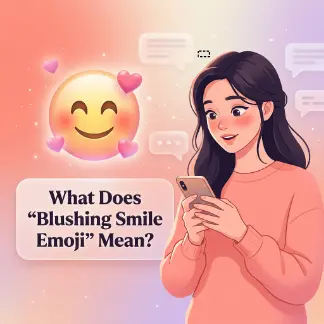
The blushing smile emoji is the yellow face with closed smiling eyes and a gentle closed-mouth smile. On many phones and apps the cheeks appear slightly pink, which is why people call it the blushing smile or shy smile emoji.
In plain English it means “I’m happy, and I’m a little soft or shy about it.” It is softer than a big grinning face and warmer than a plain smile. The official Unicode name is Smiling Face with Smiling Eyes. It was added in 2010 as part of Unicode 6.0.
The most common meaning is positive and friendly. People use it to show they are pleased, thankful, or feeling a quiet kind of joy. The pink cheeks often add a touch of bashfulness, so it can also mean “I’m flattered” or “that made me smile and blush a little.”
Unlike the flushed face emoji 😳, which often signals stronger embarrassment or shock, the blushing smile stays gentle and pleasant.
Meaning in Different Contexts
The same emoji can feel slightly different depending on where and how it is used. Context is everything.
Everyday Conversation
In casual talk the blushing smile emoji simply adds warmth. It turns a plain “thank you” into something friendlier. Friends use it when they want to sound kind without being overly excited.
Text Messages
In texts it softens the tone. A short reply like “Sounds good 😊” feels polite and positive. It can also show mild shyness after a compliment: “Aw, that’s sweet of you 😊.”
Social Media
On platforms like Facebook or Twitter (X) the emoji often appears in comments under happy posts. It signals support or quiet joy. Captions with 😊 usually feel wholesome and light.
WhatsApp users love this emoji for everyday chats with family and friends. It works well with voice notes or photo replies. Sending 😊 after a funny story or good news keeps the conversation warm.
Snapchat
On Snapchat the blushing smile often appears in streaks or quick replies. It can mean “I saw your snap and it made me smile” or simply keep the conversation friendly. Because Snapchat feels more personal, the emoji can carry a soft affectionate tone.
Instagram captions and comments use 😊 to create a friendly, approachable vibe. Influencers and everyday users add it under photos of food, travel, or pets to show genuine pleasure. In DMs it can feel a bit more personal or even lightly flirty when paired with other soft emojis.
TikTok
TikTok comments are fast and playful. The blushing smile emoji often shows up under cute or wholesome videos. Creators use it in captions when they want to seem relatable and warm rather than loud.
Gaming
In gaming chats the emoji is less common than laughing or angry faces, but players still use it after a nice team moment or when someone gives a compliment. It softens trash talk and keeps the mood friendly.
Professional Communication
In work emails or Slack messages the blushing smile is usually safe if the workplace culture is casual. It softens requests or thank-yous: “Thanks for the update 😊.” In very formal settings most people skip emojis altogether.
Internet Slang
Online the emoji is sometimes used ironically or as part of a soft aesthetic. Younger users may stack it with other cute symbols to create a “soft girl” or wholesome vibe. Still, its core meaning stays positive.
Examples of “Blushing Smile Emoji”
Here are five clear real-life examples that show how the emoji works in practice.
- Sentence: “Thanks for helping me move last weekend 😊”
Meaning: Genuine gratitude mixed with a warm, slightly shy feeling.
Situation: Texting a friend after they did you a favor. - Sentence: “You looked great at the party last night 😊”
Meaning: A soft compliment that feels kind rather than intense.
Situation: Message from a crush or close friend the day after an event. - Sentence: “I finally finished the project! 😊”
Meaning: Quiet pride and happiness.
Situation: Sharing good news on Instagram or in a group chat. - Sentence: “That was really thoughtful of you 😊”
Meaning: Appreciation with a touch of being touched or flattered.
Situation: Replying to a kind message or gift. - Sentence: “Good morning! Hope you have a nice day 😊”
Meaning: Friendly and positive greeting.
Situation: Starting a daily chat with a coworker or friend.
These examples show the emoji is flexible. It almost always keeps the message light and positive.
When Do People Use “Blushing Smile Emoji”?
People reach for the blushing smile emoji in everyday moments that call for warmth without big drama.
Common situations include:
- Saying thank you
- Responding to a compliment
- Sharing small good news
- Softening a short reply
- Showing you are happy to hear from someone
- Ending a friendly conversation on a positive note
Who uses it? Pretty much everyone. Teens, adults, parents, and coworkers all send 😊. It is especially popular among people who prefer gentle communication styles.
Why do people use it? Because it adds emotional color that plain text lacks. A bare “thanks” can feel cold. Adding the blushing smile makes the same words feel human and kind.
Appropriate situations: casual chats, friendly social media, light professional messages in relaxed workplaces, and any time you want to sound pleasant.
Inappropriate situations: very formal business letters, serious or sad conversations, or when the topic is heavy. Sending 😊 after bad news can feel tone-deaf. Also avoid overusing it in every single message, it can start to look automatic.
Different Meanings of “Blushing Smile Emoji”
Although the emoji has one main feeling, small shifts in context create slightly different readings.
1. Pure happiness and contentment
Definition: Quiet joy or satisfaction.
Context: Sharing good news or reacting to something pleasant.
Example: “Just got home after a long day and the house is clean 😊”
2. Gratitude or appreciation
Definition: Thankfulness with warmth.
Context: After someone does something nice.
Example: “You remembered my birthday! 😊”
3. Mild shyness or embarrassment
Definition: Feeling a little flustered in a positive way.
Context: Receiving a compliment or unexpected kindness.
Example: “Aw stop, you’re too nice 😊”
4. Soft affection or friendliness
Definition: A gentle way to show you like someone or enjoy talking to them.
Context: Ongoing friendly or mildly flirty chats.
Example: “It was really good talking to you today 😊”
5. Polite positive response
Definition: Keeping the tone light and agreeable.
Context: Short replies in group chats or work messages.
Example: “Yes, that works for me 😊”
These shades all stay within the same positive family. The emoji rarely turns negative.
Origin of “Blushing Smile Emoji”
The blushing smile emoji belongs to the first major wave of modern emojis. Unicode added it in 2010 under the name Smiling Face with Smiling Eyes. Its code point is U+1F60A.
Before full emoji support, people used text emoticons such as 🙂 or ^^ to show smiling eyes. Japanese mobile carriers in the late 1990s and early 2000s already had colorful face icons that inspired the later Unicode set. The pink cheeks that many platforms added later helped the emoji earn the popular nickname “blushing smile.”
Culturally the idea of a blushing smile has deep roots. In many societies a slight blush signals modesty, happiness, or being pleasantly flustered. The emoji simply translates that real-life expression into digital form. Over the years different phone makers (Apple, Google, Samsung, etc.) have drawn the face with slightly different levels of pink, but the overall friendly look has stayed consistent.
No single inventor created the emoji. It grew out of the need for better emotional expression in text, following the long history of smileys that began with the famous 🙂 in 1982.
Similar Words and Alternatives
Several other emojis and expressions sit close to the blushing smile.
- ☺️ Smiling Face – older and slightly more formal or classic. Often used the same way but can feel a bit more traditional.
- 🙂 Slightly Smiling Face – milder and more neutral. Good when you want less warmth.
- 🥰 Smiling Face with Hearts – stronger affection. Use when the feeling is more romantic or deeply fond.
- 😌 Relieved Face – more about calm satisfaction than open happiness.
- 😳 Flushed Face – stronger embarrassment or shock. Not interchangeable with the soft blushing smile.
- Text alternatives: “aww,” “hehe,” “^^,” or simply “:)”
The key difference is intensity and shade of emotion. The blushing smile sits in the gentle middle, warm but not intense, shy but not awkward.
Common Mistakes
People sometimes misread or misuse the emoji.
Incorrect usage: Sending 😊 after someone shares sad or serious news. The soft smile can feel dismissive.
Correct usage: Save it for positive or neutral friendly moments.
Another mistake is assuming it always means romantic interest. While it can feel lightly flirty, most of the time it simply means friendliness. Context and the rest of the conversation matter more than the emoji alone.
Tip to avoid confusion: Look at the whole message and the relationship with the sender. If the chat has been purely friendly, the emoji is almost certainly friendly. If the conversation has been flirty, it can lean that way too. When in doubt, match the other person’s energy rather than overthinking a single emoji.
Overusing the emoji in every reply can also make messages feel less sincere. Mix it with other expressions or plain text for better balance.
Frequently Asked Questions
1. What is the official name of the blushing smile emoji?
It is officially called Smiling Face with Smiling Eyes. People nicknamed it the blushing smile because of the pink cheeks many designs include.
2. Is the blushing smile emoji the same as the flushed face emoji?
No. 😊 is soft and positive. 😳 usually shows stronger embarrassment, surprise, or being flustered.
3. Can the blushing smile emoji be flirty?
Yes, in the right context. Paired with other warm or teasing messages it can feel lightly flirty. Alone it is usually just friendly.
4. When was the blushing smile emoji created?
Unicode added it in 2010. Earlier text smileys and Japanese mobile icons inspired its design.
5. Does the emoji look the same on every phone?
The basic design is consistent, but the amount of pink on the cheeks and the exact shape of the eyes can differ slightly between Apple, Google, Samsung, and other platforms.
6. Is it okay to use the blushing smile emoji at work?
In casual workplaces and friendly team chats, yes. In formal emails or serious discussions it is better to skip emojis.
7. What does it mean if someone only replies with 😊?
It usually means they are happy with the message, agree, or want to keep the tone positive without writing more. It is a soft, friendly acknowledgment.
Conclusion
The blushing smile emoji meaning centers on gentle happiness, warmth, and a touch of shyness. Whether you see 😊 in a thank-you text, an Instagram comment, or a Snapchat reply, it almost always adds a soft positive feeling. Understanding this emoji helps you read digital messages more accurately and choose the right tone when you reply.
Remember that context shapes the final meaning. A blushing smile after a compliment feels different from the same emoji after good news or in a work chat. Pay attention to the full conversation and the relationship you have with the other person.