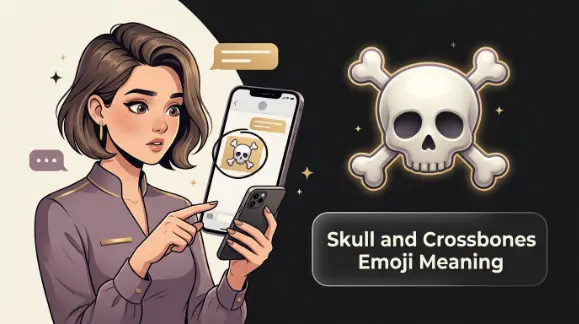
Seeing ☠️ in a message can instantly make the conversation feel darker, more dramatic, or even playful. The Skull and Crossbones Emoji Meaning is commonly connected with danger, death, poison, warning, or something considered risky.
However, people don’t always use this emoji literally. In casual texting, it can also represent extreme humor, shock, embarrassment, or a situation that feels “deadly” funny.
You may come across ☠️ in social media captions, gaming conversations, memes, Halloween posts, or messages about dangerous situations.
Quick answer: The skull and crossbones emoji ☠️ most often means danger, poison, death, or a strong warning. It also stands for pirates and can be used for Halloween or dramatic “this is deadly” reactions in casual chat.
What Does “Skull and Crossbones Emoji Meaning” Cover?
The skull and crossbones emoji is a simple picture of a skull with two long bones crossed underneath or behind it. In plain English, it is a warning sign that something is deadly or highly risky.
Its literal meaning comes from real-life hazard symbols. For many decades the same design has marked poisonous chemicals, toxic substances, and other materials that can kill or seriously harm people. The most common meaning in digital use follows that tradition: “This is dangerous,” “Stay away,” or “This could be deadly.”
People also use it for pirates because the same skull-and-bones design appeared on the black flags of real pirates centuries ago. In short messages the emoji can stand for death itself, extreme risk, or a tongue-in-cheek “I’m done for.” Context decides which sense is intended.
Meaning in Different Contexts
The skull and crossbones emoji meaning changes with the situation and the platform. Here are the most common settings.
Everyday Conversation
In spoken-style chat people drop the emoji to flag something risky or to exaggerate. A friend might text about leftover food that has been in the fridge too long and add ☠️ to show it is probably unsafe. The tone is usually light but still carries a clear caution.
Text Messages
In one-to-one texts the emoji often works as a quick warning. “Do not drink that leftover juice ☠️” tells the other person the juice is spoiled or potentially harmful. It can also appear after a joke that “kills” the conversation or after someone describes a bad idea.
Social Media
On platforms such as X (formerly Twitter) or Facebook the skull and crossbones emoji appears in posts about toxic behavior, dangerous trends, or strong opinions. Users may pair it with words like “toxic” or “stay away.” During Halloween season it shows up next to spooky photos or party invites.
WhatsApp groups use the emoji for practical warnings (bad weather, unsafe roads, expired medicine) and for dramatic storytelling. A group chat about a scary movie night might fill with ☠️ symbols to set the mood.
Snapchat
On Snapchat the emoji is short-lived and often playful. Friends send it with a photo of a steep hiking trail or a very spicy dish to say “this might end me.” Because snaps disappear, the tone stays casual.
Instagram captions and Stories lean on the visual side. Travel accounts post the emoji next to cliff-edge photos. Fitness pages use it after a brutal workout. Fashion or lifestyle posts may add it for an edgy, rebellious look.
TikTok
TikTok creators use the skull and crossbones emoji in captions, comments, and on-screen text when a challenge looks risky, a prank is extreme, or a product is labeled toxic. It also appears in pirate-themed or Halloween content.
Gaming
Gamers use the emoji when a character dies, a zone is deadly, or a boss fight is brutal. In chat it can mean “you will get wiped” or “this loadout is poison.” Some games display the symbol on poison effects or high-danger areas.
Professional Communication
In work settings the emoji is rare and usually limited to safety-related messages. A facilities team might post “Chemical spill, area closed ☠️.” Using it for jokes in formal emails is almost always a bad idea.
Internet Slang
Online the skull and crossbones emoji can label a person or situation as “toxic.” It sometimes overlaps with the plain skull emoji 💀 when someone wants to say “I’m dead” from laughter or embarrassment, though the crossbones version still leans more toward warning than pure humor.
Examples of Skull and Crossbones Emoji
Here are five realistic examples that show how the emoji works in daily life.
- Sentence: “That old bottle of cleaner under the sink is labeled ☠️ , do not open it.”
Meaning: The cleaner is poisonous or highly hazardous.
Situation: A parent warning a teenager about household chemicals. - Sentence: “These ghost peppers are ☠️ spicy. One bite and you will need milk.”
Meaning: The heat level is extreme and potentially painful.
Situation: Friends sharing food photos or restaurant reviews. - Sentence: “Talk Like a Pirate Day is coming , ready the ☠️ and the eye patches!”
Meaning: Reference to classic pirate imagery.
Situation: Planning a fun theme day or costume party. - Sentence: “My boss’s last-minute Friday deadline just hit ☠️.”
Meaning: The situation feels deadly stressful or unfair.
Situation: Casual workplace chat among coworkers after hours. - Sentence: “Halloween costume idea: classic pirate with full ☠️ hat.”
Meaning: The traditional skull-and-crossbones design for a costume.
Situation: Social media post or group planning for a party.
When Do People Use the Skull and Crossbones Emoji?
People reach for the skull and crossbones emoji in a few clear situations. They use it when they want to warn others about real physical danger, poison, toxic chemicals, unsafe conditions, or extreme sports. They also use it for metaphorical danger: toxic relationships, stressful deadlines, or very spicy food.
Who uses it? Almost anyone with a phone, but it appears most often among teens and young adults in casual chats, gamers marking high-risk areas, Halloween fans, and people posting about pirates or rebellion. Safety officers and science educators use it in more serious educational posts.
Why do people choose this emoji? It is instantly recognizable. The design has been a standard poison symbol for more than a century, so the warning is clear without many words. In playful settings it adds drama or dark humor.
Appropriate uses include safety reminders, Halloween content, pirate jokes, and mild exaggeration among friends. Inappropriate uses include joking about real death or illness in serious conversations, placing it next to someone’s name in a mean way, or using it in professional emails that are not about actual hazards. Always check the relationship and the topic before sending.
Different Meanings of the Skull and Crossbones Emoji
The emoji carries several related but distinct meanings.
Danger or hazard
Definition: Something that can cause serious harm.
Context: Safety labels, road conditions, or risky activities.
Example: “The trail is closed after the storm ☠️.”
Poison or toxicity
Definition: A substance that can kill or sicken.
Context: Chemical bottles, food that has gone bad, or metaphorical “toxic” people.
Example: “That relationship is pure ☠️ , walk away.”
Death or mortality
Definition: A reminder of death or the end of something.
Context: Serious discussions, Halloween, or dramatic exaggeration.
Example: “One wrong move in this boss fight and it’s ☠️.”
Pirates and rebellion
Definition: The classic Jolly Roger symbol.
Context: Pirate Day, costumes, sports teams, or edgy fashion.
Example: “Raising the ☠️ for Talk Like a Pirate Day!”
Extreme intensity or humor
Definition: Something so strong it feels deadly (often ironic).
Context: Spicy food, tough workouts, or jokes that “kill.”
Example: “This workout ☠️ me.”
Origin of the Skull and Crossbones Emoji
The skull and crossbones design is far older than phones. In the Late Middle Ages it appeared on tombstones as a memento mori, a reminder that everyone dies. Actual skulls and bones marked cemetery entrances in some European countries.
By the 17th and early 18th centuries the same image showed up on pirate flags, later called the Jolly Roger. Pirates flew the black flag with skull and bones to frighten ships into surrendering. The design became the most recognized pirate symbol.
In the 1800s the skull and crossbones moved onto poison bottles. Governments required clear labels for dangerous chemicals, and the familiar skull-and-bones picture became the standard warning. It remains part of modern hazard pictograms around the world.
The digital version entered Unicode in 1993 as the character U+2620. It gained full emoji status later and was widely supported as part of Emoji 1.0. Platforms render it slightly differently, some show a jawbone, others do not, but the core design stays the same. Over time the emoji kept its warning power while also picking up playful and pirate-related uses in online culture.
Similar Words and Alternatives
Several symbols and phrases sit close to the skull and crossbones emoji.
- Plain skull emoji 💀 , more often used for “I’m dead from laughing” or general death humor. The crossbones version leans heavier on poison and danger.
- Pirate flag emoji 🏴☠️ , the full black flag with skull and bones; stronger pirate association.
- Biohazard or radioactive symbols , more technical warnings for specific risks.
- Warning triangle ⚠️ , general caution without the death or poison feel.
- Phrases such as “toxic,” “deadly,” “stay away,” or “poison.”
Choosing the right one depends on how serious or playful you want to sound. The skull and crossbones emoji is stronger and more specific than a simple warning triangle.
Common Mistakes
One frequent mistake is treating the skull and crossbones emoji exactly like the plain skull emoji. Many people use 💀 for laughter, while ☠️ still reads more as a real warning or pirate symbol. Mixing them can confuse the tone.
Another error is sending the emoji in a serious conversation about illness or loss. What feels dramatic to the sender can feel insensitive to the receiver.
People also overuse it for mild situations. Calling a slightly spicy taco ☠️ weakens the symbol when you later need it for actual danger.
Tips to avoid confusion:
- Look at the rest of the message.
- Match the emoji to the relationship and the topic.
- When in doubt, add a short clarifying word.
- Save the strongest warning uses for real hazards.
Frequently Asked Questions
What does the skull and crossbones emoji mean in text?
It usually means danger, poison, or a strong warning. In lighter chats it can mean something is extremely intense or toxic.
Is the skull and crossbones emoji the same as the skull emoji?
No. The skull emoji 💀 is more often used for humor and “I’m dead.” The version with crossbones keeps a stronger link to poison, death, and pirates.
Why do people use the skull and crossbones emoji for pirates?
Because the same design appeared on historic pirate flags known as the Jolly Roger. The emoji keeps that cultural connection.
Can the skull and crossbones emoji mean “I’m dead from laughter”?
Sometimes, especially among younger users, but the plain skull emoji is more common for that purpose. Context is key.
Is it okay to use the skull and crossbones emoji at work?
Only in clear safety contexts. In most professional messages it looks unprofessional or alarming.
What does the emoji mean on TikTok or Instagram?
It often flags risky challenges, toxic trends, Halloween content, or extreme reactions. Captions and comments supply the exact sense.
Where did the skull and crossbones symbol come from originally?
It began as a medieval reminder of death on tombstones, later appeared on pirate flags, and became the standard poison warning in the 19th century.
Conclusion
The skull and crossbones emoji meaning centers on danger, poison, death, and the classic pirate symbol. In digital life it also covers toxic situations, extreme intensity, and seasonal fun such as Halloween. Its power comes from centuries of real-world use as a clear hazard sign, which is why the picture still works so well in short messages.
Context always decides the final reading. The same emoji can warn a friend about spoiled food, celebrate Talk Like a Pirate Day, or mark a tough workout. Knowing the main meanings, the differences from similar symbols, and the situations where it fits helps you both send and understand it correctly.