Emojis have become an essential part of online communication, helping people express feelings, reactions, and ideas without using many words.
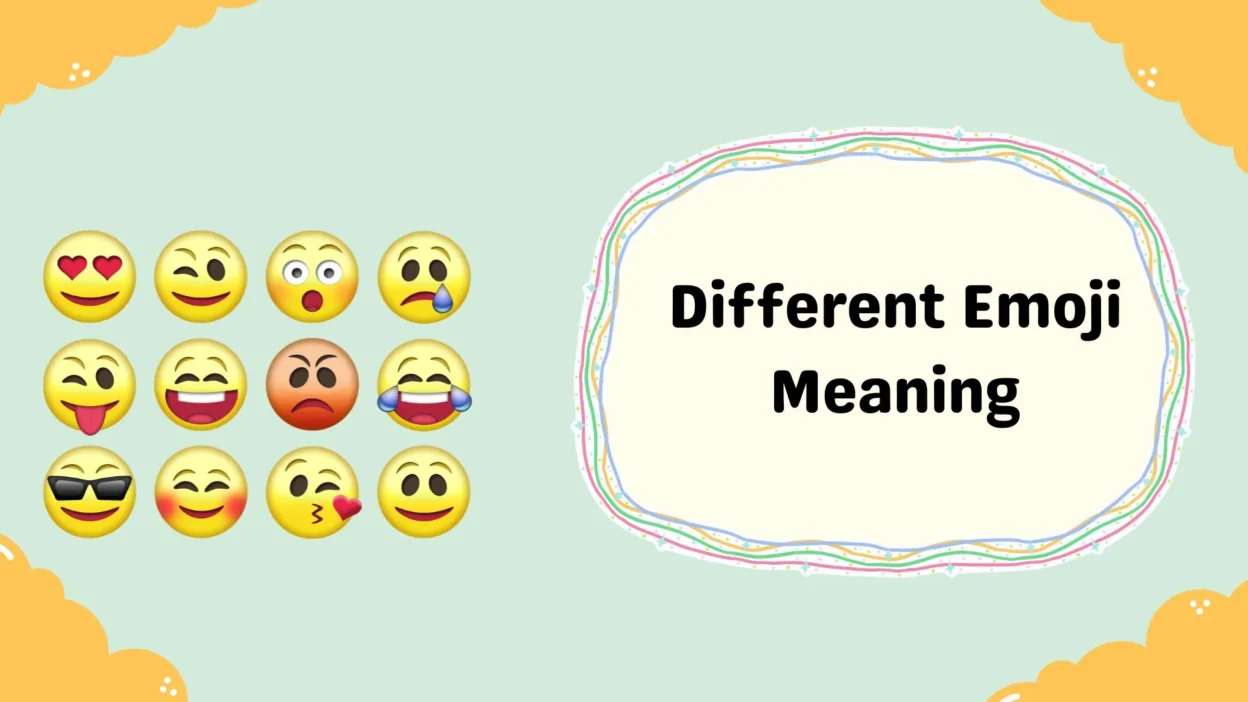
But have you ever received an emoji and wondered what the sender was actually trying to say? The Different Emoji Meaning can vary depending on the emoji, conversation, relationship, and even the platform where it is used.
A simple heart can show love, appreciation, or friendship, while a laughing face may express genuine humor, embarrassment, or sarcasm.
Quick Answer:
Different emoji meaning refers to the fact that one emoji can express more than one idea. Context, age group, culture, and platform decide the exact message. For example, the skull 💀 often means “I’m dying of laughter” among younger users, while older users may read it as something dark. Always look at the full message and the relationship with the sender to understand the true intent.
What Does “different emoji meaning” MeanING
Different emoji meaning simply means that emojis do not have one fixed dictionary definition the way regular words do. Each emoji has an official name given by the Unicode Consortium (the group that standardizes them), but people use them in flexible, creative ways.
In plain English, an emoji is a small digital picture that stands in for a feeling, object, action, or idea. The red heart ❤️ is officially “red heart,” but people use it for love, friendship, thanks, or even “I like this.” The face with tears of joy 😂 is officially for intense laughter, yet some people drop it when they feel mildly amused.
The most common meaning of any emoji is the one most people in a certain group agree on right now. That meaning can shift over time and across countries. This is why searching for different emoji meaning is so popular. People want the real-world usage, not just the official label.
Meaning in Different Contexts
Emojis change flavor depending on where and how you use them. Here is how the same symbols often work in everyday places.
Everyday Conversation
In face-to-face chats turned into text, emojis fill the gap left by missing body language and tone of voice. A simple smile 😊 softens a request. An eye-roll 🙄 shows mild annoyance without sounding harsh. People use them to keep the mood light and friendly.
Text Messages
Texting is where most people first learn different emoji meaning. A single thumbs-up 👍 can mean “okay,” “got it,” or, among some younger users, a polite but distant “whatever.” Pairing a heart with a message about plans often shows warmth. Sending only a skull 💀 after a joke usually means the joke landed hard.
Social Media
On platforms like Facebook or X, emojis become public reactions. The fire 🔥 under a post says “this is hot or impressive.” Clapping hands 👏 mean applause or strong agreement. Users also stack emojis to create mini-stories or inside jokes that their followers understand.
WhatsApp chats feel personal. People use the folded hands 🙏 for thank you or please. The pleading face 🥺 often means “pretty please” or soft begging. Group chats fill with laughing faces and hearts to keep everyone connected.
Snapchat
Snapchat leans playful and temporary. The eyes 👀 can mean “I see you” or “watching the drama.” Bitmojis and sticker-style emojis add extra layers of personality. Users often send streaks of the same emoji to keep a conversation going.
Instagram captions and comments love visual language. Heart-eyes 😍 under a photo means pure admiration. The sparkles ✨ add a touch of magic or “this is special.” Stories and Reels use emojis as quick reactions that match the visual content.
TikTok
TikTok moves fast and invents new uses quickly. The skull 💀 and the loud cry 😭 often mean something is hilariously over-the-top. Users drop the nail-polish 💅 for “unbothered” energy. Trends can give an emoji a temporary new meaning that spreads across the app.
Gaming
In game chats and Discord servers, emojis become shorthand for team talk. The flexed bicep 💪 means “let’s go” or “strong play.” The thinking face 🤔 shows strategy talk. Players invent combos that only the group understands, turning emojis into a private code.
Professional Communication
Work messages need extra care. A simple thumbs-up 👍 or check mark ✅ usually stays safe for approval. Smiling faces can feel too casual in formal emails. Many people avoid ambiguous faces or food emojis that carry slang meanings. When in doubt, stick to clear, positive icons.
Internet Slang
Online communities constantly remix emoji meanings. What starts as a literal picture can become ironic, sarcastic, or coded. The upside-down smile 🙃 often signals “I’m fine but not really.” The slightly smiling face 🙂 can feel passive-aggressive to some younger users. Staying aware of current slang helps you keep up.
Examples of “different emoji meaning”
Here are five everyday examples that show how context changes everything.
Example 1
Sentence: “Just finished the report 👍”
Meaning: Simple acknowledgment that the task is done and everything is fine.
Situation: Work chat with a coworker. The thumbs-up keeps the tone professional and short.
Example 2
Sentence: “That movie was so bad 💀”
Meaning: The movie was so terrible it was funny, or the person is “dead” from second-hand embarrassment.
Situation: Casual text between friends after watching a film together. Younger users almost always read the skull as laughter here.
Example 3
Sentence: “Can you help me with this? 🥺”
Meaning: Soft, cute request that asks for kindness rather than a demand.
Situation: Message from a partner or close friend asking for a favor. The pleading face makes the ask feel gentle.
Example 4
Sentence: “New shoes came in 🔥”
Meaning: The shoes look stylish, impressive, or “on fire.”
Situation: Instagram story or group chat where someone shares a purchase. Fire signals excitement and approval.
Example 5
Sentence: “Meeting at 3 🙏”
Meaning: Please confirm, thank you in advance, or a polite request.
Situation: Group message about a schedule. Folded hands add politeness without extra words.
These examples show why different emoji meaning matters. The same icon shifts with the words around it and the relationship between the people talking.
When Do People Use “different emoji meaning”?
People reach for emojis in almost every digital space because they save time and add feeling. Friends use them to keep chats warm. Couples use them to flirt or show care. Colleagues use a limited set to stay friendly without crossing lines. Content creators drop them to boost engagement and make posts more visual.
Common situations include reacting to good news, softening bad news, showing agreement, expressing laughter, or filling awkward silence. Younger users tend to use more ironic or layered meanings. Older users often stick closer to the literal picture.
Appropriate times are casual chats, social posts, and light work messages. Inappropriate times include serious legal or medical emails, formal job applications, or any message where clarity is more important than personality. When the stakes are high, words usually work better than pictures.
Different Meanings of Popular Emojis
Many emojis carry more than one everyday reading. Here are some of the most searched ones explained clearly.
😂 Face with Tears of Joy
Definition: Extreme laughter.
Context: Most common reaction to something funny.
Example: “That joke killed me 😂”
😭 Loudly Crying Face
Definition: Can mean deep sadness or laughing so hard you cry.
Context: Depends on the message. With a sad story it is genuine; with a meme it is often hilarity.
Example: “I can’t believe they said that 😭”
💀 Skull
Definition: Officially death or danger; online it usually means “I’m dead from laughing.”
Context: Gen Z and younger users almost never mean literal death.
Example: “This video is too much 💀”
🔥 Fire
Definition: Something excellent, attractive, trendy, or intense.
Context: Compliments on looks, food, performance, or ideas.
Example: “Your new haircut is 🔥”
🙏 Folded Hands
Definition: Prayer, thank you, please, or high-five.
Context: Gratitude and polite requests are the top uses in most places.
Example: “Thanks for the help 🙏”
🥺 Pleading Face
Definition: Soft begging, cuteness, or emotional reaction.
Context: Asking for favors or reacting to something adorable.
Example: “One more episode? 🥺”
👍 Thumbs Up
Definition: Approval or agreement.
Context: Can feel warm or distant depending on the relationship and age group.
Example: “Sounds good 👍”
🙂 Slightly Smiling Face
Definition: Mild happiness or politeness.
Context: Some younger users read it as forced or passive-aggressive.
Example: “Okay, see you then 🙂”
These layered meanings are exactly why people keep searching for different emoji meaning.
Origin of “different emoji meaning”
Emojis began in Japan in the late 1990s. Designer Shigetaka Kurita created an early set of 176 simple icons for the mobile company NTT Docomo in 1999. The goal was to make text messages more expressive on small screens. The word “emoji” comes from Japanese “e” (picture) and “moji” (character).
Earlier systems existed. SoftBank released a set in 1997. Japanese PDAs and word processors in the late 1980s already had picture characters. Before digital icons, people used emoticons made from keyboard symbols, such as 🙂 for a smile. American computer scientist Scott Fahlman popularized those in 1982.
Emojis stayed mostly in Japan until smartphones spread. Apple added emoji support in 2008 for the Japanese market, and the rest of the world soon discovered them. The Unicode Consortium began standardizing them around 2010 so the same icons would appear across phones and computers. Today there are more than 3,000 official emojis, and new ones arrive every year.
Meanings keep evolving because people invent new uses faster than any official list can update. Cultural differences and generational gaps add even more layers. That ongoing change is the real origin of different emoji meaning.
Similar Words and Alternatives
Emojis sit next to a few related tools.
Emoticons are the older text versions made from punctuation: 🙂 or :D. They do the same job but look simpler.
Stickers are larger, often animated images that platforms like WhatsApp and Instagram offer. They feel more like mini cartoons.
GIFs are short looping videos that show bigger reactions.
Reaction buttons on social media (like, love, haha) are limited official emoji choices.
Synonyms for talking about emoji meanings include “emoji definition,” “what this emoji means,” “emoji translation,” or “emoji dictionary.” Related phrases are “emoji slang,” “hidden emoji meanings,” and “emoji context.”
The main difference is that emojis are standardized pictures that travel across most apps, while stickers and GIFs stay inside specific platforms.
Common Mistakes
The biggest mistake is reading an emoji only by its picture and ignoring the rest of the message. A skull is rarely about actual death in casual chat. A slightly smiling face can feel cold if the words around it are short.
Another common error is assuming every generation uses the same meaning. What feels friendly to one age group can feel distant or sarcastic to another. Cultural differences also cause mix-ups; some gestures or colors carry extra weight in certain countries.
Frequently Asked Questions
What does the skull emoji really mean?
Among most younger users it means something is extremely funny or shocking in a humorous way. Older users may still read it more literally.
Why do people use the crying face for laughter?
The loudly crying face 😭 and the tears-of-joy face 😂 both show strong emotion. Over time the crying face became a popular way to show you are laughing so hard you cry.
Is the thumbs-up emoji rude?
It is usually friendly. In some younger circles it can feel like a short, distant reply, similar to saying “okay” and ending the chat.
What does the pleading face mean from a guy or girl?
It usually softens a request or shows vulnerability. Context decides whether it is playful, romantic, or simply polite.
Do emoji meanings change over time?
Yes. New slang and platform trends constantly shift how people use the same icons. What was popular five years ago can feel outdated today.
Are emoji meanings the same in every country?
No. Culture, language, and local trends create different readings. Always consider the sender’s background when possible.
Should I use emojis at work?
A few clear ones like thumbs-up or check marks are usually safe. Avoid anything that could be read as flirty, sarcastic, or unclear in professional messages.
Conclusion
The official names give a starting point, but real life adds the color. Context is everything. When you pause to look at the full message and the relationship, the meaning usually becomes clear.
Keep learning the current uses, stay curious about how different groups talk, and you will navigate digital conversations with more confidence and fewer awkward moments. The next time an emoji lands in your chat, you will know how to read it and how to reply..