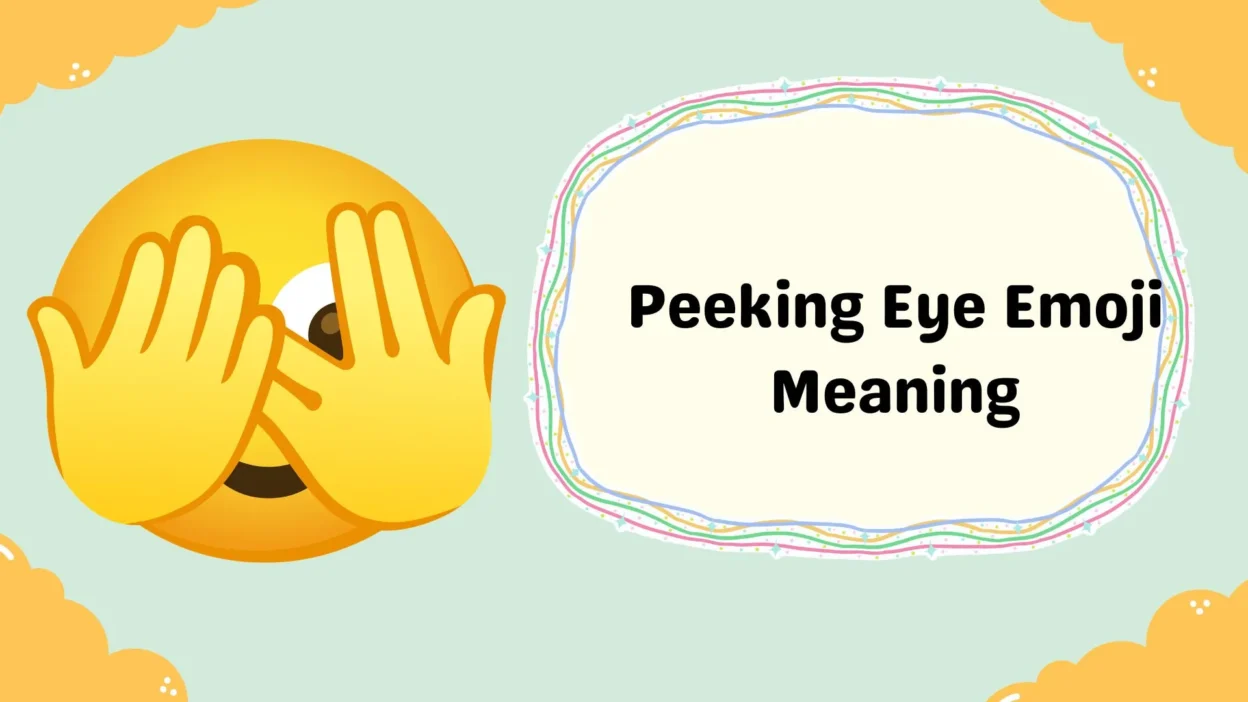
Have you ever received the 👀 peeking eye emoji in a message and wondered, “Wait… what exactly do they mean by that?” This tiny pair of eyes can say much more than simple curiosity.
The Peeking Eye Emoji Meaning can change completely depending on the conversation, the person sending it, and the situation.
Sometimes, 👀 shows that someone is interested in what you said, while other times it can suggest curiosity, suspicion, attraction, surprise, or even a playful “I’m watching” vibe.
Meaning & Definition
The peeking eye emoji (👀), officially called “Eyes” in the Unicode emoji list, shows a pair of wide, googly eyes glancing sideways. Its primary meaning in texting and social media is curiosity, suspicion, or playful attention-grabbing , basically the digital version of raised eyebrows and a knowing glance.
At its core, 👀 signals: “I’m watching,” “I see what’s happening here,” or “Tell me more.” It’s often used to react to gossip, a bold statement, or something juicy without needing to type a full response.
Examples in messages:
- Friend: “I might have a crush on someone in our group 👀”
- Reply: “👀👀👀 who is it?!”
Secondary meanings include a lighthearted way to flag that you’re paying attention to a thread, a subtle flirty nudge, or even a warning that “eyes are on you” in a more serious tone (like a manager watching a project closely).
Background & Origin
The 👀 emoji originated as part of the standard Unicode emoji set, designed simply to depict a pair of human eyes. Unlike slang abbreviations that evolved from typing shortcuts, this emoji’s meaning grew almost entirely through cultural and internet usage rather than literal definition.
Its popularity exploded on platforms like Twitter (now X) and Tumblr, where users began using it as a reaction to spill-worthy tweets, subtweets, or unexpected announcements. Over time, meme culture cemented 👀 as shorthand for “this is interesting” or “I’m nosy about this,” and it eventually crossed over into everyday texting and Instagram comments.
Usage in Different Contexts
Texting or chat messages: Used to react to secrets, gossip, or surprising news. Example: “I got the job!! 👀” (used here to build anticipation before revealing more).
Social media platforms: Common in comments and captions to hint at drama or hype without spelling it out. Example: A caption reading “New collab dropping soon 👀” teases followers.
Professional or technical settings: Occasionally used casually in workplace chats (like Slack) to indicate someone has seen a message or is monitoring an update. Example: “👀 on this thread, will follow up shortly.”
Platform-Specific Meanings
| Platform | Common Meaning | Example Use |
| Curiosity or playful teasing in group chats | “Guess who texted me 👀” | |
| Hype-building in comments/captions, hints of drama | “Wait till you see this 👀” | |
| TikTok | Reaction to plot twists or unexpected content in comments | “The ending though 👀” |
| Snapchat | Flirty or suspicious reaction to a snap | “Who’s this? 👀” |
| Twitter/X | Calling attention to controversial or juicy tweets | “This tweet aged well 👀” |
Other Fields Using the Symbol
Beyond casual chatting, the eyes emoji shows up in a few other everyday contexts:
- Content moderation & monitoring: Used informally to indicate “I’m keeping an eye on this.”
- Gaming communities: Reacting to suspicious player behavior or plot twists in a game.
- Customer service/chat support: Occasionally used to indicate a rep is reviewing a request.
Unlike text abbreviations such as DL (which can mean Download or Driver’s License), 👀 doesn’t have technical or legal definitions , its meaning stays rooted in casual, expressive communication.
Common Misconceptions & Mistakes
A common mix-up is assuming 👀 always means something negative or accusatory, when in most cases it’s simply playful curiosity. Some people also confuse it with a literal “watching you” warning, which can come across as creepier than intended if used with someone you don’t know well.
Another pitfall: sending 👀 in a professional context without context can seem passive-aggressive rather than attentive, so tone and relationship matter.
Similar Terms & Alternatives
| Term/Emoji | Meaning | Example Use |
| 👁️ (Eye) | Singular focus or literal reference to sight | “👁️ on the prize” |
| 🧐 (Monocle Face) | Skeptical curiosity | “Wait, what? 🧐” |
| SUS (Slang) | Suspicious | “That’s kinda sus 👀” |
| TEA (Slang) | Gossip | “Spill the tea 👀” |
If you enjoy decoding internet shorthand, you might also like our guides on DL meaning and IYKYK meaning for more texting lingo explained simply.
How to Respond , Chat Examples
With a friend: Friend: “I saw your ex today 👀” You: “Okay spill everything right now 😭”
With a crush: Crush: “Thinking about our conversation last night 👀” You: “Oh really? Good thoughts I hope 😉”
With a colleague: Colleague: “👀 on the budget report , numbers look off.” You: “Got it, I’ll double-check and send an update shortly.”
Differences from Similar Words
While 👀 hints at curiosity or attention, it’s not the same as words like Secret, Private, or Confidential. Those terms imply information is intentionally hidden, whereas 👀 usually signals someone noticing or reacting to something , it doesn’t inherently mean the info is off-limits. Think of it as an emotional reaction emoji rather than a privacy label.
Relevance in Online Conversations & Dating Apps
On dating apps, 👀 is a popular low-pressure way to show interest without committing to a full message. A simple 👀 reply to a bio detail or photo can spark conversation while keeping things light and flirty.
Example: Match sends a photo from a hiking trip, and you reply “👀 nice view (and I don’t just mean the mountains).”
Popularity & Trends Over Time
According to general social trends, the 👀 emoji has remained consistently popular for years, frequently spiking during viral moments, celebrity drama, or major news events where people want to react with curiosity rather than words. It’s a mainstay in meme culture, often paired with reaction GIFs or screenshots to imply “this is worth paying attention to.”
FAQs
1. What does the peeking eye emoji mean in texting? It usually signals curiosity, playful suspicion, or interest in more details about something.
2. Is 👀 flirty? It can be , especially when used in casual or dating conversations to hint at attraction or interest.
3. Can 👀 be used in professional chats? Yes, but sparingly. It’s best used to indicate attentiveness rather than sarcasm or suspicion.
4. What’s the difference between 👀 and 👁️? 👀 typically conveys curiosity or reaction, while 👁️ is more literal, often related to focus or vision.
5. Why do people use 👀 instead of typing a response? It’s a quick, expressive way to react to something intriguing without needing to write out a full sentence.
Conclusion
The peeking eye emoji meaning boils down to curiosity, playful attention, and subtle reaction , whether it’s gossip among friends, flirty banter on a dating app, or a lighthearted nudge in a group chat.
Context is everything, so next time you see (or send) a 👀, take a moment to consider the tone of the conversation before reading too much into it. Understanding these small digital cues can make your online conversations clearer, funnier, and a lot more fun.