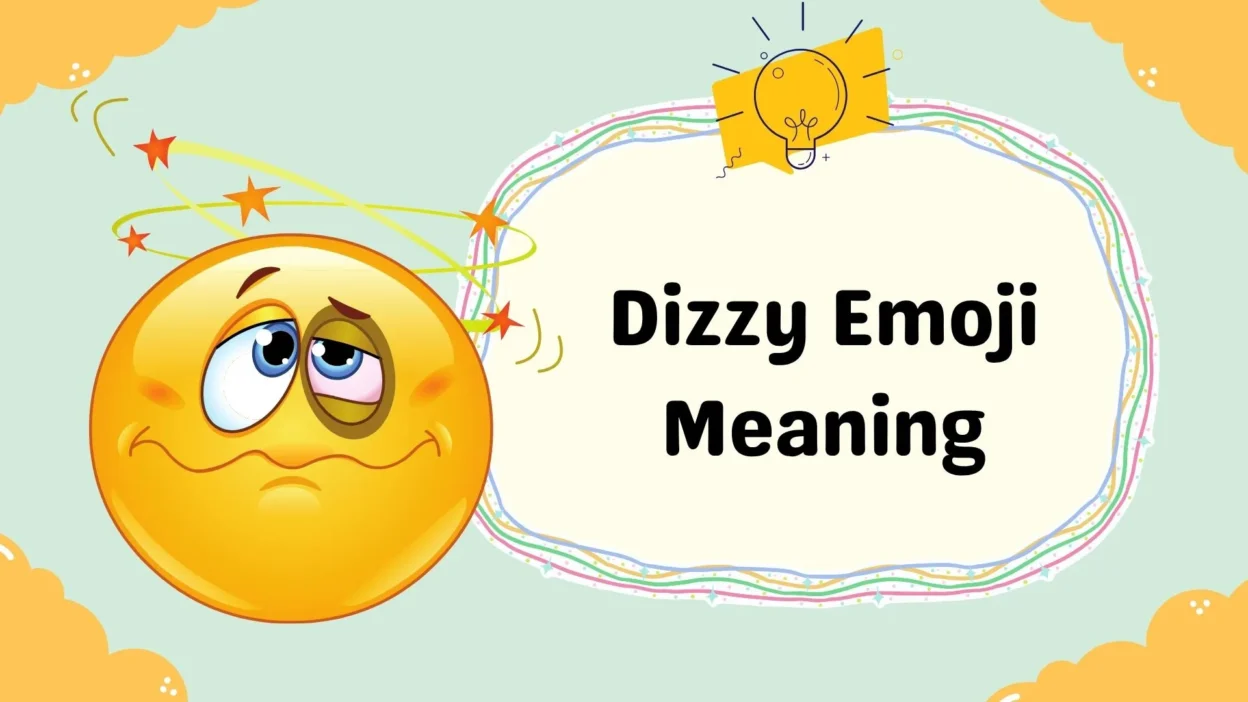
The dizzy emoji 💫 is a colorful and expressive symbol that can represent dizziness, confusion, excitement, magic, surprise, or feeling overwhelmed.
Its sparkling circular design often gives the impression that something is spinning around your head, making it perfect for describing a dizzy or disoriented feeling.
However, 💫 can have different meanings depending on the context. In texting, someone might use it after a shocking moment, a confusing situation, or something that leaves them speechless.
Quick Answer:
The dizzy emoji (mainly 😵💫 or 💫) shows that someone feels dizzy, confused, disoriented, lightheaded, or overwhelmed. It can also mean shock, intoxication, or playful amazement depending on the context.
What Does “Dizzy Emoji” Mean?
The dizzy emoji is a group of related symbols that all point to a spinning or off-balance feeling. The three you see most often are:
- 😵💫 Face with Spiral Eyes
- 💫 Dizzy Symbol (the swirling star)
- 😵 Face with Crossed-Out Eyes (sometimes still called the old dizzy face)
In plain English, the dizzy emoji means your head is spinning. You feel lightheaded. The world feels a bit wobbly. Something has thrown you off balance, physically or mentally.
The literal cartoon idea comes from old comics and cartoons. When a character gets hit on the head or spins around too fast, artists draw stars or spirals around their head. That visual became the emoji.
The most common meaning today is disorientation or overwhelm. Someone might use 😵💫 after a long day, a confusing conversation, a roller-coaster ride, or too many drinks. The 💫 star often adds a lighter or more magical touch, while 😵 leans toward shock or “I’m done.”
These emojis are visual shortcuts. Instead of typing a long explanation, one symbol says “my head is spinning right now.”
Meaning in Different Contexts
Context changes everything with the dizzy emoji. The same icon can feel playful in one chat and serious in another. Here is how it usually works across common places.
Everyday Conversation
In face-to-face talks or casual spoken stories, people use the dizzy emoji in texts that follow up on real life. Someone might say they stood up too fast and felt dizzy, then drop 😵💫. Or after spinning in an office chair for fun, they send it with a laugh. It keeps the tone light and relatable.
Text Messages
Texting is where the dizzy emoji shines. Friends use it to share how they feel without long paragraphs. “Just got off the bus and everything is spinning 😵💫” tells the story fast. It also works for mental overload: “This group project has me 😵💫.” The emoji softens the complaint and invites support or a joke back.
Social Media
On platforms like Facebook or X (formerly Twitter), the dizzy emoji reacts to big news or wild posts. A shocking headline might get a string of 😵💫. People also use it under funny videos that leave them “seeing stars.” It signals strong reaction without typing much.
WhatsApp chats among family and friends often use the dizzy emoji for daily life updates. After a long family gathering or a busy school day, someone might reply “I’m 😵💫.” It feels warm and honest. In group chats it can mark the moment when a joke or story gets too chaotic.
Snapchat
Snapchat leans playful and visual. The dizzy emoji appears in captions under snaps of spinning rides, dance challenges, or late-night hangs. It matches the app’s quick, fun energy. Filters that make everything swirl pair naturally with 😵💫 or 💫.
Instagram captions and stories love the dizzy emoji for both aesthetic and honest posts. Someone might post a carousel of a mistaken weekend with “Still recovering 😵💫.” Beauty or fashion posts sometimes add 💫 for a dreamy, starry vibe. Reels about confusing trends or viral challenges also collect these reactions in the comments.
TikTok
TikTok comments are full of 😵💫. Viewers drop it under videos that are mind-blowing, confusing, or hilariously over-the-top. Creators use it in captions when a trend leaves them speechless. The emoji matches the platform’s fast, high-energy feel. It can mean “this broke my brain in the best way.”
Gaming
In gaming chats and Discord servers, the dizzy emoji shows up after intense matches or confusing game mechanics. “That boss fight left me 😵💫” is common. It also marks motion sickness from first-person games or the mental fog after hours of play. Streamers use it in titles or chat reactions when something wild happens on screen.
Professional Communication
In work chats the dizzy emoji needs care. Among close teammates it can lighten a tough day: “This deadline has me 😵💫 but we got this.” In more formal settings it is safer to skip it. Clients or bosses might misread it as unprofessional or overly casual. When in doubt, use plain words.
Internet Slang
Online, the dizzy emoji has become slang for mental overload or playful confusion. People stack it, 😵💫😵💫😵💫, to show the feeling is strong. In meme culture it pairs with phrases like “brain go brrr” or “I can’t even.” It also shows up in fandom spaces when a celebrity or plot twist makes fans “dizzy with excitement.”
Examples of “Dizzy Emoji”
Here are real-life style examples that show how the dizzy emoji works in practice.
- Sentence: “Stood up too fast after sitting all day. Everything is spinning 😵💫”
Meaning: Literal physical dizziness.
Situation: Someone texting a friend right after feeling lightheaded at their desk. - Sentence: “Just finished that 12-hour shift. My brain is completely 💫”
Meaning: Mental exhaustion and overwhelm.
Situation: A nurse or retail worker updating their partner at the end of a long day. - Sentence: “This plot twist in the new season has me 😵💫 I did not see that coming!”
Meaning: Shock mixed with confusion and excitement.
Situation: Commenting under a TV show discussion post or group chat about a series. - Sentence: “One more ride on the roller coaster and I’m done 😵”
Meaning: Feeling physically woozy and ready to stop.
Situation: Texting from an amusement park with friends. - Sentence: “Trying to follow this new recipe and the instructions have me 😵💫”
Meaning: Mild confusion and frustration while learning something new.
Situation: Cooking at home and chatting with a family member for help. - Sentence: “After three cups of coffee and no sleep I’m seeing stars 💫”
Meaning: Over-caffeinated or sleep-deprived lightheadedness.
Situation: Late-night study session or early morning work message. - Sentence: “That magic show was pure 💫 I still can’t figure out the tricks.”
Meaning: Amazement with a touch of delightful confusion.
Situation: Sharing a photo from a live performance on Instagram Stories.
These examples show the emoji stays flexible. The surrounding words always guide the exact feeling.
When Do People Use “Dizzy Emoji”?
People reach for the dizzy emoji in everyday moments when words alone feel too slow or flat. Common situations include:
- Feeling lightheaded after exercise, heat, or standing up quickly
- Mental overload from work, school, or too much information
- After laughing hard or hearing something shocking
- Describing the aftermath of a party or late night
- Reacting to confusing instructions or complicated news
- Showing playful overwhelm in fandom or entertainment talk
Who uses it? Almost everyone who texts. Teens and young adults use it most freely on social apps. Adults use it with friends and family. Coworkers use it carefully in casual team chats. Gamers and online communities treat it as everyday slang.
Why do people use it? It is fast, visual, and emotional. One symbol carries the feeling of spinning without a long explanation. It also softens complaints so they feel less heavy. A simple “I’m 😵💫” can invite care or a joke instead of worry.
Appropriate situations are casual chats, social media reactions, and light professional messages among people who know each other well. Inappropriate times include formal emails, serious medical conversations (better to use clear words), or any setting where the emoji might look careless. If someone is truly unwell, words matter more than icons.
Different Meanings of “Dizzy Emoji”
The dizzy emoji family carries a few clear shades of meaning. Each one depends on which symbol you pick and the words around it.
1. Physical Dizziness or Lightheadedness
Definition: Your body feels unsteady. The room seems to move.
Context: After spinning, heat, low blood sugar, motion sickness, or standing too fast.
Example: “Got off the merry-go-round and now I’m 😵💫”
2. Mental Confusion or Overwhelm
Definition: Too much information or stress has your thoughts spinning.
Context: Work deadlines, complicated explanations, or information overload.
Example: “This new software update has me completely 😵💫”
3. Shock or Disbelief
Definition: Something surprising hits so hard you feel knocked off balance.
Context: Unexpected news, plot twists, or sudden changes.
Example: “They announced the surprise guest and I was 😵”
4. Intoxication or Hangover Feeling
Definition: The woozy, spinning sensation linked to alcohol or similar effects.
Context: After a night out or describing the next-day fog. Use carefully and never to promote unsafe behavior.
Example: “Last night was fun but today I’m 😵💫”
5. Playful Amazement or Starstruck Feeling
Definition: Delightful overwhelm, often with a magical or exciting edge.
Context: Seeing something beautiful, meeting a favorite person, or watching a great performance.
Example: “That concert left me 💫”
6. Hypnosis or Trance-Like State
Definition: Feeling under a spell or mentally checked out in a dreamy way.
Context: Watching a long video, listening to repetitive music, or joking about being mesmerized.
Example: “This song has me 😵💫 in the best way”
These meanings overlap in daily use. The face with spiral eyes (😵💫) leans strongest toward pure dizziness and confusion. The star (💫) often adds sparkle or magic. The crossed-out eyes (😵) leans toward “knocked out” or extreme shock.
Origin of “Dizzy Emoji”
The idea behind the dizzy emoji is older than phones. Cartoonists in the early 1900s started drawing stars or circles around a character’s head to show they were dazed. Looney Tunes and other classic animations made the “seeing stars” look famous. Japanese manga and anime later used similar spiral eyes for the same effect.
The actual emoji arrived in stages. The swirling star 💫 was approved in Unicode 6.0 in 2010 under the name “Dizzy Symbol.” It joined the first big wave of emoji that spread worldwide. The face with crossed-out eyes 😵 also arrived around the same time and was originally called “Dizzy Face.”
Platforms disagreed on how to draw the face. Some showed X-shaped eyes. Others used spirals. This caused confusion, the same code looked different on different phones. In 2020 Unicode fixed it by creating the Face with Spiral Eyes 😵💫 as a combination of the old dizzy face and the dizzy star. It became widely available in 2021 and quickly became the go-to symbol for true dizziness.
Culturally the symbol moved from pure cartoon pain to everyday digital feeling. What started as “I got hit on the head” now covers modern life, burnout, information overload, and playful reactions. The star version also picked up extra meanings of magic and sparkle because it looks like a shooting star.
No single inventor created the emoji. It grew from shared cartoon language into the standardized digital icons we use today.
Similar Words and Alternatives
Several emojis and phrases sit close to the dizzy emoji. Knowing the differences helps you choose the right one.
- 🥴 Woozy Face – Feels more drunk, tired, or lovesick. The mismatched eyes and wavy mouth look messier than pure dizziness.
- 🤯 Exploding Head – Mind blown by a big idea or surprise. More about sudden realization than spinning.
- 😵💫 vs 😵 – Spiral eyes = still conscious but spinning. Crossed-out eyes = more “knocked out” or done.
- 🌀 Cyclone / 🌪️ Tornado – Stronger spinning force, often used for chaos or weather.
- ✨ Sparkles or 🌟 Glowing Star – Positive shine and magic without the dizzy feeling.
- 🤢 Nauseated Face – Focuses on sickness more than spinning.
Text alternatives include “my head is spinning,” “I’m seeing stars,” “feeling woozy,” “brain fog,” or “completely overwhelmed.” Abbreviations like “idk” or “bruh” sometimes pair with the emoji for extra effect.
The dizzy emoji stays unique because it keeps that cartoon spinning visual. The others either look messier, more explosive, or purely positive.
Common Mistakes
People sometimes mix up the dizzy emojis or use them in ways that create confusion.
One common mistake is treating 😵 and 😵💫 as exact twins. They are close but not the same. 😵 often reads as “I’m dead” or extreme shock. 😵💫 reads more clearly as “dizzy or confused.” Using the wrong one can change the tone.
Another mistake is using the dizzy emoji in serious health talks without clear words. If someone feels truly unwell, “I feel dizzy and need help” is safer than the icon alone.
People also overuse the star 💫 for pure dizziness when the spiral-eyed face works better. The star has drifted toward magic and aesthetics for many users.
Incorrect usage example: Sending 😵💫 after a formal work email about a deadline. It can look too casual.
Correct usage: In a friend group chat after a confusing movie plot, 😵💫 fits perfectly.
Tips to avoid confusion:
- Match the emoji to the feeling and the relationship.
- Add a short phrase so the meaning is clear.
- Check how the emoji looks on different devices if the message matters.
- When in doubt, use words first and the emoji second.
Frequently Asked Questions
1. What is the difference between 😵 and 😵💫?
😵 has X-shaped eyes and often means knocked out, shocked, or “I’m done.” 😵💫 has spiral eyes and more clearly means dizzy, confused, or disoriented. The spiral version arrived later to reduce confusion between platforms.
2. Does the dizzy emoji always mean someone is drunk?
No. While it can show the spinning feeling after drinking, it more often means physical lightheadedness, mental overload, or playful confusion. Context decides the meaning.
3. Can I use the dizzy emoji at work?
Only in casual chats with teammates who know your style. Skip it in formal emails, client messages, or serious discussions. Clear words are safer in professional settings.
4. Why do people use 💫 if it is called the dizzy emoji?
Unicode named it the Dizzy Symbol because of the cartoon stars. Over time many people started using it for magic, sparkle, and positive vibes because it looks like a shooting star. Both meanings exist side by side.
5. Is the dizzy emoji the same on every phone?
Most modern phones show 😵💫 the same way now. Older devices or some platforms may still display the parts separately as 😵💫. The basic idea stays clear.
6. What does it mean when someone sends multiple dizzy emojis?
Stacking them (😵💫😵💫😵💫) usually means the feeling is stronger. It can signal big overwhelm, heavy confusion, or extra playful reaction.
7. Are there any hidden or NSFW meanings?
No widely accepted hidden adult meaning exists for the main dizzy emojis. They stay focused on dizziness, confusion, shock, and mild intoxication. Always read the full message for context.
Conclusion
The dizzy emoji meaning centers on that spinning, off-balance feeling, whether your body is lightheaded, your mind is overloaded, or something amazing has left you starstruck. The main symbols 😵💫, 💫, and 😵 give us quick visual ways to share those moments without long explanations. From everyday texts and social media reactions to gaming chats and light work messages, the emoji adapts to the situation while keeping its cartoon roots.
Remember that context always guides the exact reading. The same icon can signal a real physical wobble after a ride or pure mental fog after a long day. Knowing the small differences between the spiral eyes, the crossed-out eyes, and the swirling star helps you both send and understand the message clearly.