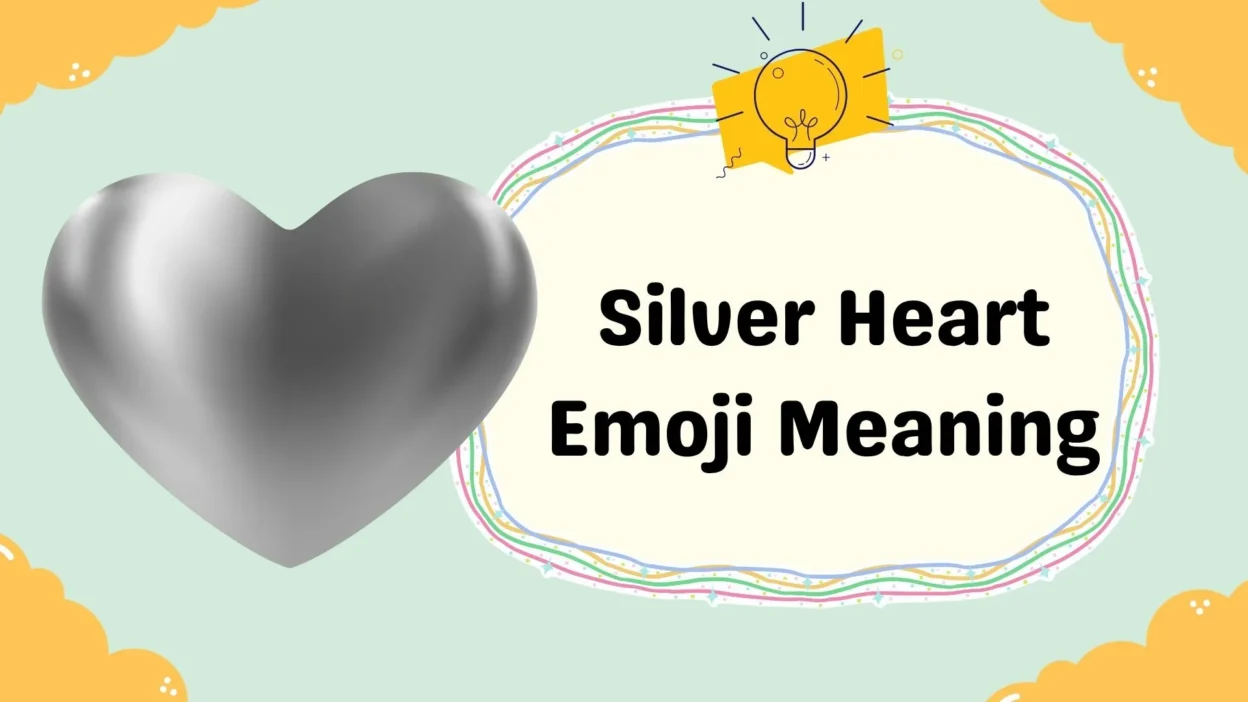
The silver heart emoji 🩶 is a subtle and elegant way to express emotions such as care, support, calmness, sympathy, and affection.
Unlike the classic red heart ❤️, the silver or gray heart can communicate a softer, more neutral feeling without always suggesting romance.
People often use 🩶 when they want to show that they care about someone, appreciate their presence, or offer emotional support during a difficult moment.
Quick answer:
The silver heart emoji (🩶) usually means understated affection, neutral or calm support, sincerity without intensity, or appreciation for something grey/silver. It is less romantic than a red heart and more reserved than most other colored hearts.
What Does “Silver Heart Emoji Meaning” Mean?
The silver heart emoji is the grey heart 🩶. On most phones and apps it appears as a soft, silvery-grey heart shape.
In plain English, it shows care or positive feeling in a quiet way. It does not shout romance or strong emotion. Instead it says something closer to “I like this,” “I’m here for you,” or “this feels calm and nice.”
The most common meaning is neutral or gentle affection. People reach for it when they want warmth without the full weight of a red heart. It can also simply mean the person likes the color grey or silver, or that the message fits a minimalist or elegant vibe.
Meaning in Different Contexts
Context decides almost everything with heart emojis. The same silver heart can feel supportive in one chat and distant in another.
Everyday Conversation
In casual talk the silver heart often softens a message. Someone might say “Thanks for the help today 🩶” to show appreciation without sounding formal or overly emotional. It keeps the tone friendly and balanced.
Text Messages
In private texts the silver heart frequently signals platonic care or quiet support. A friend might reply to bad news with “Thinking of you 🩶.” It feels present and kind without demanding a big emotional response. Between people who are not dating, it rarely reads as romantic.
Social Media
On platforms like Instagram or X (Twitter) the silver heart works well in comments and captions that aim for a clean or aesthetic look. People use it under photos with grey tones, silver jewelry, or calm scenery. It can also mark quiet solidarity or soft approval.
WhatsApp chats often treat the silver heart as a polite, low-pressure way to show you care. Group messages, family updates, or work-related friendly notes sometimes include it because it feels warmer than a simple “ok” yet safer than a red heart.
Snapchat
Snapchat’s special friendship hearts (yellow, red, pink) are separate badges. A silver heart that appears in a Snapchat chat is just the regular emoji. Users send it for the same reasons as in other texts: soft affection, aesthetic preference, or gentle support. It does not change your friendship ranking.
Instagram favors the silver heart for minimalist captions and fashion or lifestyle posts. A photo of a silver ring or a monochrome outfit might get “🩶” in the caption or comments. It also appears in softer support messages under personal posts.
TikTok
On TikTok the silver heart shows up in comments under calm, aesthetic, or emotional videos. Creators and viewers use it when they want to react positively without the high energy of red or pink hearts. It fits slower, more thoughtful content well.
Professional Communication
In work chats or professional messages the silver heart is usually safer than brighter hearts. It can politely acknowledge a kind gesture or good news while staying professional. Still, many workplaces prefer no hearts at all, so check the culture first.
Internet Slang and Aesthetic Use
Online, the silver heart sometimes stands for “grey area,” emotional neutrality, or a quiet, sophisticated vibe. People who like silver jewelry, grey aesthetics, or understated style adopt it as their signature heart.
Examples of “Silver Heart Emoji”
Here are five realistic examples that show how the silver heart works in daily life.
- Sentence: “Proud of you for finishing that project 🩶”
Meaning: Quiet pride and support.
Situation: A friend or colleague just completed hard work and you want to celebrate without sounding over-the-top. - Sentence: “This grey sweater is perfect 🩶”
Meaning: Appreciation for the color and style.
Situation: Commenting on a photo or shopping link that features silver or grey tones. - Sentence: “Here if you need anything 🩶”
Meaning: Calm availability and care.
Situation: Someone shared difficult news and you want to offer support gently. - Sentence: “Congrats on the new apartment 🩶”
Meaning: Warm but measured congratulations.
Situation: A casual acquaintance or coworker just moved and a red heart would feel too personal. - Sentence: “Love the silver details in this design 🩶”
Meaning: Aesthetic approval.
Situation: Reacting to art, jewelry, or interior photos on social media.
When Do People Use “Silver Heart Emoji”?
People reach for the silver heart when they want to express positive feeling without high intensity. Common situations include:
- Showing support during tough times in a low-key way
- Reacting to grey, silver, or minimalist visuals
- Keeping friendships warm but clearly platonic
- Adding a soft touch to thank-you messages
- Matching an elegant or quiet aesthetic in captions
Who uses it? Friends, family members, colleagues in casual settings, social-media users who prefer muted tones, and anyone who finds red hearts too strong. Younger users often choose it for style; older users may pick it because it feels polite and restrained.
Appropriate uses include supportive replies, aesthetic comments, and gentle appreciation. It becomes less appropriate when the relationship is clearly romantic and the other person expects stronger signals, or when the situation calls for clear enthusiasm. In very formal professional emails most people still skip hearts entirely.
Different Meanings of “Silver Heart Emoji”
The silver heart carries a few distinct shades of meaning depending on the conversation.
Understated affection or platonic care
Definition: Warmth without romance.
Context: Friendships and light social exchanges.
Example: “Miss our coffee chats 🩶”
Calm support or sympathy
Definition: Quiet solidarity during hard moments.
Context: Messages after bad news or stress.
Example: “Take your time. I’m here 🩶”
Neutrality or emotional balance
Definition: No strong positive or negative charge.
Context: Situations that feel in-between or undecided.
Example: “Still thinking about it 🩶”
Aesthetic or color preference
Definition: Love for grey/silver looks or minimalist style.
Context: Fashion, design, photography posts.
Example: “This palette is everything 🩶”
Sophistication or restraint
Definition: Elegant, composed feeling.
Context: Brand or personal posts that aim for a polished tone.
Example: “Simple and classic 🩶”
Origin of “Silver Heart Emoji”
The grey (silver) heart 🩶 joined the official emoji set in 2022 as part of Unicode 15.0 and Emoji 15.0. It was proposed to fill the gap between the white heart and the black heart, giving users a calm middle option.
Heart symbols themselves are much older. The familiar heart shape has roots in medieval European art and earlier plant motifs. Colored heart emojis began appearing in larger numbers in the 2010s as smartphones made emoji a daily language. The silver/grey version arrived later because people wanted more subtle emotional tools.
No single culture “owns” the silver heart. Its meanings grew organically from how users combined color psychology (grey as neutral, calm, or sophisticated) with the universal heart shape that already meant care.
Similar Words and Alternatives
- White heart 🤍 , closer to pure love, peace, or sympathy; often looks silvery on some screens.
- Black heart 🖤 , darker tone, can signal grief, dark humor, or edgy style.
- Blue heart 💙 , trust, loyalty, calm friendship.
- Yellow heart 💛 , friendship and happiness.
- Red heart ❤️ , classic love or strong affection.
The silver heart sits between white and black in both color and intensity. It feels cooler and quieter than most other options.
Common Mistakes
One frequent mistake is reading the silver heart as pure indifference or coldness. While it can signal neutrality, most people use it positively. Another error is treating it like a red heart and assuming romance. Context and the existing relationship matter more than the emoji alone.
People also sometimes send it in highly emotional romantic conversations where a stronger heart would match the moment better. Tip: Look at the rest of the message and how the person usually communicates. When in doubt, a short clarifying reply works better than overthinking a single emoji.
Frequently Asked Questions
What does the silver heart emoji mean from a guy or a girl?
Gender rarely changes the core meaning. Read the relationship and the rest of the text. It usually signals gentle care or neutral positivity rather than strong romantic interest.
Is the silver heart romantic?
Rarely. It is one of the least romantic heart options. Red, pink, or sparkling hearts carry more romantic weight.
Does the silver heart mean the same as the white heart?
They overlap but are not identical. The white heart leans toward purity and soft love; the silver/grey heart leans toward neutrality and understated support. On some devices the white heart looks silvery, which causes the mix-up.
What does the silver heart mean on Snapchat?
It is not a special friendship badge. Snapchat’s ranked hearts are yellow, red, and pink. A silver heart is just the regular emoji used for its normal meanings.
Can I use the silver heart at work?
In casual work chats or team messages it is often acceptable. In formal emails or with senior leadership most people avoid hearts.
Why do people use the silver heart instead of red?
They want to show care without sounding intense, romantic, or overly emotional. It also matches grey or minimalist aesthetics.
Is the silver heart a new emoji?
Yes. The grey heart 🩶 arrived in 2022 with Unicode 15.0. Older phones may not display it correctly until they update.
Conclusion
The silver heart emoji meaning centers on quiet care, neutral warmth, and understated appreciation. It gives people a way to express positive feeling without the strong emotional charge of brighter hearts. Whether it appears in a text after a hard day, a caption under a silver accessory, or a polite reply to good news, the emoji stays calm and flexible.
Context always guides the exact reading. The same symbol can feel supportive, aesthetic, or gently friendly depending on the conversation and the relationship. When you understand this range, the silver heart becomes a useful, low-pressure tool rather than a confusing one. Next time you see or send 🩶, pause for a moment to consider the surrounding words and the bond you share. That small habit turns a simple emoji into clearer, kinder communication.