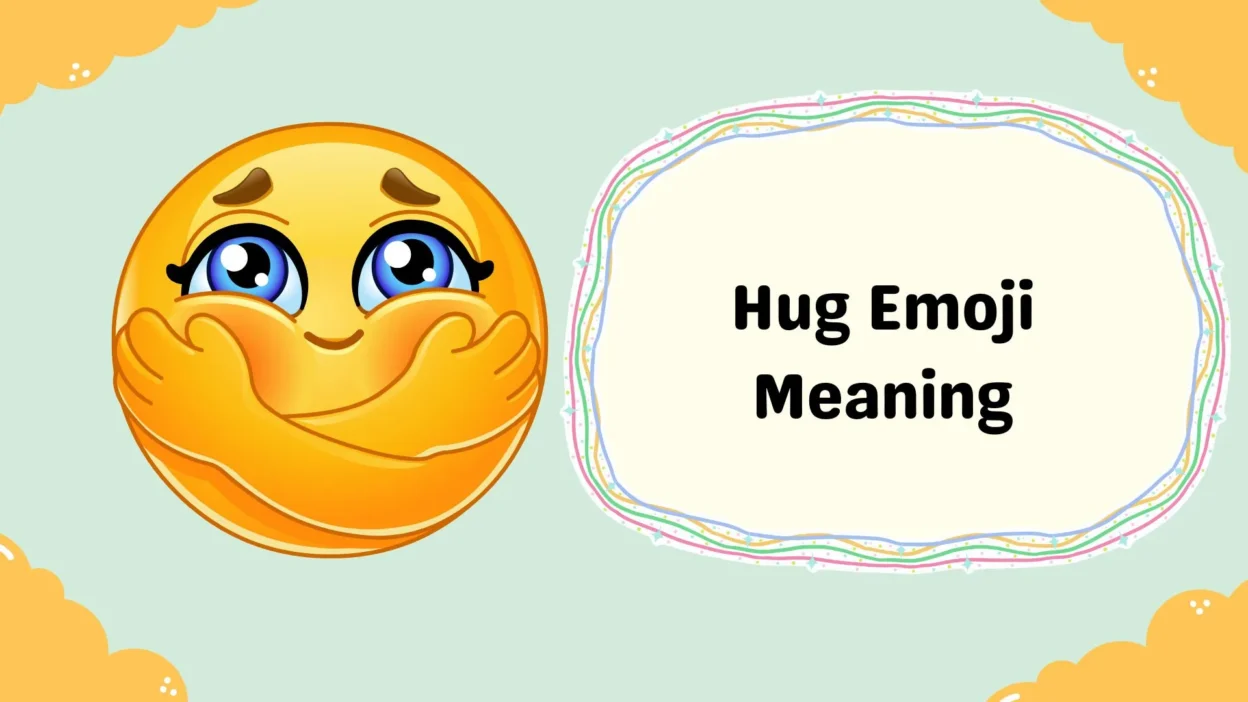
The Hug Emoji Meaning can be sweet, emotional, or even romantic depending on the conversation and the person who sends it.
The 🤗 emoji, commonly known as the Hugging Face emoji, is often used to express warmth, affection, comfort, happiness, support, or friendliness.
Someone may send it when they want to give you a virtual hug, show appreciation, cheer you up, or make a conversation feel more caring.
Quick answer:
The hug emoji 🤗 means a virtual hug. It shows affection, support, gratitude, or excitement. People use it to offer comfort, say thank you, celebrate good news, or simply send a friendly feeling when words alone feel cold.
What Does “Hug Emoji Meaning” Mean?
The hug emoji is a yellow smiling face with two open hands on either side. Officially it started as “Hugging Face” and is now often called “Smiling Face with Open Hands.” In everyday use, almost everyone just calls it the hug emoji.
In plain English, it means “I’m giving you a hug right now through this message.” The open hands and warm smile create a feeling of welcome and care. It is softer than a heart emoji and less intense than a kissing face. Most of the time it carries positive, friendly, or supportive energy.
The literal idea is simple: one person reaching out with open arms. The most common meaning is a digital version of that gesture, comfort, appreciation, or shared happiness. Because the hands sit in a somewhat ambiguous position, some people also read it as jazz hands, which adds a layer of excitement or playful emphasis.
Meaning in Different Contexts
The hug emoji meaning stays positive in most places, but the exact feeling changes with the conversation and the app.
Everyday Conversation
In regular chats with friends or family the hug emoji usually means pure warmth. Someone might say “Miss you” and add 🤗. It feels like a soft verbal hug. It can also close a message on a kind note, the same way a real hug ends a visit.
Text Messages
Texting is where the hug emoji shines. When someone shares bad news, “I’m so sorry 🤗” offers quiet support. After good news it becomes “That’s amazing 🤗.” Many people use it as a friendly way to say thank you without sounding too formal.
Social Media
On platforms like Facebook or X (Twitter), the hug emoji often appears in comments under personal posts. It can mean “sending support” under a tough update or “so happy for you” under a celebration. In replies it softens the tone and makes the comment feel more personal.
WhatsApp chats rely heavily on emojis for tone. The hug emoji is a favorite for group good-mornings, birthday wishes, and check-ins. In private chats it can feel a little more intimate depending on who sends it. Families and close friends use it freely; newer contacts use it more carefully.
Snapchat
On Snapchat the hug emoji often appears in streaks or quick replies. It can keep a light, caring vibe going. Because Snapchat feels temporary and casual, the emoji usually stays playful rather than deep.
Instagram comments and DMs use the hug emoji for encouragement. Under a photo someone might write “Love this 🤗” to show friendly appreciation. In Stories replies it often means “you’ve got this” or “thinking of you.”
TikTok
TikTok comments move fast. The hug emoji shows up under emotional or wholesome videos as a quick sign of support or shared feeling. Creators sometimes reply with it to thank viewers in a warm way.
Gaming
In gaming chats the hug emoji is less common than celebration or reaction emojis, but it still appears. Players might send it after a tough loss to say “we’ll get them next time” or after a win to share the moment with teammates. It keeps the mood friendly.
Professional Communication
At work the hug emoji is usually limited. Some teams that are already informal use it to thank a colleague for help or to celebrate a small win. In more formal settings people stick to text or a simple smiley so the message stays professional. Context and company culture decide whether it feels appropriate.
Internet Slang
Online the hug emoji can take on a slight jazz-hands energy. When someone types something dramatic or exciting and adds 🤗, it can read as “ta-da!” or playful emphasis. In rare cases the open hands have been used with a slightly sarcastic or distancing tone, almost like a polite “there, there.” Most of the time, though, the friendly reading wins.
Examples of “Hug Emoji Meaning”
Here are five everyday examples that show how the hug emoji works in real messages.
- Sentence: “I heard about the exam results. You’ve got this next time 🤗”
Meaning: Support and encouragement.
Situation: A friend just failed a test and feels down. The emoji softens the message and shows care without being dramatic. - Sentence: “Thank you so much for covering my shift yesterday 🤗”
Meaning: Genuine gratitude with a personal touch.
Situation: A coworker helped out. Adding the emoji makes the thank-you feel warmer than plain text. - Sentence: “We finally booked the trip!! 🤗🎉”
Meaning: Shared excitement and happiness.
Situation: Friends planning a vacation. The hug emoji adds a feeling of togetherness to the celebration. - Sentence: “Thinking of you today. Hope you’re okay 🤗”
Meaning: Quiet comfort and presence.
Situation: Someone is going through a hard anniversary or loss. The emoji stands in for a real hug when distance makes that impossible. - Sentence: “You did an amazing job on the presentation 🤗”
Meaning: Warm praise and appreciation.
Situation: A manager or teammate acknowledging good work in a slightly informal team chat.
When Do People Use “Hug Emoji Meaning”?
People reach for the hug emoji in moments that call for warmth but do not need heavy words.
Common situations include offering comfort after bad news, saying thank you for a favor, celebrating good news together, checking in on someone who is struggling, ending a message on a kind note, and showing friendly affection when a heart emoji would feel too strong.
Who uses it? Almost everyone, teens, adults, parents, friends, partners, and casual acquaintances. Younger people tend to use it more freely across apps. Older users often reserve it for closer relationships.
Why do people use it? Text alone can feel flat. The emoji adds emotional color. It bridges physical distance. It also helps avoid misunderstandings by signaling positive intent.
Appropriate times are personal chats, supportive replies, and informal group messages. It can feel out of place in very formal emails, serious professional feedback, or conversations where the other person prefers minimal emojis. When in doubt, match the other person’s style.
Different Meanings of “Hug Emoji Meaning”
The hug emoji carries a few related but distinct shades of meaning.
Virtual hug / affection
Definition: A digital stand-in for a real embrace.
Context: Close friends, family, partners.
Example: “Miss you already 🤗”
Support and comfort
Definition: “I’m here for you” without needing many words.
Context: Difficult moments, bad news, hard days.
Example: “So sorry you’re going through this 🤗”
Gratitude
Definition: A warm thank-you.
Context: After help, kindness, or a favor.
Example: “Thanks for listening 🤗”
Excitement or celebration
Definition: Shared joy, sometimes with a jazz-hands feel.
Context: Good news, achievements, fun plans.
Example: “You got the job!! 🤗”
Friendly welcome or openness
Definition: A soft “come here” or “glad you’re here.”
Context: Group chats, new connections, positive replies.
Example: “Welcome to the team 🤗”
These meanings overlap. The surrounding words and the relationship almost always make the intended feeling clear.
Origin of “Hug Emoji Meaning”
The hug emoji was approved as part of Unicode 8.0 in 2015 and added to the official emoji set the same year. Its original name was “Hugging Face.” Later the name shifted in some systems to “Smiling Face with Open Hands” because the design does not always read clearly as a hug.
Before the official emoji, people used text-based kaomoji such as \(^-^)/ or simple ASCII hugs to show the same feeling. Early chat systems and Gmail also experimented with animated hug sequences. The 2015 Unicode release gave the world a standardized version that worked across phones and platforms.
The design shows a smiling face with open hands. On some platforms the hands reach outward; on others they sit closer to the face. This small difference is one reason people sometimes see jazz hands instead of a hug. In 2018 Elon Musk publicly noted that his phone suggested the emoji when he typed “jazz hands,” which helped popularize that alternative reading.
Because the original emoji was not always clear enough for serious comfort, Unicode later approved a second hug emoji, 🫂 People Hugging, in 2020. That one shows two faceless figures embracing and is often preferred when the message needs to feel more genuine and less playful.
The AI company Hugging Face also adopted the 🤗 emoji as part of its brand identity, giving the symbol an extra life in tech communities.
Similar Words and Alternatives
Several emojis and phrases carry related feelings.
- 🫂 People Hugging – a clearer, more literal hug between two people. Better for serious support.
- ❤️ Red Heart – stronger affection or love. More intense than a simple hug.
- 🥰 Smiling Face with Hearts – warm adoration, often romantic or very fond.
- 😊 Smiling Face with Smiling Eyes – general friendliness without the hug gesture.
- 🙌 Raising Hands – celebration or praise, closer to the jazz-hands reading of 🤗.
- 👐 Open Hands – openness or offering, but without the face.
- Text alternatives: “sending a hug,” “virtual hug,” “big hug,” or simply “hugs.”
The main difference is intensity and clarity. 🤗 sits in the middle, warmer than a basic smile, lighter than a heart or the two-person hug.
Common Mistakes
One frequent mix-up is treating 🤗 as purely romantic. Most of the time it is friendly or supportive. Sending it to someone who expects only professional language can feel too casual. Another mistake is using it when the other person is sharing very heavy news and a more serious emoji (or plain words) would feel more respectful.
Some people still see the hands as awkward or “grabby,” which can make the emoji feel slightly off in certain designs. The newer 🫂 emoji solves that problem for many users.
Tips to avoid confusion:
- Match the relationship and the tone of the chat.
- Pair the emoji with clear words so the meaning is obvious.
- Notice how the other person uses emojis and mirror their style.
- When in doubt, a simple “thinking of you” or “thank you” works fine on its own.
Frequently Asked Questions
What does the hug emoji mean from a girl?
Usually warmth, support, or friendly affection. It can be a virtual hug, a thank-you, or gentle encouragement. Context and the rest of the message decide whether it feels more platonic or a little flirty.
What does the hug emoji mean from a guy?
The same core meanings, support, gratitude, friendliness, or shared happiness. In a romantic conversation it can feel caring; in a casual one it stays light.
Is the hug emoji flirty?
It can be, but it is rarely the strongest flirting signal. Hearts, kissing faces, or specific compliments usually carry more romantic weight. The hug emoji is safer and more flexible.
What’s the difference between 🤗 and 🫂?
🤗 is a smiling face with open hands and often feels lighter or more excited. 🫂 shows two people actually hugging and feels more direct and comforting, especially in serious moments.
Can I use the hug emoji at work?
In informal teams or friendly coworker chats, yes. In formal emails or with people you barely know, it is safer to skip it.
Why do some people call it jazz hands?
Because the open hands look similar to the theatrical “jazz hands” gesture. Phone keyboards sometimes even suggest the emoji when you type those words.
Does the hug emoji mean the same on every platform?
The core idea stays the same, but the exact drawing of the hands and face can look slightly different on Apple, Google, Samsung, or other systems. The feeling people intend is usually consistent.
Conclusion
The hug emoji meaning is simple at heart: it is a digital hug. People use 🤗 to offer comfort, show gratitude, share excitement, and keep conversations feeling warm when they cannot be in the same room. Its exact shade of meaning depends on the words around it, the relationship, and the platform, but the overall tone stays positive and caring.
Understanding this emoji helps you read messages more accurately and reply with the right energy. Whether you are supporting a friend, thanking a colleague, or celebrating good news, the hug emoji gives you a quick, friendly way to connect. Just remember that context always matters more than any single symbol. When you choose emojis that match the moment and the person, your messages feel clearer and kinder.