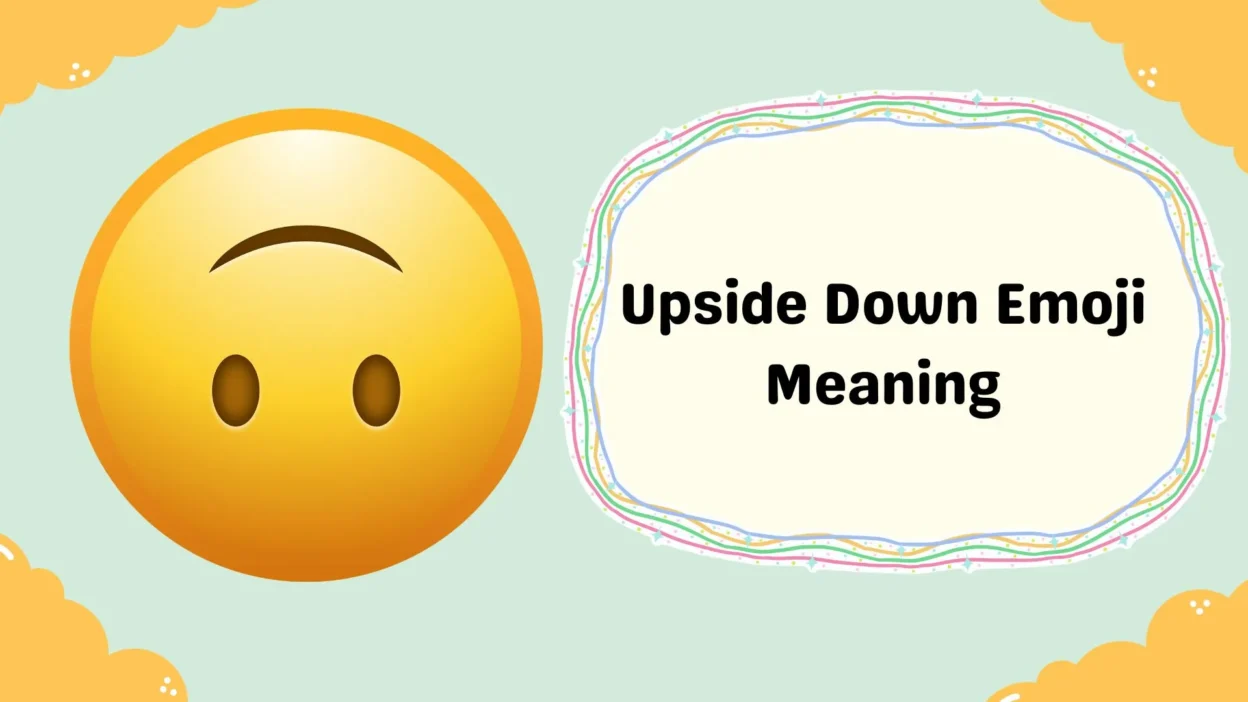
The Upside Down Emoji Meaning can be confusing because the 🙃 emoji often says more than its cheerful-looking face suggests.
Officially known as the Upside-Down Face emoji, 🙃 is commonly used to express sarcasm, irony, awkwardness, playful frustration, or a situation that is not going exactly as expected.
Someone may send it when they are joking about an uncomfortable moment, pretending everything is fine when it clearly is not, or adding a humorous twist to their message.
Quick Answer:
The upside-down emoji 🙃 most often shows sarcasm, irony, silliness, light embarrassment, or resigned acceptance of a frustrating situation. It tells the other person the message is not fully serious or that the sender is smiling while something feels off.
What Does “Upside-Down Emoji Meaning” Mean?
The upside-down emoji is officially called Upside-Down Face. It looks exactly like the slightly smiling face 🙂 but turned completely upside down. On almost every phone and platform the mouth still curves the same way, yet the whole face is flipped.
In plain English, it means the speaker is not being completely straightforward. The smile is there, but something about the situation has been turned on its head. Think of it as a visual way to say “I’m smiling, but…” or “this is fine (even though it’s not).”
Its most common meaning is sarcasm or irony. When words alone could sound too harsh or too serious, people add 🙃 so the other person knows they are joking or not fully serious. It also frequently shows silliness, mild embarrassment, or the feeling of “what can you do?” when something goes wrong but you have to keep going.
Unlike a regular happy face, this one rarely expresses pure joy. The inversion itself carries the message that the situation or the words are a bit topsy-turvy.
Meaning in Different Contexts
The upside-down emoji meaning changes depending on where and how people use it. Context is everything.
Everyday Conversation
In casual talk with friends or family, 🙃 often lightens the mood. Someone might say they burned dinner or missed the bus and end with the emoji. It softens the complaint and invites a shared laugh instead of sympathy. It works like a digital shrug that keeps the conversation friendly.
Text Messages
Texting is where the emoji shines. Without voice tone or facial expressions, messages can sound flat or harsh. Adding 🙃 signals “don’t take this the wrong way.” It is especially useful after a sarcastic comment or an admission of a silly mistake. Many people treat it as a tone indicator that prevents misunderstandings.
Social Media
On platforms like Twitter/X or Facebook, the upside-down face often appears under posts about everyday frustrations or ironic observations. Someone might share a photo of a chaotic morning and caption it with 🙃. It tells followers the poster is laughing at the mess rather than complaining seriously.
In WhatsApp group chats and private messages the emoji is extremely common. Friends use it when sharing awkward stories, when plans change last minute, or when someone makes a self-deprecating joke. Because WhatsApp feels more personal than public social media, the emoji often carries a warmer, more resigned tone of “we’re all in this together.”
Snapchat
Snapchat users lean into the playful side. The upside-down face appears in snaps that show silly faces, failed attempts at something, or light teasing between friends. It fits the temporary, fun nature of the app and rarely feels heavy.
On Instagram the emoji shows up in comments and captions. People use it under Relatable posts about adulting fails, funny fails, or mildly embarrassing moments. It helps captions feel casual and self-aware rather than polished.
TikTok
TikTok creators and commenters love 🙃 for ironic or chaotic energy. It pairs well with videos about everyday disasters or deadpan humor. In comments it can mean “this is so true it’s painful” or “I felt this in my soul.” The short-form, high-energy style of the platform makes the emoji’s light sarcasm especially effective.
Gaming
Gamers use the upside-down face after a silly mistake, a bad play, or when the match goes sideways in a funny way. It softens trash talk between friends and shows the player is not taking the loss too seriously. In party chat or Discord it often appears after someone does something goofy.
Professional Communication
In most workplaces the upside-down emoji is rare and usually best avoided. In very casual team chats it might appear after a minor tech glitch or a shared office frustration, but only if the culture is relaxed. In emails or formal messages it can look unprofessional or passive-aggressive, so most people stick to clearer language.
Internet Slang
Online the emoji has become part of a broader “this is fine” energy. It sits near the same emotional space as the shrugging person 🤷 or the classic “this is fine” dog meme. It can signal mild nihilism or the feeling that everything is slightly broken but life continues.
Examples of “Upside-Down Emoji Meaning”
Here are real-life style examples that show how the emoji works in practice.
Example 1
Sentence: “My meeting got moved to 7 a.m. again 🙃”
Meaning: Mild frustration mixed with acceptance. The person is not happy but is choosing not to complain loudly.
Situation: Work group chat after another schedule change.
Example 2
Sentence: “I just waved at a complete stranger thinking it was you 🙃”
Meaning: Light embarrassment and self-deprecating humor.
Situation: Texting a friend after an awkward public moment.
Example 3
Sentence: “Sure, another group project where I do everything. Sounds perfect 🙃”
Meaning: Clear sarcasm. The speaker does not think the situation is perfect.
Situation: University group chat when someone is frustrated with teammates.
Example 4
Sentence: “Spent twenty minutes looking for my phone while I was talking on it 🙃”
Meaning: Pure silliness and laughing at oneself.
Situation: Casual message to a close friend.
Example 5
Sentence: “You’re the worst 🙃”
Meaning: Playful teasing or light flirting. The words sound negative but the emoji softens them into affection.
Situation: Private chat between two people who like each other.
Example 6
Sentence: “The Wi-Fi died right before my presentation 🙃”
Meaning: Resigned acceptance of bad luck.
Situation: Message to a coworker or friend after a technical failure.
These examples show how the same emoji can swing from sarcasm to humor to mild annoyance depending on the words around it.
When Do People Use “Upside-Down Emoji”?
People reach for the upside-down emoji in several common situations. They use it when they want to joke without being misunderstood, when something mildly annoying happens and they choose to laugh instead of complain, or when they feel a bit awkward and want to acknowledge it lightly.
Younger users, especially teens and people in their twenties, use it most often. It appears frequently among friends who share the same sense of dry humor. Many people turn to it because plain text can feel too blunt. The emoji acts as a softener that keeps conversations friendly.
It works well in appropriate situations such as joking with friends, sharing small fails, or reacting to ironic news. It becomes less appropriate in serious conversations, professional emails, or when someone is genuinely upset and needs real support. Using it after someone shares bad news can come across as dismissive. The key is matching the emoji to the emotional weight of the moment.
Different Meanings of “Upside-Down Emoji”
The upside-down emoji does not have only one fixed meaning. Here are the main ones people use.
Sarcasm and Irony
Definition: The words say one thing while the emoji signals the opposite.
Context: Comments about meetings, Mondays, or inconvenient plans.
Example: “Looking forward to that 8 a.m. call 🙃”
Silliness and Playfulness
Definition: Pure goofiness or light joking.
Context: Sharing funny mistakes or ridiculous stories.
Example: “I put the milk in the cupboard again 🙃”
Embarrassment or Awkwardness
Definition: Soft acknowledgment of a cringe moment.
Context: Admitting a social slip or sending a message to the wrong person.
Example: “Wrong chat, ignore that 🙃”
Resigned Frustration
Definition: “This is annoying but I’m dealing with it.”
Context: Repeated small problems or bad luck.
Example: “They canceled the event last minute 🙃”
Flirty Teasing
Definition: Playful teasing that keeps the tone light.
Context: Banter between people who like each other.
Example: “You’re impossible 🙃”
Each meaning depends on the relationship between the people and the words that come with the emoji.
Origin of “Upside-Down Emoji”
The upside-down face emoji was approved as part of Unicode 8.0 in 2015 and added to the official Emoji 1.0 set the same year. Its code point is U+1F643.
It appeared earlier in digital form. Google included an upside-down smiley in Gmail’s emoji set around 2008. That design drew inspiration from Japanese kaomoji (text-based emoticons) that showed faces upside down or doing handstands. The Unicode version standardized the design so it looked consistent across platforms.
Culturally the emoji filled a gap. Regular smileys could not easily show sarcasm or mixed feelings. Turning the face upside down created a simple visual signal that the tone was off-kilter. Over time users expanded its range to cover embarrassment, resignation, and playful chaos. It evolved the same way many internet symbols do: people started using it, others copied the pattern, and the shared meaning grew stronger through everyday use.
No single inventor created the modern meaning. It developed organically as more people needed a way to mark tone in text.
Similar Words and Alternatives
Several other emojis and expressions sit in a similar emotional space.
- 🤷 Person Shrugging , closer to pure “I don’t know” or “whatever.”
- 🙂 Slightly Smiling Face , friendlier and more neutral; less ironic.
- 😏 Smirking Face , more smug or suggestive.
- 🫠 Melting Face , stronger awkwardness or secondhand embarrassment.
- The text “this is fine” or the classic dog-in-fire meme , similar resigned energy.
- The old text emoticon ¯_(ツ)_/¯ (shruggie) , an earlier way to show ambivalence.
The upside-down face sits between pure silliness and mild frustration. It is softer than an angry face and more ironic than a regular smile. Choosing between these options depends on how strong the feeling is and how close you are to the other person.
Common Mistakes
One frequent mistake is treating 🙃 as a pure happy emoji. Because it still has a smile, some people read it as cheerful when the sender meant sarcasm. Always look at the full message.
Another error is using it in serious or professional settings where it can seem dismissive or unprofessional. In those cases clear words work better.
People also overuse it. When every message ends with 🙃 the meaning becomes muddy. Save it for moments when the tone truly needs softening or clarifying.
To avoid confusion, match the emoji to the relationship and the situation. If you are unsure how someone will read it, add a short clarifying phrase or choose a more straightforward emoji.
Frequently Asked Questions
What does the upside-down emoji mean in text?
It usually signals sarcasm, silliness, mild embarrassment, or resigned acceptance. The exact shade depends on the words and the relationship.
Is the upside-down emoji passive-aggressive?
It can be, especially when used alone or after a short reply. In most friendly chats it is more playful than hostile.
What does 🙃 mean from a girl or guy?
The meaning does not change much by gender. Context and the person’s usual style matter more than who sends it.
Can the upside-down emoji be flirty?
Yes. When paired with teasing language it often softens the words into playful banter.
When should I avoid using the upside-down emoji?
Avoid it in formal emails, serious conversations about difficult topics, or when someone needs genuine support rather than light humor.
Is there a difference between 🙃 and 🙂?
Yes. The regular slightly smiling face is usually friendly or polite. The upside-down version adds irony, silliness, or mixed feelings.
Why do people use the upside-down emoji so much?
Because text lacks tone of voice. The emoji quickly shows that a message is not fully serious and keeps conversations from feeling too blunt.
Conclusion
The upside-down emoji meaning centers on mixed feelings. It is the digital face people use when they want to smile while acknowledging that something is off, silly, awkward, or mildly frustrating. Whether it signals sarcasm, playful teasing, light embarrassment, or quiet resignation, the emoji helps fill the gap that plain text leaves behind.
Remember that context always leads. The same yellow face can feel friendly with one person and slightly sharp with another. Looking at the full message, the relationship, and the situation will almost always tell you the intended tone.