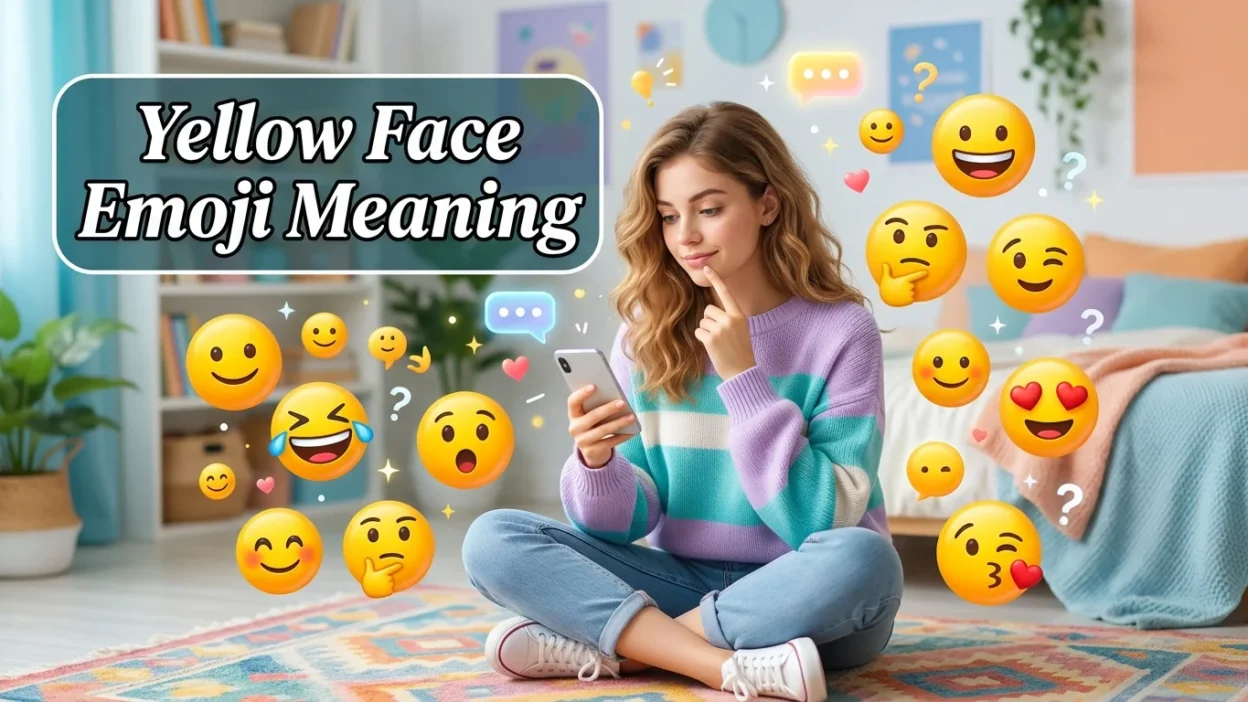
Bright, cheerful, and easy to recognize, the yellow face emoji is one of the most familiar symbols in digital communication. The Yellow Face Emoji Meaning can vary widely because different facial expressions communicate different emotions.
Depending on the specific emoji, a yellow face may show happiness, affection, surprise, sadness, confusion, excitement, or even frustration. People often use yellow face emojis to make their messages feel more expressive and personal.
A smiling face can create a friendly tone, while a worried or crying face may show emotional vulnerability. That’s why understanding the expression behind the emoji is more important than simply focusing on its yellow color.
Quick Answer
Yellow face emojis usually represent emotions, reactions, or facial expressions. Depending on the specific emoji, they can show happiness, laughter, affection, confusion, embarrassment, sadness, sarcasm, excitement, or other feelings. The exact yellow face emoji meaning depends on the emoji’s expression and the context of the conversation.
What Does “yellow face emoji meaning” Mean?
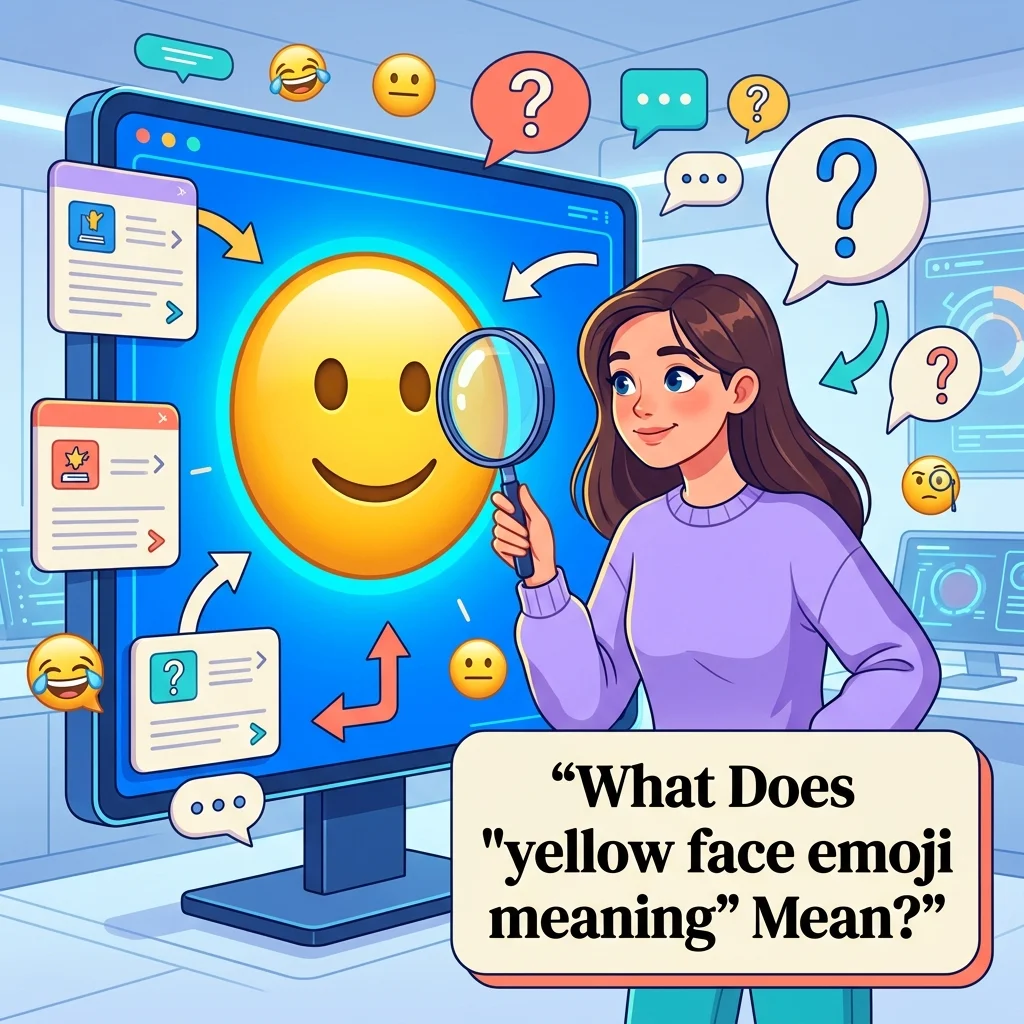
The yellow face emoji meaning refers to the emotion, reaction, or message communicated by a yellow-colored facial emoji.
Yellow facial emojis are among the most recognizable symbols in online communication. A smiling face can make a message feel friendly, while a crying face can show sadness or laughter. A confused face may suggest uncertainty, and a smirking face can sometimes suggest teasing or flirtation.
The yellow color itself usually does not mean a particular emotion. Instead, the facial expression is what carries most of the meaning.
For example:
- 😀 can express happiness or general good cheer.
- 😂 commonly expresses strong laughter.
- 😊 can show warmth, happiness, or appreciation.
- 😢 can communicate sadness.
- 😕 can show confusion or uncertainty.
- 😎 can suggest confidence or a “cool” attitude.
- 😏 can suggest smugness, teasing, flirtation, or innuendo.
- 😳 can show embarrassment, surprise, or other strong reactions.
Unicode explains that emoji are pictographic characters and that their meanings can change according to context, culture, language, and changing online usage.
What Does the Yellow Color Represent?
The yellow color used for many facial emojis is primarily a visual convention rather than a message about someone’s actual skin color.
Unicode documentation describes yellow as a typical generic color for smiley faces. Human emoji that represent people can use separate skin-tone modifiers, but ordinary smiley faces generally remain yellow.
So, if someone sends 😀, the yellow color does not normally mean “yellow.” The expression is what matters.
Literal Meaning
Literally, a yellow face emoji is a digital pictograph showing a face with a particular expression.
Its emotional meaning comes from the expression shown by the eyes, eyebrows, mouth, tears, sweat, accessories, or other facial details.
This is why two yellow faces can communicate completely different emotions.
Meaning in Different Contexts
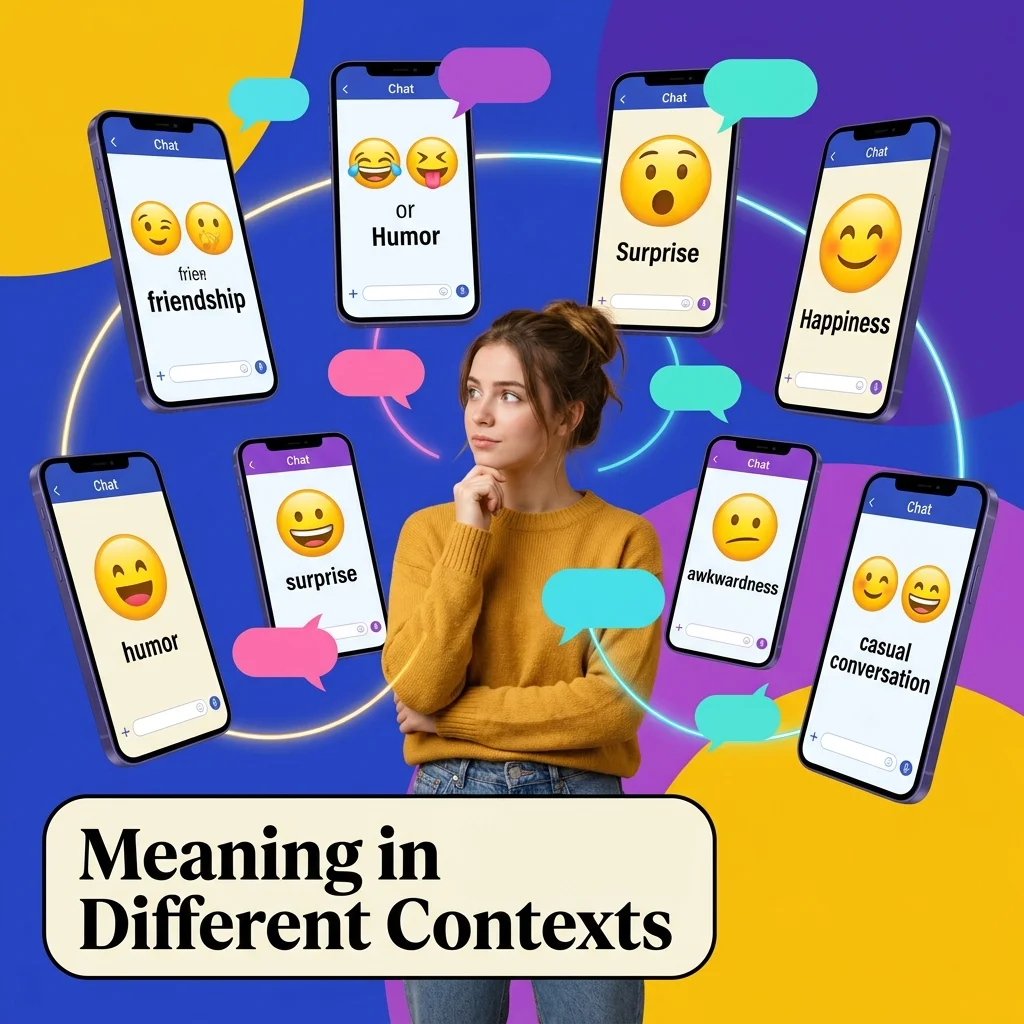
The same yellow face emoji can feel slightly different depending on where and how someone uses it.
A face sent alone may communicate a quick reaction. The same emoji placed after a sentence may change the tone of that sentence.
Everyday Conversation
In everyday conversations, yellow face emojis make messages feel more expressive and personal.
For example:
“That sounds great 😀”
Here, the emoji reinforces a positive feeling.
Another example is:
“I can’t believe I did that 😭”
The crying face may communicate sadness, frustration, or exaggerated laughter depending on the conversation.
In casual communication, emojis often work like facial expressions during an in-person conversation.
Text Messages
Yellow face emojis are extremely common in texting because text does not include facial expressions or tone of voice.
Compare:
“Okay.”
with:
“Okay 😊”
The first message may sound neutral or even cold. The second feels warmer and friendlier.
However, this does not mean every emoji has one fixed interpretation. The relationship between the people and the previous messages can affect how an emoji is understood.
Social Media
On social media, yellow face emojis often appear in captions, comments, replies, and direct messages.
People use them to:
- Show excitement
- React to jokes
- Express surprise
- Add humor
- Show support
- Make a comment feel friendly
- Emphasize an emotional reaction
A creator might write:
“New video is finally here! 😍”
The emoji adds excitement and admiration.
On WhatsApp, yellow faces are often used as quick emotional reactions.
For example:
“Thank you so much 😊”
The smiling face makes the message sound warm and appreciative.
A friend might also send:
“You actually said that 😂”
Here, the emoji signals that the person finds the situation very funny.
Because WhatsApp conversations are usually informal, many yellow face emojis can be used casually between friends and family.
Snapchat
Snapchat users often use facial emojis to express reactions in chats, captions, and stories.
Some emojis can also have platform-specific meanings. For example, Snapchat uses certain emojis next to contacts to communicate friendship-related information. Emojipedia notes that 😎 can indicate that two users have best friends in common, while 😏 can indicate a particular imbalance in snapping frequency.
Therefore, you should not automatically assume that an emoji beside a Snapchat contact has the same meaning as an emoji inside a normal message.
Instagram users commonly add yellow face emojis to captions, comments, Stories, and direct messages.
For example:
“This place is beautiful 😍”
The emoji communicates admiration or excitement.
In comments, a single emoji can act as a complete reaction:
😂😂😂
This usually means that the person found something very funny.
TikTok
On TikTok, yellow face emojis frequently support humor, reactions, sarcasm, excitement, and relatable content.
For example:
“Me pretending I understand the assignment 😭”
The crying face may not represent literal sadness. Instead, it can exaggerate frustration for humorous effect.
This is a good example of why context matters. Online communities often repurpose emotional emojis for humorous or exaggerated reactions.
Gaming
Gamers may use yellow face emojis in Discord chats, game communities, comments, and private messages.
For example:
“You really won that round 😂”
Here, the emoji can show amusement or friendly teasing.
A gamer might also use:
“That was close 😳”
The flushed face can emphasize surprise or tension.
Professional Communication
Yellow face emojis can appear in workplace communication, but you should consider the relationship and setting before using them.
For example:
“Thanks for the quick update 🙂”
A mild smile can make a short message feel more approachable.
However, highly playful emojis may not fit every formal situation. In a professional email to someone you do not know well, plain and clear language is often safer.
Examples of “yellow face emoji meaning”
Here are real-life examples showing how yellow facial emojis can work in different situations.
Example 1: 😀 Happiness
Sentence:
“I finally finished my project! 😀”
Meaning:
The person feels happy or pleased.
Situation:
Someone has completed something important and wants to share their positive mood.
The Grinning Face emoji is generally associated with pleasure, good cheer, or humor.
Example 2: 😂 Strong Laughter
Sentence:
“That video was too funny 😂”
Meaning:
The person found something extremely funny.
Situation:
A friend sends a joke, funny video, or amusing story.
The emoji communicates a stronger laughing reaction than a simple smile.
Example 3: 😊 Warm Appreciation
Sentence:
“Thanks for helping me today 😊”
Meaning:
The sender feels happy, thankful, or warm toward the other person.
Situation:
Someone has helped with a task or offered support.
A gentle smiling expression can make a thank-you message feel more personal.
Example 4: 😕 Confusion
Sentence:
“Wait, what happened? 😕”
Meaning:
The sender is confused or unsure.
Situation:
The person does not understand what another person has said.
Emojipedia describes 😕 as commonly expressing confusion or hesitation, while it can also convey mild sadness, disappointment, or frustration.
Example 5: 😎 Confidence
Sentence:
“I knew I could do it 😎”
Meaning:
The sender feels confident, relaxed, or proud.
Situation:
Someone has succeeded at something and is expressing a cool or confident attitude.
The sunglasses emoji is commonly associated with being cool, confident, carefree, or excellent.
Example 6: 😳 Embarrassment
Sentence:
“Everyone heard me sing 😳”
Meaning:
The sender may feel embarrassed, awkward, or surprised.
Situation:
Something happened that made the person uncomfortable or self-conscious.
However, 😳 can have several meanings, including surprise, admiration, affection, excitement, and disbelief.
Example 7: 😏 Teasing or Smugness
Sentence:
“You know exactly what I mean 😏”
Meaning:
The sender may be teasing, being playful, or implying something.
Situation:
Two people share an understanding that is not being stated directly.
Because 😏 can sometimes communicate flirtation or sexual innuendo, its meaning should be interpreted carefully.
Example 8: 😒 Irritation
Sentence:
“You forgot again 😒”
Meaning:
The sender is annoyed, displeased, or skeptical.
Situation:
Someone has repeated a behavior that the sender does not appreciate.
Emojipedia associates 😒 with emotions such as irritation, displeasure, grumpiness, and skepticism.
When Do People Use “yellow face emoji”?
People use yellow face emojis whenever they want to add emotional information to digital communication.
To Show Happiness
Smiling faces can make positive messages clearer.
“I got the job! 😀”
The face reinforces the excitement already expressed in the sentence.
To Make a Message Friendlier
A short message can sometimes sound too serious.
“Thanks.”
Adding a friendly emoji can soften the tone:
“Thanks 😊”
This does not guarantee that the recipient will interpret it in exactly the same way, but it often adds warmth.
To React to Humor
Laughing emojis are widely used when someone finds a joke, story, video, or comment funny.
“I can’t stop laughing 😂”
They can also appear as a reaction without any additional words.
To Show Confusion
A confused face can quickly communicate that something is unclear.
“What do you mean? 😕”
This may be easier and faster than explaining the entire emotional reaction.
To Show Surprise
Some yellow faces can emphasize an unexpected event.
“You actually did it?! 😳”
The emoji adds emotional intensity.
To Tease Someone
Certain expressions, particularly 😏, can add a teasing or playful tone.
However, this is one area where context matters greatly. A teasing emoji between close friends may feel completely different from the same emoji sent by a stranger.
Appropriate vs. Inappropriate Situations
Yellow face emojis are generally suitable for:
- Casual texts
- Friendly chats
- Social media
- Family conversations
- Informal group chats
- Gaming communities
- Casual online discussions
Use more judgment in:
- Formal business emails
- Job applications
- Academic communication
- Serious complaints
- Legal communication
- Sensitive conversations
There is no universal rule that says emojis are always inappropriate in professional communication. The relationship, workplace culture, and purpose of the message matter.
Different Meanings of “yellow face emoji”
There is no single emoji officially called “Yellow Face Emoji” that has one universal meaning. Instead, yellow face emoji is a broad description covering many facial emojis.
Here are some of the most common emotional categories.
Happiness and Positivity
Faces such as 😀, 😃, 😄, and 😊 can communicate positive emotions.
For example:
“We are going on vacation! 😄”
The sender is showing excitement or happiness.
The exact strength of the emotion depends on the individual emoji.
Laughter and Humor
😂 and related expressions are often used when something is funny.
For example:
“That was the funniest thing I’ve seen all week 😂”
The emoji acts as a strong visual signal that the sentence is humorous.
Love and Affection
Some yellow faces, such as 😘 or 🥰, can express affection, warmth, or romantic feelings.
For example:
“Good night 🥰”
The same emoji can also be used between family members or close friends, so it does not automatically indicate romance.
Confusion
😕 is often used when someone is uncertain or confused.
For example:
“I’m not sure what you mean 😕”
The expression makes the uncertainty visible.
Sadness
Yellow faces with tears, such as 😢, can express sadness, disappointment, or emotional pain.
In internet culture, however, crying emojis can sometimes be used dramatically or humorously.
For example:
“My favorite show ended 😭”
The person may be genuinely sad, but the dramatic emoji can also add playful exaggeration.
Sarcasm and Irony
Some facial emojis can signal that a statement should not be interpreted completely literally.
🙃 is a particularly good example. It is commonly used for sarcasm, irony, silliness, awkwardness, frustration, or resignation.
For example:
“Everything is going perfectly 🙃”
If the person’s day has actually been terrible, the emoji can signal irony.
Irritation
Faces such as 😒 and 😑 may communicate annoyance, frustration, or displeasure.
For example:
“You didn’t tell me about the change 😒”
The emoji strengthens the negative tone.
Confidence and Coolness
😎 often communicates a relaxed, confident, or “cool” attitude.
For example:
“No problem. I got this 😎”
The emoji can make the sentence feel playful rather than overly serious.
Flirtation or Suggestive Meaning
Some yellow facial emojis can have flirtatious meanings.
😏 is a common example. It can communicate smugness, playfulness, mischief, flirtation, or suggestive humor.
Do not assume that every use is romantic. The relationship and surrounding words are important.
Origin of “yellow face emoji”
The history of yellow face emojis is closely connected to the history of smiley faces, emoticons, mobile communication, and Unicode.
The idea of using a simple face to communicate emotion existed before modern emoji. Early text communication used combinations of keyboard characters such as 🙂 and :-(. Unicode explains that these are emoticons, while emoji are pictographic characters.
The word emoji comes from Japanese. Unicode explains that the Japanese term 絵文字 combines e, meaning “picture,” and moji, meaning “character.” Emoji were originally associated with mobile phone usage in Japan before becoming popular around the world.
Over time, mobile phones and operating systems began offering colorful pictographic characters instead of requiring users to type facial expressions manually.
The Classic Smiley
The familiar yellow smiley became a major visual model for many modern facial emojis.
One important example is the Smiling Face emoji, ☺️. Emojipedia notes that this character predates Unicode emoji support. It was approved in Unicode 1.1 in 1993 under the name “White Smiling Face” and was added to Emoji 1.0 in 2015.
The word “white” in that historical Unicode name does not refer to human skin color. Unicode explains that formal character names do not necessarily define how an emoji should look or what it means.
Growth of Facial Emojis
As emoji standards developed, more facial expressions were added.
For example, Grinning Face was approved as part of Unicode 6.1 in 2012 and added to Emoji 1.0 in 2015.
Other expressions followed, creating the large family of yellow faces people use today.
Why Are They Yellow?
Yellow became a familiar visual convention for generic smiley faces.
Unicode documentation has described generic smiley faces as using a non-realistic yellow color. This helps distinguish them from human emojis that can use skin-tone modifiers.
Therefore, the yellow color is usually part of the visual design rather than a hidden emotional code.
Meanings Continue to Change
Emoji meanings are not frozen forever.
Unicode specifically notes that emoji meanings can vary across language, culture, and context and can also be repurposed over time.
That explains why a younger internet community may use an emoji differently from an older generation or why an emoji can develop a humorous meaning on a particular platform.
Similar Words and Alternatives
Because “yellow face emoji” describes a broad group rather than one specific symbol, there are several related terms.
Smiley
Smiley is a common word for a smiling face or a smiley symbol.
Example:
“Send me a smiley.”
This usually suggests a happy or friendly facial symbol.
Emoji
Emoji is the broader category.
A yellow smiling face is an emoji, but emojis also include:
- Animals
- Food
- Objects
- Activities
- Symbols
- People
- Places
- Hearts
Unicode describes emoji as pictographic characters that can represent objects, emotions, feelings, activities, and more.
Emoticon
An emoticon is different from an emoji.
For example:
🙂
This is an emoticon made from keyboard characters.
By comparison:
🙂
This is an emoji character.
The two can serve similar communication purposes, but they are technically different.
Facial Emoji
Facial emoji or face emoji is a more general term for emoji depicting faces and expressions.
It can include yellow faces showing happiness, sadness, anger, surprise, confusion, and many other emotions.
Reaction Emoji
A reaction emoji is any emoji used primarily as a response to another person’s message or content.
For example:
😂
could simply mean, “That is funny.”
Common Mistakes
Understanding the yellow face emoji meaning can be tricky because people sometimes interpret an emoji too literally.
Mistake 1: Assuming Yellow Means a Specific Emotion
The yellow color itself usually does not mean happiness, jealousy, sickness, or another particular emotion.
Correct approach:
Look at the entire facial expression.
The eyes, mouth, eyebrows, tears, and accessories usually provide more useful clues.
Mistake 2: Treating Every Smile as the Same
Not every smiling emoji means exactly the same thing.
😀, 😃, 😄, 😊, 🙂, and 😎 have different designs and can create different tones.
Tip:
Pay attention to the exact emoji rather than simply seeing “a smile.”
Mistake 3: Ignoring Context
An emoji can change meaning depending on the sentence.
For example:
“Great job 😀”
is clearly positive.
But an emoji used after an obviously negative statement might be sarcastic or ironic.
Unicode confirms that context plays an important role in emoji interpretation.
Mistake 4: Assuming 😏 Always Means Romance
The smirking face can be flirtatious, but it can also be smug, mischievous, teasing, or suggestive.
Correct approach:
Look at the relationship between the people and the surrounding conversation.
Mistake 5: Assuming 😂 Always Means Literal Tears
The laughing face may communicate intense amusement rather than sadness.
Online users can also use crying-related emojis dramatically when something is extremely funny or relatable.
Mistake 6: Forgetting Platform Differences
Emoji artwork can look slightly different across Apple, Google, Microsoft, Samsung, and other platforms.
The basic Unicode identity remains the same, but the visual design may differ.
That means you should focus on the recognized emoji expression rather than relying on tiny design details.
Mistake 7: Reading Too Much Into One Emoji
An emoji is only one part of communication.
If someone sends:
“Okay 🙂”
you should not automatically assume they are happy, angry, sarcastic, or romantically interested.
The previous messages, relationship, and overall tone provide important information.
Frequently Asked Questions
What does a yellow face emoji mean?
A yellow face emoji usually communicates an emotion, reaction, or facial expression. The exact meaning depends on the specific emoji, such as happiness, laughter, confusion, sadness, surprise, irritation, or affection.
Why are most face emojis yellow?
Yellow is commonly used as a generic, non-realistic color for smiley faces. It is a visual convention and does not usually represent a person’s actual skin tone. Unicode documentation describes generic smileys as using a yellow color.
Does a yellow emoji always mean happiness?
No. Yellow face emojis can represent many emotions. Some show sadness, confusion, anger, embarrassment, surprise, or other reactions. The facial expression is more important than the color.
What is the difference between an emoji and an emoticon?
An emoji is a pictographic character such as 😀 or 😕. An emoticon uses ordinary keyboard characters to create an expression, such as 🙂 or :-(. Unicode distinguishes these two forms of digital expression.
Can yellow face emojis have different meanings on social media?
Yes. Meaning can change according to the platform, community, culture, and conversation. Unicode states that emoji meanings can vary by language, culture, and context and may be repurposed over time.
What does a yellow smiling face mean in a text?
A yellow smiling face usually makes a message feel positive, friendly, warm, or happy. However, some smiling faces can also be used for politeness, irony, teasing, or other purposes depending on context.
How can I know what someone means by a yellow face emoji?
Read the complete message, consider the conversation before it, identify the exact emoji, and think about your relationship with the sender. If the meaning is still unclear, asking the person directly is more reliable than guessing.
Conclusion
The yellow face emoji meaning is not limited to one emotion. Yellow facial emojis form a large group of digital expressions that can communicate happiness, laughter, affection, confusion, sadness, embarrassment, surprise, irritation, confidence, sarcasm, and more. The exact meaning depends on the specific emoji and the situation in which it appears.
The yellow color itself usually acts as a familiar visual style for generic smiley faces rather than representing a particular emotion or skin tone. Emoji also continue to develop as people use them in new ways across texting, WhatsApp, Instagram, Snapchat, TikTok, gaming, and other online communities.