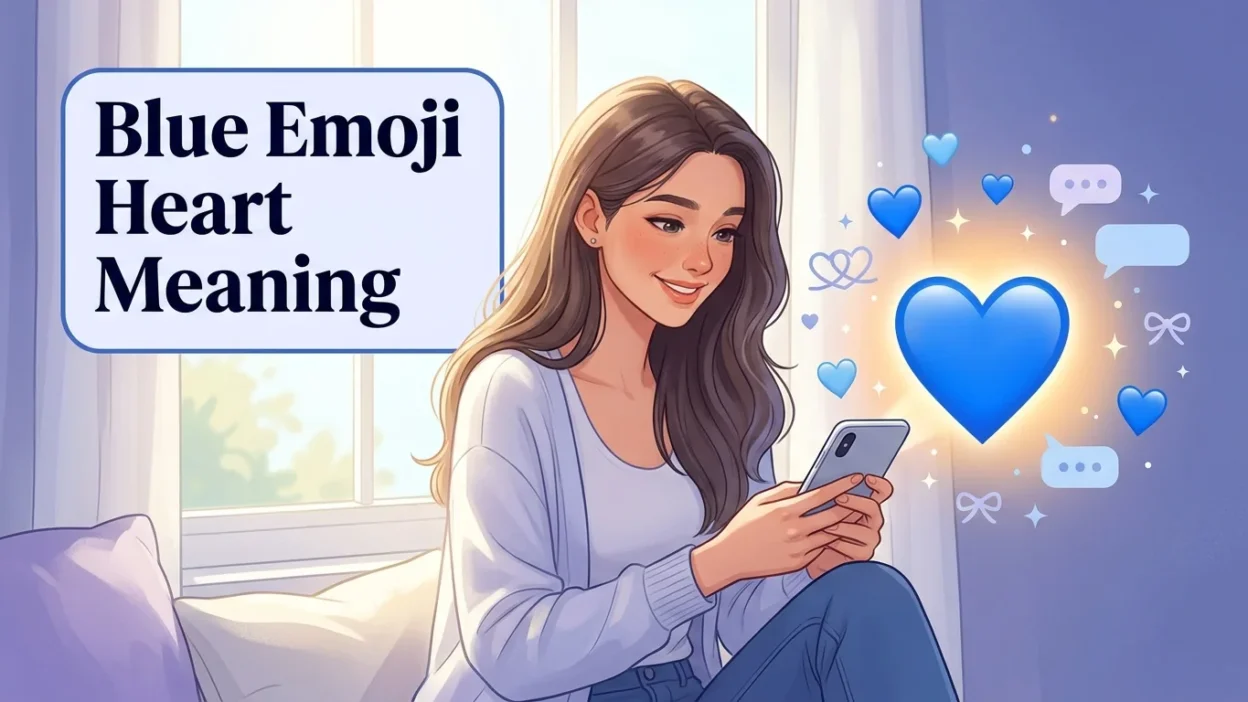
When someone sends a blue heart, it can add a calm and meaningful touch to an ordinary message. The Blue Emoji Heart Meaning is often connected with trust, loyalty, support, peace, and affection. Unlike the classic red heart, the blue heart can feel more gentle, friendly, or emotionally supportive depending on the context.
People commonly use 💙 when showing appreciation for a friend, supporting someone, or expressing a caring connection without making the message sound overly romantic. It can also appear in conversations about friendship, encouragement, and emotional support. However, its meaning can change depending on who sends it and what the conversation is about.
If you’re searching for the Blue Emoji Heart Meaning, this guide will explain what 💙 means in texting, relationships, friendship, social media, and different situations. You’ll also find simple examples to help you understand and use the blue heart naturally.
Quick Answer:
The 💙 Blue Heart emoji usually means trust, loyalty, friendship, support, care, peace, or affection. It can express love, but it often feels calmer and less intensely romantic than the ❤️ Red Heart.
For example:
- “Thanks for always being there for me 💙” = appreciation and emotional support.
- “You’re my best friend 💙” = friendship and loyalty.
- “Love you too 💙” = affection or love with a calm, caring tone.
- “We did it! 💙” = support for a team, group, school, or community.
- “Thinking of you 💙” = care and emotional support.
The sender, relationship, conversation, and surrounding words are important when interpreting the emoji.
What Does “blue emoji heart meaning” Mean?
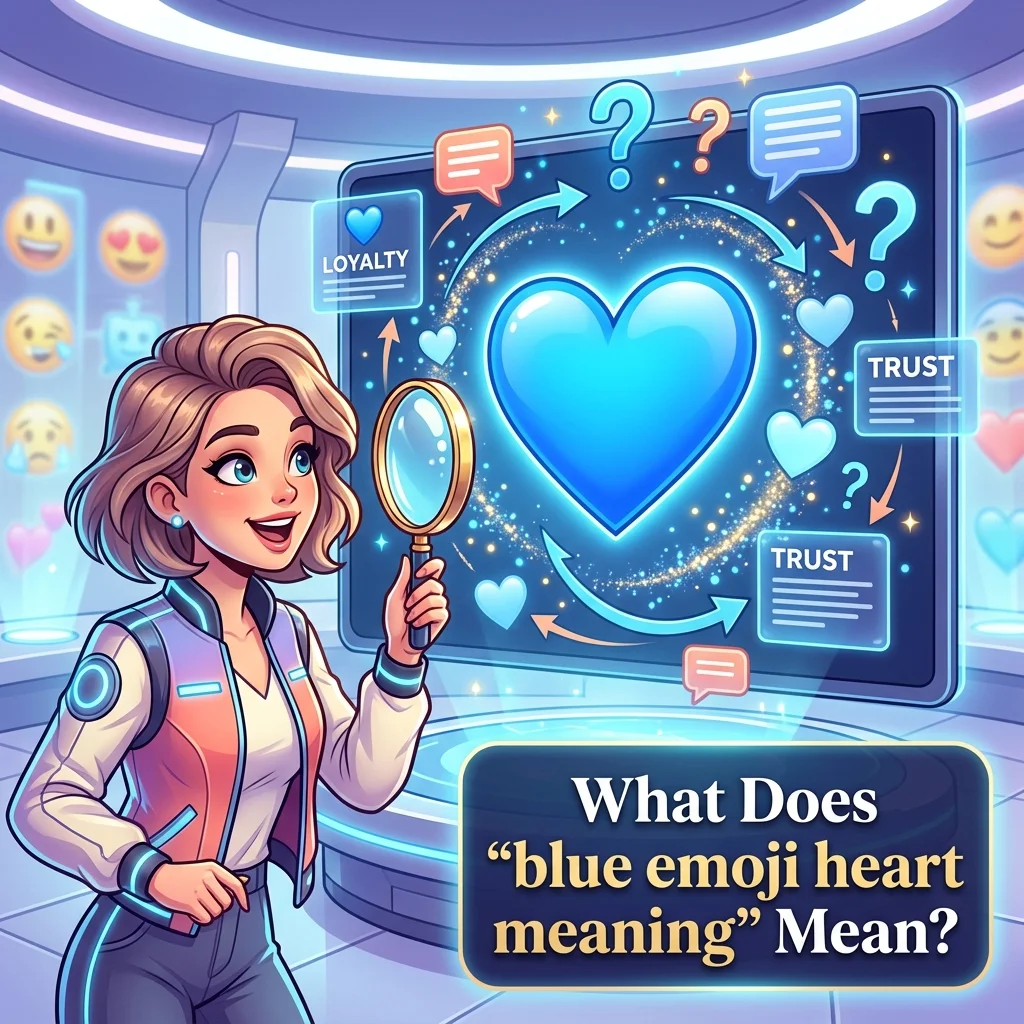
The phrase blue emoji heart meaning refers to the message or emotion communicated by the 💙 Blue Heart emoji.
The blue heart is commonly associated with trust, loyalty, calmness, friendship, support, peace, and affection. Unlike the red heart, which often carries a strong romantic or passionate feeling, the blue heart can feel more relaxed and emotionally steady.
Think of it this way: ❤️ often feels warm and passionate, while 💙 can feel calm, loyal, and reassuring.
The Basic Meaning of 💙
At its simplest, 💙 can communicate:
- “I care about you.”
- “I support you.”
- “I trust you.”
- “You matter to me.”
- “I’m here for you.”
- “I appreciate you.”
- “We’re close.”
- “I’m loyal to you.”
It does not have one fixed meaning in every conversation. Emojis work like emotional signals, so their meaning changes according to context.
What Does the Blue Heart Symbolize?
Blue is often culturally associated with calmness, stability, trust, and peace. Because of these associations, the 💙 emoji can communicate emotions that feel supportive rather than highly passionate.
For example, someone might send:
“I’m proud of you 💙”
Here, the blue heart reinforces warmth and support. It does not necessarily mean romantic love.
Is 💙 a Romantic Heart?
It can be.
A blue heart can appear between romantic partners, people who have a crush on each other, or someone who wants to express affection. However, 💙 is not automatically a sign of romantic interest.
If someone sends “Good night 💙” every evening, it may show affection. But if a friend sends “Good luck tomorrow 💙,” it may simply express friendship and support.
Context matters more than the color alone.
Meaning of 💙 in Different Contexts
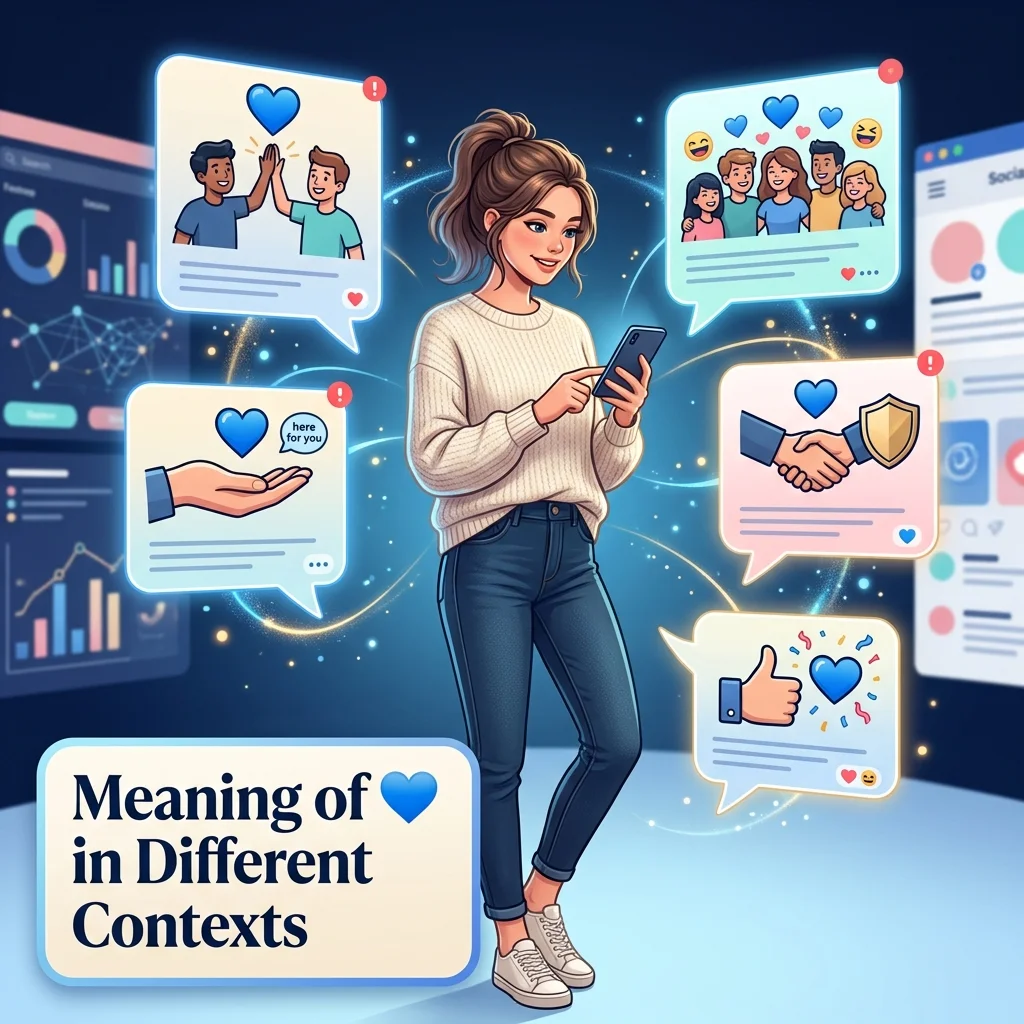
The same blue heart can communicate different emotions depending on where and how someone uses it.
💙 in Everyday Conversation
In everyday conversation, 💙 often adds warmth to an otherwise ordinary message.
For example:
“Thank you for helping me today 💙”
The heart makes the message feel more personal and appreciative.
Another example is:
“Take care of yourself 💙”
Here, the blue heart can communicate genuine concern and care.
It is especially useful when someone wants to sound kind without making the message overly romantic.
💙 in Text Messages
In texting, the blue heart can mean care, friendship, trust, support, or affection.
For example:
“You can always talk to me 💙”
This usually means the sender wants to show emotional support.
A message such as:
“Miss you 💙”
can be more emotionally meaningful, but it still does not automatically prove romantic interest.
The surrounding conversation helps determine the intended tone.
💙 on Social Media
On social media, people use the blue heart for many reasons.
Someone might add 💙 to:
- A friendship post
- A family photo
- A motivational message
- A sports post
- A charity campaign
- A tribute
- A school-related post
- A community event
- A post about peace or support
Because social media audiences are often large, the blue heart may have a broad supportive meaning rather than a personal romantic meaning.
💙 on WhatsApp
On WhatsApp, 💙 is commonly used between friends, family members, couples, and other people who communicate regularly.
For example:
“Good luck with your interview 💙”
This usually means encouragement and support.
A partner might write:
“I love you 💙”
In that situation, the blue heart can simply reinforce romantic affection.
WhatsApp does not give the emoji one universal emotional meaning. The people involved and their relationship determine how it should be understood.
💙 on Snapchat
On Snapchat, the meaning can depend on the relationship between users and the surrounding message.
If someone sends a blue heart while discussing a personal problem, it may mean emotional support.
If a friend sends:
“Besties forever 💙”
the emoji is likely expressing friendship and loyalty.
Do not assume that a blue heart by itself means someone has romantic feelings.
💙 on Instagram
Instagram users often use 💙 in captions, comments, Stories, and direct messages.
For example:
“Forever grateful for these people 💙”
Here, the blue heart expresses appreciation and affection toward a group.
It can also appear in posts supporting sports teams, schools, communities, organizations, or causes connected with blue.
💙 on TikTok
On TikTok, 💙 can appear in comments and captions to show support or agreement.
For example:
“This video made my day 💙”
The emoji adds a friendly and positive emotional tone.
Creators may also use blue hearts as part of a community identity or recurring visual style.
💙 in Gaming
Gamers may use 💙 to show support for a teammate, gaming friend, community, or favorite team.
For example:
“Great game, bro 💙”
Here, the blue heart can communicate friendship and appreciation rather than romance.
Its meaning can also depend on a game’s community, team colors, or fan culture.
💙 in Professional Communication
A blue heart is generally more casual than a professional symbol such as a simple thank-you.
It may be appropriate in friendly workplace chats where emojis are already common. However, in formal emails, job applications, business proposals, or serious professional communication, you should usually avoid using hearts unless the communication style clearly allows them.
For example, a manager might write:
“Great work on the presentation 💙”
in a casual team chat, but the same emoji may feel unusual in a formal business email.
Examples of the Blue Emoji Heart Meaning
Here are real-life examples that show how context changes the meaning of 💙.
Example 1: Friendship
Sentence:
“You’re honestly the best friend ever 💙”
Meaning:
The blue heart expresses friendship, appreciation, and loyalty.
Situation:
A friend sends it after receiving emotional support or spending time together.
Example 2: Emotional Support
Sentence:
“I know things are difficult right now. I’m here for you 💙”
Meaning:
The emoji communicates care, comfort, and support.
Situation:
Someone is going through a difficult personal experience.
Example 3: Romantic Affection
Sentence:
“Good night, love. Sleep well 💙”
Meaning:
Here, 💙 can express romantic affection and tenderness.
Situation:
A couple is ending a conversation before going to sleep.
Example 4: Appreciation
Sentence:
“Thank you for helping me with everything 💙”
Meaning:
The blue heart adds warmth to a thank-you message.
Situation:
Someone wants to show sincere gratitude.
Example 5: Loyalty
Sentence:
“No matter what happens, I’ve got your back 💙”
Meaning:
The heart represents loyalty, trust, and emotional support.
Situation:
A close friend is reassuring another friend.
Example 6: Team Support
Sentence:
“Let’s go! 💙 We’re winning tonight!”
Meaning:
The blue heart may represent support for a sports team or group.
Situation:
A fan posts about their favorite team.
Example 7: Family Love
Sentence:
“Love you, Mom 💙”
Meaning:
The heart expresses family love and affection.
Situation:
Someone sends a loving message to a parent.
When Do People Use the Blue Heart Emoji?
People use 💙 in many situations because its emotional tone is flexible.
To Show Friendship
The blue heart is often a friendly heart. It can tell someone that you value the relationship without necessarily suggesting romance.
For example:
“Thanks for being such a good friend 💙”
The message feels affectionate but clearly focuses on friendship.
To Show Trust
Blue is often associated with trust and stability. As a result, people sometimes use 💙 when reassuring someone.
“You can trust me 💙”
The heart strengthens the emotional reassurance.
To Show Support
Someone may send 💙 when a friend is struggling or needs encouragement.
“You’ll get through this 💙”
The emoji makes the message feel warmer and more supportive.
To Show Appreciation
You can also use 💙 after someone does something kind.
“I really appreciate you 💙”
Here, the heart adds emotional warmth to gratitude.
To Express Love Without Strong Passion
Some people choose 💙 instead of ❤️ because it feels softer and calmer.
For example:
“Love you always 💙”
The message can still be deeply affectionate, but the color may create a gentler emotional tone.
To Represent a Team or Community
Blue is also widely used in branding, sports, schools, communities, and online groups.
In these situations, 💙 may have little to do with romance or personal affection.
Different Meanings of 💙
The blue emoji heart meaning can be divided into several common interpretations.
1. Friendship
Definition:
A way to express warmth and affection between friends.
Context:
Used in friendly conversations, posts, and messages.
Example:
“Best friends forever 💙”
2. Loyalty
Definition:
A sign of commitment, trust, or standing by someone.
Context:
Often used when reassuring a close friend or loved one.
Example:
“I’ll always support you 💙”
3. Trust
Definition:
A calm emotional signal showing confidence in someone.
Context:
Used during supportive or reassuring conversations.
Example:
“Thank you for trusting me 💙”
4. Emotional Support
Definition:
A way to communicate care and comfort.
Context:
Often appears when someone is having a difficult time.
Example:
“Sending you love and strength 💙”
5. Romantic Affection
Definition:
A softer form of romantic love or affection.
Context:
Used between partners or people with a close romantic relationship.
Example:
“Can’t wait to see you tonight 💙”
6. Peace and Calm
Definition:
The blue heart can represent calmness, peace, or positive feelings.
Context:
Used with peaceful messages, nature posts, or calming content.
Example:
“Choose peace today 💙”
7. Support for a Cause or Group
Definition:
A symbol of support for a community, campaign, organization, team, or cause.
Context:
The meaning comes from the surrounding topic rather than the heart itself.
Example:
“Standing together 💙”
What Does the Blue Heart Mean From a Guy?
When a guy sends 💙, it can mean several things.
He may be expressing:
- Friendship
- Loyalty
- Appreciation
- Emotional support
- Trust
- Affection
- Romantic interest
The emoji alone cannot tell you exactly what he feels.
For example:
“Good luck today 💙”
may simply mean he supports you.
But:
“I miss you so much 💙”
from someone you are dating may carry a more romantic meaning.
Look at his words, communication pattern, relationship with you, and the overall conversation rather than interpreting the emoji in isolation.
What Does the Blue Heart Mean From a Girl?
A girl may use 💙 to express friendship, appreciation, support, loyalty, affection, or romantic feelings.
For example:
“Thank you for listening to me 💙”
usually sounds supportive and appreciative.
Meanwhile:
“Wish you were here with me 💙”
could feel more emotionally intimate, depending on the relationship.
Again, the emoji does not have a gender-specific meaning. A girl’s use of 💙 should be interpreted through the context of the conversation.
What Does 💙 Mean From a Guy to a Girl?
When a guy sends a blue heart to a girl, people sometimes wonder whether it means he likes her romantically.
It can show affection, but it does not automatically mean romantic interest.
Consider these examples:
“Good luck on your exam 💙”
Likely supportive.
“You mean so much to me 💙”
More emotionally intimate.
“Love you, babe 💙”
Clearly affectionate, with the romantic meaning coming mainly from the words.
The important point is that the words around the emoji often carry more meaning than the color itself.
What Does 💙 Mean From a Girl to a Guy?
A girl may send 💙 to a guy because she:
- Appreciates him
- Trusts him
- Values the friendship
- Wants to encourage him
- Feels emotionally close
- Has romantic feelings
For example, “Proud of you 💙” could be friendly or romantic depending on the relationship.
There is no universal rule saying that 💙 from a girl to a guy means friendship or romance.
Blue Heart vs Red Heart
The difference between 💙 and ❤️ is mainly emotional tone and context.
| Emoji | Common associations |
| 💙 Blue Heart | Trust, loyalty, friendship, support, calm affection |
| ❤️ Red Heart | Love, romance, passion, strong affection |
| 🩵 Light Blue Heart | Gentle affection, calmness, softness, support |
| 💜 Purple Heart | Affection, admiration, creativity, support |
| 💚 Green Heart | Nature, support, growth, friendship, varied meanings |
| 💛 Yellow Heart | Friendship, happiness, warmth, positive affection |
| 🖤 Black Heart | Dark humor, grief, edgy style, deep or complicated feelings |
| 🤍 White Heart | Peace, purity, care, sympathy, gentle affection |
| 🩷 Pink Heart | Sweetness, affection, tenderness, romantic or friendly warmth |
These associations are not strict rules. People choose emojis based on personal habits, relationships, aesthetics, and context.
Blue Heart vs Purple Heart
💙 and 💜 can both express affection and support, but they often create different emotional impressions.
💙 Blue Heart:
Often feels calm, loyal, trustworthy, supportive, and friendly.
💜 Purple Heart:
Can feel affectionate, admiring, creative, special, or emotionally warm.
However, individual users may give these emojis their own meanings.
Blue Heart vs Yellow Heart
💙 and 💛 are both commonly used in friendly situations.
💛 often feels cheerful, warm, positive, and friendly.
💙 can feel calmer, more loyal, supportive, or emotionally reassuring.
For example:
“Thanks for being my friend 💛”
sounds bright and cheerful.
“Thanks for always being there for me 💙”
sounds more emotionally supportive.
Blue Heart vs Light Blue Heart
The 💙 Blue Heart and 🩵 Light Blue Heart are visually related, but they can create slightly different impressions.
💙 often communicates loyalty, trust, support, and affection.
🩵 can feel softer, lighter, gentler, and more peaceful.
There is no official rule requiring people to use them in these specific ways.
Is 💙 a Friendzone Emoji?
Not necessarily.
Some people call 💙 a “friendship heart” because it is frequently used between friends. However, that does not mean sending 💙 automatically places someone in the friend zone.
A romantic partner can use 💙 too.
If someone sends:
“I love you 💙”
the words clearly communicate love.
If someone sends:
“Thanks, buddy 💙”
the context sounds more friendly.
Therefore, you should not use the emoji color alone to decide whether someone is romantically interested.
Is 💙 Flirty?
The blue heart can be flirty in the right conversation, but it is not inherently a flirting emoji.
For example:
“You looked really good today 💙”
could feel flirty.
But:
“Great job on your presentation 💙”
is more likely to be supportive.
The same emoji can move from friendly to romantic depending on the words, relationship, and tone.
Is 💙 a Sign of Love?
Yes, 💙 can represent love, but love is not its only meaning.
The blue heart can express:
- Romantic love
- Family love
- Friendship
- Loyalty
- Emotional care
- Support
- Appreciation
This is why context is essential.
When Should You Use 💙?
The blue heart is useful when you want your message to sound warm, supportive, or affectionate.
Good situations include:
- Talking to close friends
- Encouraging someone
- Thanking someone
- Supporting a loved one
- Showing loyalty
- Sending a kind message
- Expressing affection
- Celebrating a friendship
- Supporting a team or community
When Should You Avoid 💙?
There are situations where a heart emoji may feel too personal.
For example, if you are communicating with someone you barely know in a formal setting, 💙 may create an unnecessarily personal tone.
In professional communication, follow the tone already established by the people involved.
Common Mistakes When Interpreting 💙
Mistake 1: Assuming It Always Means Friendship
Some people believe 💙 always means “friend.”
That is too narrow.
The blue heart can represent romantic love, family affection, support, or loyalty too.
Mistake 2: Assuming It Always Means Romantic Love
The opposite mistake is equally common.
A person may send 💙 because they care about you as a friend. It does not automatically indicate a crush.
Mistake 3: Ignoring the Message Around the Emoji
The surrounding words often provide the strongest clue.
Compare:
“Good luck 💙”
with:
“I miss you so much 💙”
They contain the same emoji, but the emotional contexts are very different.
Mistake 4: Treating Emoji Colors as Universal Codes
There is no universal dictionary that forces every person to use 💙 in exactly one way.
Emoji meanings develop through culture, online communities, personal habits, and context.
Mistake 5: Overanalyzing One Emoji
If someone normally uses several heart colors, a single 💙 may not have a hidden message.
Look for patterns across the conversation instead of trying to decode one symbol.
How to Understand 💙 in a Text
When you receive 💙 and are unsure what it means, ask yourself five questions:
Who sent it?
A close friend, partner, family member, coworker, or stranger?
What did they say?
Look at the words immediately before the emoji.
What were you discussing?
A romantic conversation and a sports conversation can give the same emoji completely different meanings.
How do they normally use emojis?
Some people use hearts with almost every message.
What is your relationship?
Your existing relationship provides important context.
This approach is more reliable than assigning one fixed definition to 💙.
Origin of the Blue Heart Emoji
The 💙 Blue Heart is part of the standardized emoji system used across modern digital communication.
Its history is connected to the development of emoji as a way to add emotional and visual meaning to electronic messages. Unicode standardized emoji characters so that digital systems could represent them consistently across platforms.
The exact emotional meaning of a blue heart did not come from one person or one internet event. Instead, its meaning developed through widespread digital communication and common cultural associations with the color blue.
Blue has long been connected with ideas such as calmness, trust, peace, stability, and loyalty in many contexts. These associations help explain why users often interpret 💙 in similar ways.
However, emoji meanings are not fixed definitions. Online communities and individual users can give an emoji additional meanings over time.
This is especially important when interpreting social media posts, fandoms, sports communities, or private conversations.
Similar Words and Alternatives
The blue heart can often be replaced by words or other emojis depending on the intended emotion.
“I Care About You”
This is a direct verbal alternative to 💙 when you want to show concern or affection.
“I’m Here for You”
This works especially well when the blue heart expresses emotional support.
“I Appreciate You”
Use this when 💙 is showing gratitude.
“I Support You”
This is a strong alternative when the emoji communicates encouragement.
“Love You”
If the blue heart is being used romantically, words such as “love you” make the intended meaning clearer.
“Best Friend”
When 💙 represents friendship, “best friend” communicates the relationship directly.
Other Heart Emojis
❤️ can communicate stronger romantic love.
💛 often creates a cheerful, friendly feeling.
💜 can express affection or admiration.
🩵 can feel softer and gentler.
🤍 can communicate peaceful or tender affection.
🖤 can have a darker, humorous, stylish, or emotionally complex tone depending on context.
Blue Heart Emoji in Relationships
The meaning of 💙 can change as a relationship changes.
Between New Friends
It may communicate friendliness and growing trust.
Between Best Friends
It can symbolize loyalty, closeness, and appreciation.
Between Family Members
It can represent love, care, and emotional connection.
Between Romantic Partners
It may express affection, loyalty, reassurance, or love.
Between Former Partners
Its meaning can be more complicated. It could represent friendship, respect, support, or lingering affection.
Because relationships are personal, the emoji should not be treated as a secret universal code.
Blue Heart Emoji and Social Media Culture
Social media has made emojis more flexible than traditional written symbols.
People use 💙 to decorate captions, express reactions, identify with communities, and create a particular visual style.
For example, a sports fan might use blue hearts because their favorite team’s colors are blue. A creator might use 💙 regularly because it matches their personal branding.
In these cases, the emoji may not communicate a personal emotion at all.
This is why context is one of the most important parts of understanding emoji meaning.
Blue Heart Emoji and Internet Slang
Unlike abbreviations such as “LOL,” “BRB,” or “WDYM,” 💙 is not internet slang in the traditional sense.
It is an emoji that communicates emotional or symbolic meaning.
Still, online communities can create their own interpretations. A particular group may use 💙 as an inside symbol, fandom reference, or community marker.
If you encounter an unusual use of 💙 online, look at the surrounding post and community before assuming its standard meaning.
How to Reply to a Blue Heart
Your reply should match the relationship and tone.
If a friend sends:
“Proud of you 💙”
you could reply:
“Thank you! That means a lot 💙”
If a romantic partner sends:
“Miss you 💙”
you might reply:
“Miss you too ❤️”
If someone sends:
“Good luck tomorrow 💙”
a simple:
“Thank you! 💙”
is enough.
You do not need to use the exact same heart color in your response.
Frequently Asked Questions
What does 💙 mean in texting?
💙 usually means trust, loyalty, friendship, support, care, or affection. In some conversations, it can also express romantic love.
Does 💙 mean love?
It can mean love, but not always romantic love. It may represent friendship, family love, emotional support, loyalty, or appreciation.
What does 💙 mean from a guy?
A guy may use 💙 to show friendship, support, loyalty, appreciation, or affection. It can be romantic, but the emoji alone does not prove romantic interest.
What does 💙 mean from a girl?
A girl may use 💙 to communicate friendship, trust, support, appreciation, or affection. Its meaning depends on the conversation and relationship.
Is 💙 a romantic emoji?
It can be romantic, but it is not exclusively romantic. The blue heart is often less strongly associated with passion than the red heart.
Does 💙 mean friendship?
It often can. Friends commonly use 💙 to show loyalty, care, and appreciation. However, it can also have romantic, family, or supportive meanings.
What is the difference between 💙 and ❤️?
💙 commonly suggests trust, loyalty, support, calm affection, or friendship, while ❤️ is more strongly associated with love, romance, and passion. Neither emoji has only one fixed meaning.
Conclusion
The blue emoji heart meaning is mainly connected with trust, loyalty, friendship, support, care, peace, and affection. It can also represent romantic love, but its meaning depends on the people involved and the context of the conversation.
A 💙 from a friend may show loyalty or appreciation. The same emoji from a romantic partner may express love and emotional closeness. On social media, it can even represent a sports team, community, cause, or personal style.